Every year, construction companies face staggering losses due to theft at jobsites across North America. The impact goes far beyond just missing equipment; theft creates project delays, drives up insurance premiums, and puts additional strain on already tight project timelines. Understanding current construction site theft statistics can help teams plan budgets, mitigate risk, and justify investments in security.

The numbers don’t lie. Nearly 89% of tradespeople become victims of construction theft. These construction site theft statistics
highlight how pervasive the problem has become. To avoid becoming another statistic, let’s review what you need to know about construction site theft so you can protect valuable assets!
Key Takeaways
- Construction site theft is widespread, with nearly 89% of tradespeople reporting being victims, driving billions in losses, project delays, and higher insurance costs.
- Thieves commonly target heavy machinery, power tools, and raw materials like copper and lumber; recovery rates for stolen equipment hover around 56%, with risks influenced by location and season.
- The most effective defense is a layered approach: physical security, controlled access, surveillance and GPS technology, worker training, and coordination with law enforcement.
- Proactive solutions such as TrueLook’s cameras help deter theft and keep projects on schedule.
Understanding the Scope of Construction Site Theft
The construction industry continues to grapple with widespread theft issues that affect projects of all sizes. From small construction businesses to large construction sites, no operation is immune to the risks. While exact numbers can be difficult to track due to unreported incidents, industry estimates suggest the financial impact stretches into the billions annually.
The most commonly stolen items include:
- Heavy machinery and construction equipment (especially skid steers and backhoes): The average cost of heavy equipment is between $15,000 and $600,000, depending on the type and size.
- Power tools and portable equipment: Tools are popular targets and can cost millions to replace. One county in Florida reported $2.4 million in stolen power tools in 2022 alone.
- Raw materials like copper wiring and lumber: The price of lumber is sky-high, and copper has always been a popular commodity. Since 2020, lumber is now up an average of 250%, making it a profitable stolen material.
The hidden costs extend beyond just replacing stolen equipment. Construction companies face many of these administrative challenges when forced to deal with theft of the jobsite:
- Project delays and missed deadlines
- Higher insurance premiums
- Additional security expenses
- Lost productivity during equipment and material replacement
- Administrative time dealing with police reports and insurance claims
- Damaged reputation if victim of multiple thefts
Unfortunately, because construction sites are works-in-progress, they are prime targets for theft. It doesn’t help that much of the equipment and materials used on construction sites are high-dollar, untraceable items.
Key Construction Site Theft Statistics
With an understanding of how broad and deep jobsite theft extends, we can examine a few critical construction site theft statistics that further illustrate the impact of poor construction site security. Recent trends within the construction industry reveal concerning inclinations, such as:
Construction Equipment Theft
Despite their size, the high-ticket average makes heavy machinery a frequent target. Thieves will target everything from backhoes, skid loaders, excavators, and bulldozers to the gas in their tanks. We already mentioned that equipment can run into hundreds of thousands of dollars depending on size and type, and recovery rates for stolen equipment hover around 56%.
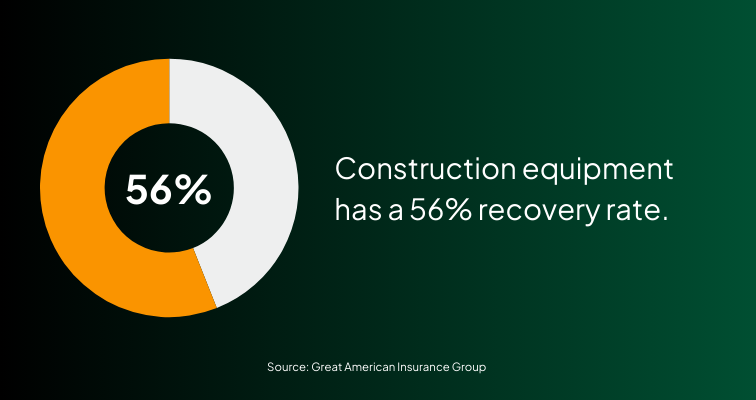
Small construction companies face disproportionate impacts from equipment theft and are less likely to have GPS monitoring equipment to aid in recovery. Technology is becoming more affordable, and the cost of equipment theft is too high not to invest in one of the many solutions.
Material Theft
2020 showed us how fragile supply chains are and how supply chain disruptions can lead to massive upticks in the theft of materials. Copper wiring, lumber, and other metals continue to be prime targets due to demand, but theft of other materials, like concrete, steel rebar, and insulation, is on the rise.
Criminals often remove raw materials during off-hours when sites are at their most vulnerable. Construction site cameras from vendors such as TrueLook are one solution to keep a virtual eye on goods. Likewise, storing materials in locked and secured sheds or buildings is a best practice.
Regional and Seasonal Construction Site Theft Statistics
While it’s more difficult to rob a construction site in the middle of downtown than in the country, it still happens. Rural or remote locations face higher risks due to the limited security presence and bystander witnesses.
Weather and time of year (seasonal factors) impact criminal activity, as well. During the summer, many companies take on peak capacity, making June, July, and August prime crime season. Theft is also most likely to occur during the first few phases of the project when material and equipment are most vulnerable.
Why Construction Sites Are Targets for Theft
To the average person, a construction site is just a collection of raw materials and equipment we imagined playing with as kids. To a criminal, however, a construction site is a gold mine offering endless reserves of cash. Several unique characteristics present security challenges that make them attractive targets.
Vulnerable Access Points
Construction sites are often large, open spaces that are challenging to secure fully. There are often multiple entry/exit points and a regular flow of authorized personnel that makes it hard to spot unauthorized access.
High-Value Assets
The jobsite is home to expensive equipment, often left on site unattended after hours.

Vulnerable materials also require storage in easily accessible areas, and many times, these areas lack adequate security. Additionally, tools and materials are easy to transport and difficult to trace.
Recovery Challenges
Materials, tools, and small equipment lack robust identification systems, making them popular pawn shop items. Stolen smaller items may also go undiscovered for days, causing further delays in recovery or replacement.
Preventative Measures to Avoid Becoming a Construction Site Theft Statistic
Theft prevention is possible by creating a secure environment with comprehensive security measures in place. To achieve this tighter security posture, consider some of the following action steps:
- Physical Security: Install proper fencing and gate systems around the perimeter. Install secured storage facilities for all valuable equipment, materials, and tools. Provide adequate lighting to perimeters and work areas for security and safety.
- Access Control: Deploy added access controls to entry/exit points such as RFID cards or biometric scans. Monitor access logs to identify unauthorized access while clearly identifying authorized personnel.
- Technological Solutions: Install construction site cameras, motion-activated lighting, and alarm systems to deter criminal activity. Outfit equipment with GPS tracking devices and utilize alarm systems that trigger lights and sound upon unauthorized entry.
- Worker Training: Require ongoing employee training on safety and security procedures. Develop protocols for reporting suspicious behavior and document incidents clearly for future reference.
- Collaborate with Law Enforcement: Build healthy relationships with local authorities and be open when sharing information about theft patterns. Rapid reporting of security breaches allows for rapid responses to incidents.
Every jobsite is unique and will require a custom approach to security. A flexible approach with multiple security layers is the most effective response and deterrence to criminal theft and disruptive behavior.
Frequently Asked Questions
It’s pervasive—nearly 89% of tradespeople report being victims, and industry estimates put total losses in the billions annually. Beyond the direct cost of stolen items, theft triggers project delays, higher insurance premiums, added security expenses, lost productivity, administrative burdens for claims and reports, and potential reputational damage.
Thieves target high-value, easy-to-move, and hard-to-trace assets. Common targets include heavy machinery (e.g., skid steers and backhoes, often costing $15,000 to $600,000), power tools and portable equipment (one Florida county saw $2.4 million in tool thefts in 2022), and raw materials like copper and lumber (with lumber prices up an average of 250% since 2020). These items are attractive because they’re valuable, frequently left on-site, and often lack robust identification.
Risk increases at rural or remote sites with fewer witnesses and less security presence, though urban sites are not immune. Theft tends to happen off-hours and spikes in summer—June, July, and August are prime months. Early project phases are especially vulnerable when large quantities of materials and equipment are staged on-site.
Jobsites are large, evolving environments with multiple access points and a steady flow of people, making unauthorized entry harder to spot. High-value equipment is often left unattended, materials are stored in easily accessible areas, and small tools typically lack identification, making them easy to fence. Theft of smaller items may go unnoticed for days, further hindering recovery.
A layered, proactive approach works best. Combine physical security (fencing, secured storage, lighting) and access control (RFID/biometrics, monitored logs) with technology (construction cameras, motion-activated lighting, alarms, GPS on equipment). Train workers to follow security protocols and report suspicious activity, and coordinate closely with law enforcement. Solutions like TrueLook’s live-view construction cameras help deter intrusions, provide real-time monitoring, and support faster recovery and prosecution if incidents occur.
Stay Ahead of Construction Site Theft with Proactive Security
Protecting your construction site requires implementing robust security measures before incidents occur. By understanding the risks and taking proactive steps, you significantly reduce your vulnerability to theft and its costly consequences and improve your security posture.
Consider investing in comprehensive security systems that combine physical security with modern technology solutions, like those offered by TrueLook. Construction Cameras with live viewing capabilities help you monitor your site remotely, while GPS tracking and proper documentation make equipment recovery and prosecution more likely if theft does occur.
Remember, the most effective security plans combine multiple layers of protection, from basic physical security to advanced surveillance systems. Request a live demo from TrueLook and take action now to protect your valuable assets and keep your projects on track.