This post was originally published on November 9th, 2016, and updated on June 16,2026.
Installing security cameras on a construction site improves productivity during work hours while deterring theft and vandalism overnight. This guide walks through how to install a construction security camera system from start to finish: choosing the right cameras, positioning them for maximum coverage, and mounting and powering your setup correctly the first time. Installing your camera in the wrong location can make it difficult to see what’s happening on your jobsite, or even worse, it could put workers and equipment at risk.
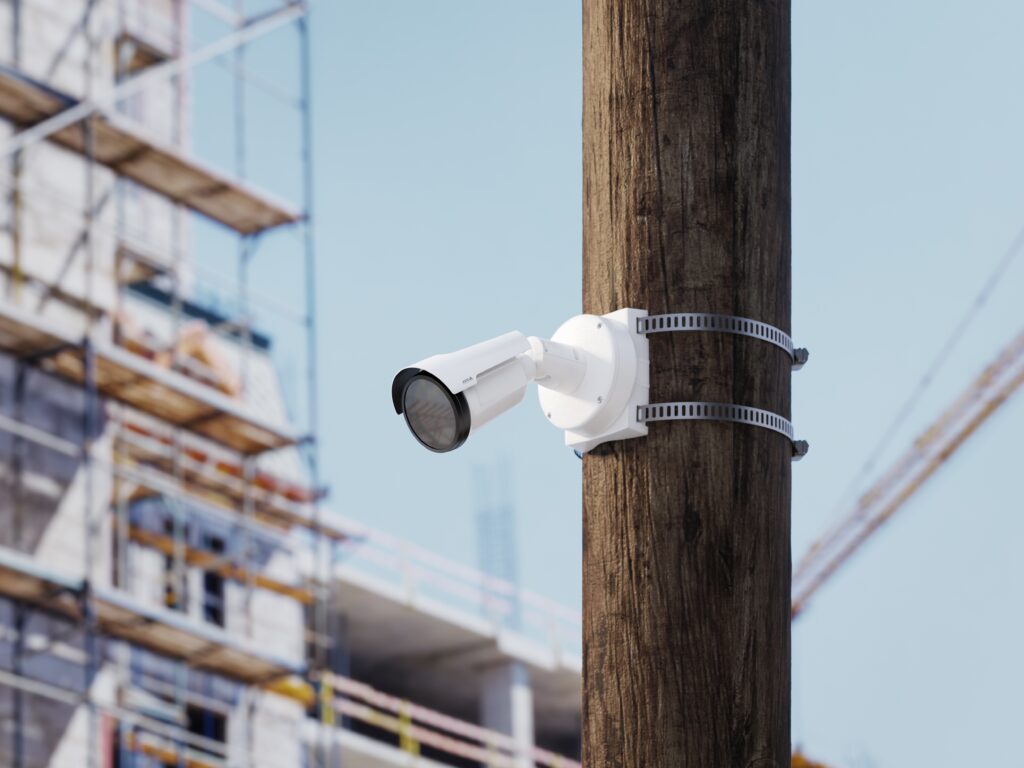
In this blog post, we’ll cover how to choose the right camera, how to position your construction security cameras, and how to install security cameras at your worksite for maximum efficiency, productivity, and security.
How to Install a Construction Security Camera System: 5 Steps
Installing a construction security camera system comes down to five decisions: choosing your camera type, choosing placement, choosing a mount, deciding on a permanent or temporary setup, and securing a power source. Walking through these in order, before you ever climb a ladder, prevents the most common installation mistakes: blind spots, glare, and cameras mounted somewhere no one can run power to.
- Choose the right camera(s) for your site. Fixed, PTZ, or interior, based on jobsite size and what you need to capture.
- Choose your camera placement and angle. Positioned for full coverage with the sun behind the lens.
- Choose a mounting structure. A utility pole, neighboring building, non-penetrating roof mount, or mobile trailer.
- Decide permanent vs. temporary. This affects both mount type and security against tampering.
- Secure your power source. Hardwired, temporary site power, or solar.
The sections below go through each step in detail.
Choosing the Right Construction Camera
Before you install security cameras, you need to rent or buy one. But there are different types of security cameras used on jobsites, so how do you choose the best one?
Think about your project needs and how your construction cameras will fit into different aspects such as construction site monitoring and project documentation. Make sure your device includes all of the camera features you’ll need to get the job done. These features may include:
- Night vision
- Motion detection
- Remote live view access
- Construction time-lapse recording functionality
- Appropriate field of view
1. How many cameras do you need?
From our experience here at TrueLook, most customers find that a single camera works for construction project management and capturing quality time-lapses, especially on single-building projects.
However, if you need to capture views from multiple vantage points, or if the jobsite is large and/or includes multiple buildings, it may be best to acquire several cameras. Developers working on subdivisions, strip malls, and similar projects often place cameras at several crucial locations to capture the full story. Even some smaller projects may benefit from multiple cameras if there are key areas of interest to document or secure, such as entry and exit points. Before you install security cameras, make sure you lease or buy enough devices to capture every angle.
2. Which type of camera is best?
TrueLook offers both robotic Pan-Tilt-Zoom (PTZ) cameras and fixed-position cameras. PTZ cameras are best suited for large jobsites or situations where multiple zones need to be documented from one position. This type of camera can be scheduled to capture multiple time-lapse shots focusing on various sections and activities, as well as panoramic time-lapses.
Fixed cameras are better if you are mounting the cameras close to the site, need everything captured in one shot, or want the most stable time-lapses.
We also provide interior cameras, for a full range of coverage.
Installing Security Cameras: Where to Position Them on Your Jobsite
After you’ve chosen your devices, it’s time to think about placement. Keep in mind that with TrueLook, you can either choose the DIY installation route, or you can opt for professional camera installation. Either way, these questions should help you understand how to install security cameras at your jobsite:
1. What’s the right camera angle?
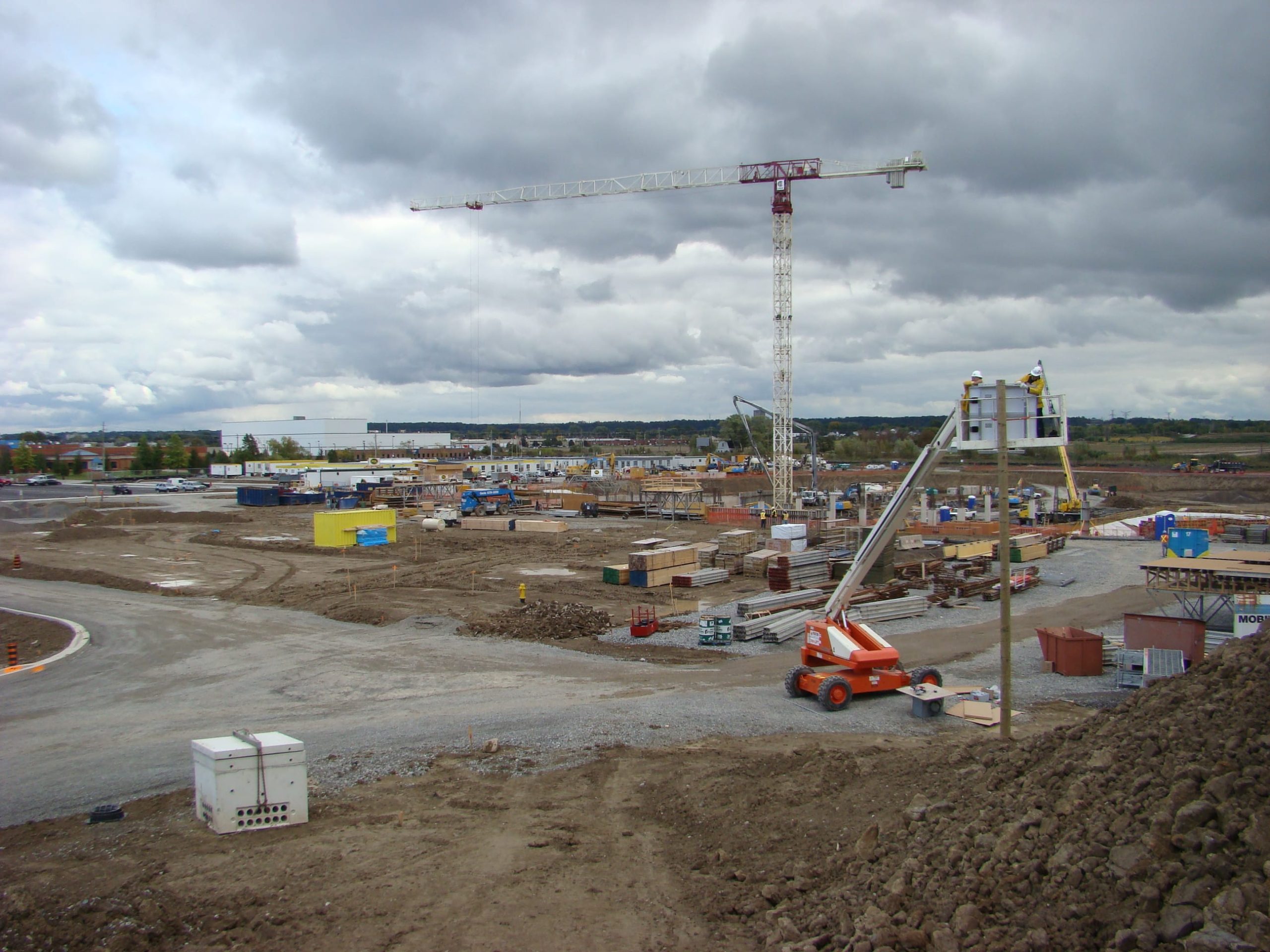
This depends on how you plan to use your footage and images. For example, many builders focus their cameras at the front of the building to create a smooth time-lapse view that can be shared across digital platforms.
Others may choose to focus on a corner of the building so that they capture multiple sides of the project in one view. For this perspective, make sure the camera is positioned high enough to capture the entire footprint of the structure, as well as all levels or stories.
Whenever possible, our experts recommend positioning cameras with the sun behind them to minimize shadows and glare. This also provides the best lighting for daytime images.
2. What structure should hold the camera?
If you’re able, we recommend placing your camera outside the construction area. This prevents issues caused by changes in work activity that might require you to reposition the camera and disrupt time-lapse continuity.
Your camera location should be close enough to avoid visual obstructions, but far enough away to give you views of the entire project to ensure a clear, complete view from start to finish.
When mounting your cameras on adjoining properties, it’s important to consider issues like permitting, privacy, legal responsibility, insurance, and cost. Your camera provider should be able to provide some support and guidance in these areas. Feel free to reach out to a TrueLook specialist before you install security cameras at your jobsite!
3. What should I use as a camera mount?
Many TrueLook customers mount their cameras on neighboring buildings or utility poles. A popular alternative is non-penetrating roof mounts so you can securely attach the camera without having to puncture the building’s elements. Another mounting option is a mobile camera trailer, which is an all-in-one solution for both solar power and mounting your camera. Contact us to discuss mounting options before you install security cameras at your jobsite.
4. Will this be a permanent or temporary setup?
When you install security cameras, consider whether the assembly will be mounted for a long or short period of time. This will also impact where and how you affix your setup. If you’re aiming for a long-term solution for an outdoor camera, you’ll want to place the device in a secure location where it cannot be tampered with, either by the weather or vandals. If you need something short-term, placing your camera on a mobile camera trailer or an on-site utility pole could suffice. If you need a temporary camera setup, then renting wireless security cameras to monitor your jobsite could be just what you need. Learn how to decide whether to lease or buy a construction camera.
5. Where’s the power supply?
We recommend picking a location where power already exists or where it’s easy to run power to the equipment. If you are already adding temporary power to the jobsite, consider placing the supply in a location that also works to feed the camera position.
No easy spot for power? Solar is a great option for remote jobsites or those who prefer to remain off-the-grid. Many solar powered camera packages include backup batteries that can power your device for multiple days, meaning sites stay covered on overcast days.
TrueLook’s solar panels perform in most weather, even in extreme conditions such as severe snow. In adverse conditions, your setup will rely on the battery-powered system, ensuring continuous recording and monitoring.
Construction Security Camera Installation with TrueLook
You’ve chosen the right construction surveillance cameras for your project and found the perfect spots to capture your build. It’s time for installation!
The last step is the easiest. TrueLook cameras come pre-wired and pre-programmed with your chosen mounting kits, so installing your construction security camera system comes down to three actions: attach the camera to the mount using the included hardware, connect it to your power source, and confirm the device comes online. Most customers complete a single-camera installation in under an hour. Once power is connected, the camera automatically checks in with TrueLook’s network. No manual configuration, network setup, or software installation is required on your end.
If you think you’ll need assistance with this step, we offer a convenient professional camera installation service that makes setup a breeze! We’ll work with you to choose exactly what you need to capture every angle of your project, then come to your jobsite to set up your assembly.
Frequently Asked Questions About Installing Construction Security Cameras
A single fixed or PTZ camera typically takes under an hour to install once the mount and power source are in place. Most of the project time goes into planning placement and running power, not the physical mounting. Professional installation services, like TrueLook’s, can usually complete a full setup (mount, power, and connectivity check) in a single site visit.
You don’t need an electrician if you’re connecting to an existing power source or using a solar-powered camera with battery backup. You will likely need an electrician if you’re running new temporary power to a location that doesn’t already have it. Many builders coordinate camera placement with their temporary power plan to avoid this extra step.
Yes, TrueLook cameras are designed for DIY installation and arrive pre-wired and pre-programmed so you only need to mount the unit and connect power. If your jobsite has tricky access, permitting requirements for adjoining-property mounts, or multiple cameras to coordinate, professional installation removes that complexity.
Avoid placing cameras inside the active construction footprint, where equipment movement or changing site conditions will force you to relocate the camera and break time-lapse continuity. Also avoid angles that point directly into the sun, since this creates glare and washes out footage during peak daylight hours.
A permanent installation is built for the full project duration in a tamper- and weather-resistant location, often hardwired to power. A temporary installation, such as a camera on a mobile trailer or utility pole, is built for flexibility and is easier to relocate as the jobsite changes.
Final Thoughts on Installing Security Cameras on Construction Sites
Investing in the right type of cameras, the appropriate number of cameras, and strategically positioning them on your jobsite can provide tremendous benefits for project management, documentation, and security monitoring. By considering factors such as camera perspective, mounting location, and power supply, you can ensure that you capture the most comprehensive and high-quality footage throughout your construction project.
With TrueLook’s easy installation process and expert support, you and your team can be confident that your construction cameras will provide secure monitoring and deliver valuable insights on your projects.
Contact us today to get a free demo!
Superb Image Quality. Widest Field of View. Unbeatable Value.
The stability and simplicity of a fixed-position construction camera make it the optimal choice for capturing a singular, ultra-wide view of a jobsite.