A data center substation is the electrical facility that steps utility power down from high transmission or subtransmission voltage to a level the data center can actually use, typically 13.2kV to 34.5kV for internal distribution. Any data center pulling more than 10 megawatts almost always needs one, and it’s rarely a simple add-on. In many markets, the substation, not the building, is now the single biggest driver of cost, schedule, and site selection.
Key Takeaways
- A dedicated data center substation typically costs $3 million to $7 million for the core equipment, but full utility interconnection, including transmission lines, easements, and utility contribution charges, can run $20 million to $100 million+ depending on distance to the grid and required voltage.
- Data centers over 10 MW are usually fed via transmission or subtransmission lines, which requires the operator to design, build, and maintain a substation that steps power down to distribution voltage.
- Substation and switchgear procurement carries 26 to 52+ week lead times, and interconnection timelines in constrained markets like Northern Virginia now stretch to 7 years.
- Redundancy design (N, N+1, 2N, or 2N+1) determines how many independent rpower paths the substation and everything downstream must support. Moving from Tier III to full 2N+1 Tier IV redundancy adds substantial cost: industry estimates vary widely, from roughly 25% to as much as double the electrical budget, depending on scope and existing infrastructure.
- Proximity to existing high-voltage infrastructure often matters more than land price, because it directly shortens interconnection scope and utility upgrade risk.
Substation build-outs have become the main pacing item on many hyperscale projects, outpacing even the building shell in schedule risk. Get the power strategy wrong, and every other trade waits on it.
What Is a Data Center Substation?
A data center substation is a dedicated electrical facility, either on-site or utility-owned nearby, that receives high-voltage power from the grid and transforms it into a voltage the data center’s internal distribution system can handle.
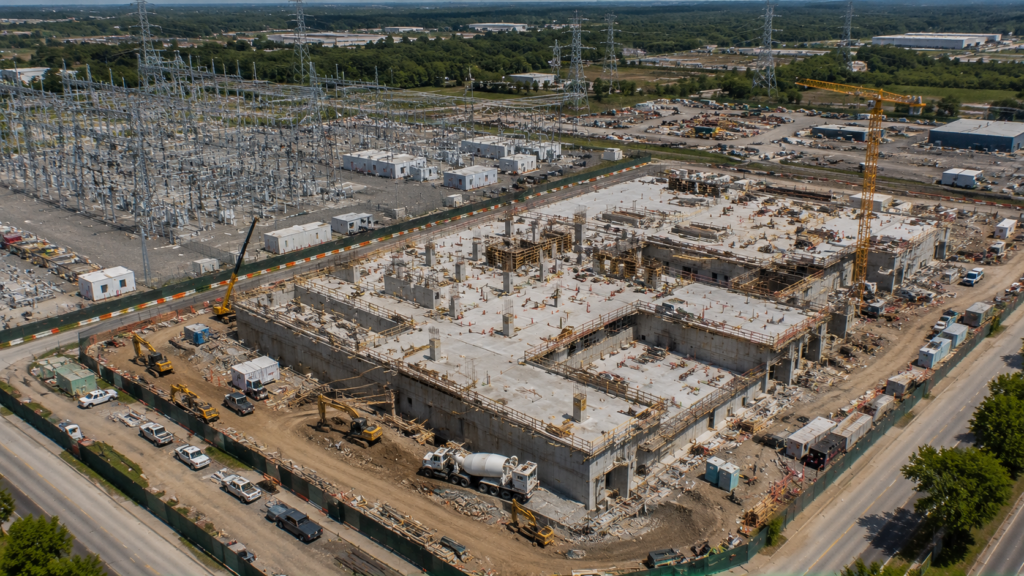
Sizing generally follows load, though exact thresholds vary by utility and region:
- Under 1 MW: In most cases, served through standard distribution service without a dedicated substation.
- 1-10 MW: Typically served at distribution voltage; whether dedicated infrastructure is needed usually depends on local grid capacity.
- 10+ MW: Commonly requires a dedicated substation, fed from the utility’s transmission or subtransmission system and stepped down to distribution voltage (commonly 13.2kV).
- Hyperscale (20-100+ MW): Typically requires a private substation connecting at 138kV or 230kV, stepped down to 15kV or 34.5kV for facility distribution.
These bands are general industry patterns, not fixed rules. Every utility sets its own thresholds, so early conversations with the local utility are the only way to confirm requirements for a specific site.
The core function is the same at every scale: take power the grid can deliver efficiently over distance and convert it into power the building can safely distribute to switchgear, UPS systems, and ultimately server racks.
Why the Data Center Substation Is Often the Real Bottleneck
Construction teams are used to issues showing up in permitting delays or material lead times. On data center projects, it increasingly lives in the interconnection queue.
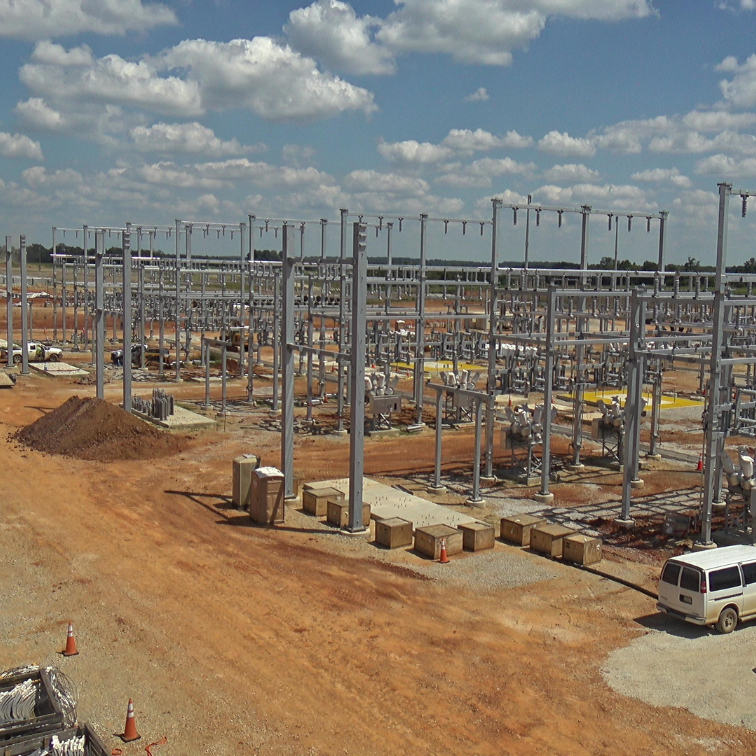
A few reasons why:
- Utility studies take time. Before approving a new substation or transmission tap, utilities generally run system impact studies to confirm the grid can handle the added load without destabilizing service to other customers, a standard part of the interconnection process industry-wide.
- Equipment lead times are long. Utility interconnection, substation construction, and switchgear procurement routinely carry 26- to 52-plus-week lead times, and that’s before installation and commissioning.
- Land scarcity compounds the problem. In dense markets, buildable acreage with existing high-voltage access is scarce enough that some operators pay a premium for proximity to power rather than for lower land cost.
- Regional grid capacity varies widely. In constrained markets, interconnection timelines have stretched to three to five years for new substation service, long enough to reshape a project’s entire site selection strategy.
The practical result: many hyperscale and colocation teams now start the interconnection request before finalizing the building design, because the substation timeline is the longer pole in the tent.
Data Center Substation Design: Core Components
Every data center substation, regardless of scale, is built around the same functional building blocks:
- Incoming transmission or subtransmission line — the physical connection to the utility grid, typically at 69kV, 138kV, or 230kV for large facilities.
- Step-down power transformers — convert incoming high voltage to medium voltage (commonly 13.2kV to 34.5kV) for internal distribution.
- High-voltage switchgear — protects the substation and isolates faults before they propagate into the facility’s electrical system.
- Protective relaying and monitoring — detects abnormal conditions (overloads, short circuits, ground faults) and trips breakers automatically to protect equipment.
- Medium-voltage distribution switchgear — routes stepped-down power to the facility’s internal UPS, generator paralleling, and PDU systems.
- Metering and utility interconnection equipment — required by the utility to monitor load, billing, and grid compliance.
- Physical security and fencing — substations carry lethal voltages and are treated as restricted, high-consequence areas requiring controlled access and continuous monitoring.
For hyperscale campuses, some or all of this infrastructure may be utility-owned and located off-site, with the data center operator paying a capital contribution or ongoing rate premium instead of building and maintaining the substation directly.
Substation construction means restricted-access work zones for months at a time.
TrueLook’s jobsite cameras give project owners and EPCs real-time visibility into build progress without putting extra people inside an electrical yard.
Redundancy Levels: How Much Backup Do You Need for a Data Center Substation Design?
Redundancy is one of the most consequential decisions in data center substation design. Substation and power-path redundancy is defined using the same N, N+1, 2N framework used for the rest of the electrical system, and the choice here cascades through every downstream cost decision.
1. N (No Redundancy)
A single power path with no backup. If any component fails, the facility loses power. Rare for data center applications given the cost of downtime.
2. N+1 (Component Redundancy)
One spare component, an extra transformer or switchgear bay, covers a single failure. This is the most common baseline for AI and enterprise data centers because it balances cost against reliability.
3. 2N (Full Path Redundancy)
The entire power path is duplicated, typically meaning two independent utility feeds, often from separate substations, with automatic transfer between them. If one path fails entirely, the second carries full load without interruption.
4. 2N+1 (Maximum Resilience)
Adds a spare component on top of full duplication. This is the standard for Tier IV facilities, capable of up to 99.995% uptime, less than 26.3 minutes of downtime per year. Published cost premiums for Tier IV vary widely by source, from roughly 25% above a Tier III design to nearly double, depending on scope and how much existing infrastructure the site can leverage. There’s no single authoritative figure from the Uptime Institute itself, so treat any specific percentage as a rough planning range, not a fixed number.
The practical tradeoff: Higher redundancy means duplicated transformers, switchgear, and often a second utility feed from a separate substation entirely. That’s a real cost and schedule decision, not just a technical spec, and it should be set before land acquisition and interconnection requests, not after.
How Much Does a Data Center Substation Cost?
Substation costs vary enormously based on scope, voltage, and how much of the surrounding grid infrastructure the developer has to fund:
- Utility interconnection and power availability: $5 million to $30 million in most markets, depending on proximity to existing grid capacity, transmission line extensions needed, easements, and utility upgrade contributions, based on current 2026 industry benchmarks.
- Power-constrained regions: Interconnection costs can climb to $40 million to $60 million or more in markets like Northern Virginia, where grid capacity is tightly limited.
- On-site generation as a hedge (natural gas, solar, or future small modular nuclear): An additional $3 million to $10 million+ per MW for operators looking to reduce dependence on constrained grid capacity.
Many operators try to convert substation costs from a capital expense to an operating expense by having the utility (or a third party) build and own the substation, recovering the cost through the electricity rate over time rather than a lump-sum capital outlay.
Data Center Substation Site Selection: What Actually Drives the Decision
Site selection for data centers increasingly starts with the grid, not the building.
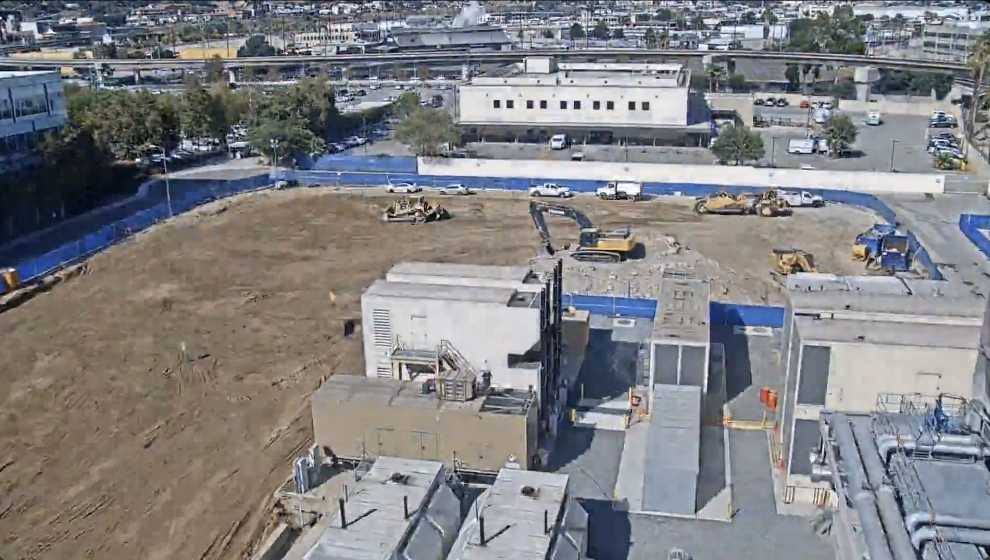
Key factors:
- Distance to existing high-voltage infrastructure: shorter distance means less new transmission line, lower cost, and a faster interconnection study.
- Utility queue position and capacity: some utilities have multi-year interconnection queues in high-demand corridors; checking queue status early can save a year or more of schedule.
- Voltage class match: connecting at a voltage the local utility already supports nearby avoids costly line upgrades.
- Redundancy requirements: 2N designs may require two separate substations or feeders from physically distinct points on the grid, which narrows viable sites considerably.
- Environmental and permitting exposure: substation yards, transmission corridors, and associated land clearing often trigger separate environmental review from the building permit itself.
FAQs
A data center substation is a dedicated electrical facility that steps down high-voltage power from the utility’s transmission or subtransmission grid to the medium voltage a data center uses for internal distribution, typically 13.2kV to 34.5kV.
Data center substation design is the process of engineering the electrical facility that steps utility power down to a usable voltage for a data center, including sizing transformers and switchgear, selecting a redundancy level (N, N+1, 2N, or 2N+1), planning protective relaying, and coordinating with the utility on interconnection voltage and capacity. The design has to be locked early, since it drives equipment lead times, site selection, and the facility’s overall reliability tier.
No. Facilities under roughly 1 MW are usually served through standard utility distribution service. Once a facility exceeds 10 MW, a dedicated substation is almost always required because standard distribution service can’t deliver that much power reliably.
Substation-class equipment, transformers and switchgear, typically carries 26- to 52-plus-week lead times. Once utility interconnection studies and approvals are added on top, total project timelines commonly stretch well past a year, and some constrained markets are seeing 3- to 5-year timelines for new service.
N+1 adds one spare component to cover a single failure in an otherwise single power path. 2N fully duplicates the power path, often with two separate utility feeds, so the facility can lose an entire path and stay online without interruption.
It depends on the market and the deal structure. Some operators fund and own the substation as a capital asset. Others negotiate for the utility (or a third party) to build and own it, converting the cost into a rate-based operating expense over time instead of an upfront capital outlay.
Protect Your Substation Investment From Day One
A data center substation build-out involves multiple contractors, utility crews, and high-voltage safety zones running for months, sometimes years, before the facility ever energizes. Jobsite documentation matters as much as design.
TrueLook’s jobsite cameras give data center owners, EPCs, and utility partners real-time visual verification of substation progress, subcontractor coordination, and safety compliance in restricted electrical work zones, without adding foot traffic to a live high-voltage site. That same visual record supports change order documentation if utility-side delays or scope changes affect your build timeline.
Ready to bring visibility to your next data center build? Get a quote →