Video surveillance has moved beyond high-risk environments to become a foundational layer across commercial, industrial, residential, and public-sector settings. The market is projected to grow from $95.01 billion in 2026 to $261.65 billion by 2034, a CAGR of 13.5%, according to Fortune Business Insights.
Here’s what that stat doesn’t tell you: most of that spend isn’t going toward more cameras. It’s going toward a different kind of camera.
It’s no longer just about recording an industrial site; it’s about actually watching it. Those are two different products, and a lot of facilities are still buying the first one when they need the second.
The old way vs. the new way
Old way — recorded, reviewed later:
- Footage sits on a server or SD card
- Someone finds out about an incident when they notice something’s missing or broken
- Video gets pulled after the fact, mostly useful for a police report or an insurance claim
- No one’s actually watching most feeds, most of the time
New way — live, monitored, verified:
- Off-hours coverage doesn’t depend on a person physically walking the site
- Motion in a defined zone triggers real-time review, not just a recording
- A trained monitoring professional (or AI system) confirms whether it’s a real threat
- Response (strobes, siren, talkdown, dispatch) happens while the incident is still in progress
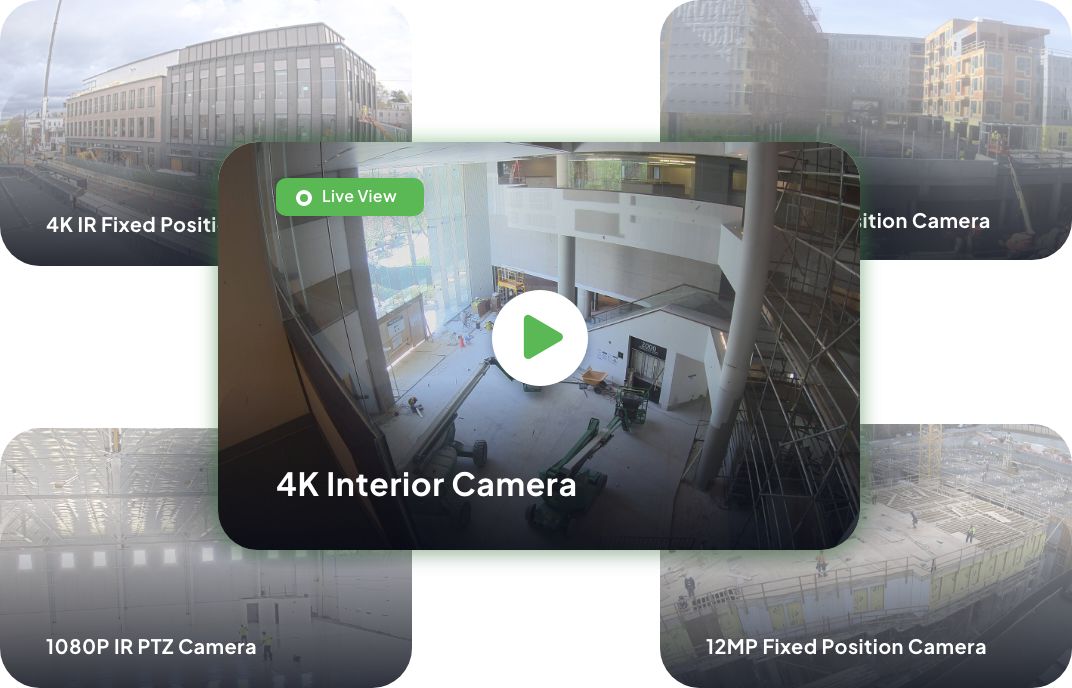
Industry analysis published in mid-2026 backs this up at the market level — the shift is away from reactive alarm response and toward AI-assisted, verified detection, mainly because reactive response got too slow and too expensive to run at scale.
What an industrial footprint actually looks like
A manufacturing plant, distribution center, or processing facility isn’t one building with a front door. It’s a yard full of staged materials, a loading dock running multiple shifts, exterior tanks and equipment, and a fence line longer than one guard can walk in an eight-hour shift.
Run the numbers on staffing, and the gap shows itself fast:
- Third shift runs a fraction of daytime headcount — fewer eyes on the same footprint
- Contractors and delivery drivers work on their own schedule, not the plant’s, which means unscheduled site access is routine, not rare
- Raw material and finished-goods yards sit exposed between the last forklift pass of one shift and the first of the next
- Perimeter, dock, and yard are often the last areas to get camera budget — despite being the areas with the least supervision
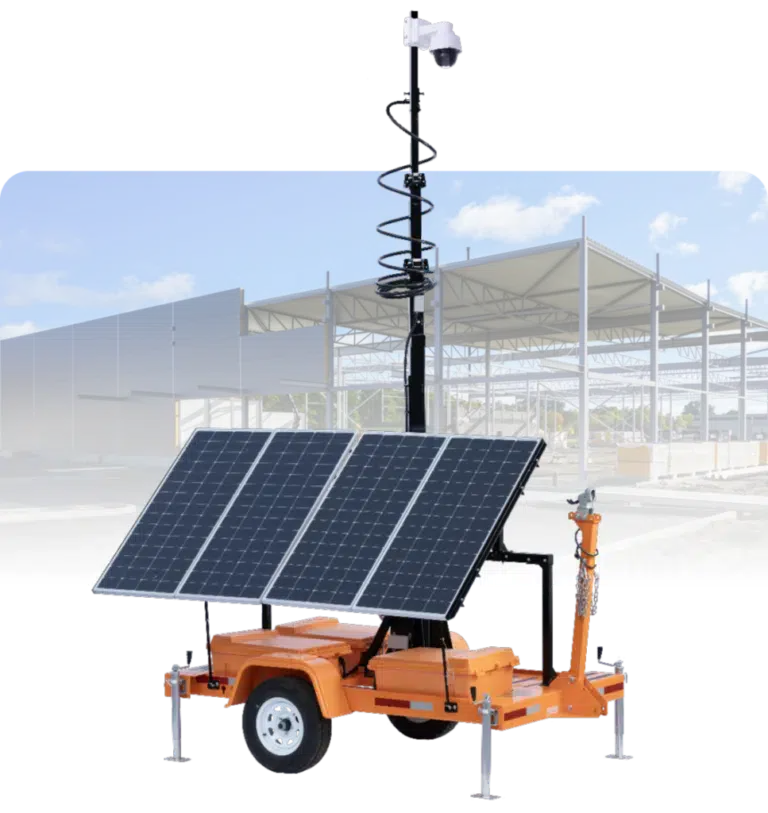
A lot of that open, no-fixed-infrastructure footprint is exactly what mobile, solar-powered camera trailers exist for; no trenching, no new power runs, deployable anywhere the yard extends.
The common thread
The common thread across all of it: nobody’s watching most of an industrial site all of the time, and that’s not a staffing failure; it’s math. You can’t put a person on every acre of yard, every tank farm, every dock, around the clock, and keep the budget intact.
The incidents that actually show up on industrial sites aren’t hypothetical:
- Raw material theft off a staging yard
- A contractor in an area they weren’t cleared for
- A forklift-versus-pedestrian near-miss with no one around to call it in
- A trailer at the dock that shouldn’t be there
None of those get stopped by a camera that’s only reviewed after someone reports something missing. They get caught on tape. Getting caught on tape isn’t the same as getting stopped.
Where TrueLook fits into this shift
We build cameras. We also pay close attention to what separates a camera that records from a system that actually watches, because that’s the gap our customers are asking us to close.
A few specifics:
- TrueDeter and TrueShield route motion in a monitored zone to TrueLook’s monitoring center, Noonlight, which is UL Listed and Five Diamond Certified and is in the top 5% of monitoring centers nationally
- A trained professional verifies the activity before anything escalates — strobes, siren, live talkdown, or a request for emergency dispatch
- TrueLook Cameras use AI-powered motion detection across custom-defined zones, with alert schedules tuned to when an area should actually be empty — second shift, weekends, holiday shutdowns
- One person can’t watch five feeds around the clock. Software watching all five and only pulling a person in when it matters is the actual fix, not more cameras pointed at more empty yard
That verification step — a real person confirming a real threat before anything triggers — is what separates live monitoring from a camera that just happens to catch something on video. See how TrueDeter and TrueShield handle live monitoring on high-risk sites →
Frequently Asked Questions
Recorded systems store footage for someone to pull later, usually after an incident’s already been reported. Live monitoring means motion gets reviewed and verified in real time, so a response — an alert, a siren, a dispatch call- happens while it’s still happening, not after.
No, and that’s the point. AI-based detection filters activity across every zone continuously, and only pulls in a trained monitoring professional when something’s actually flagged. That’s how a small team covers a footprint they could never watch manually.
Yes. Solar-powered, cellular-connected camera trailers cover yards, staging areas, and perimeter sections without running new electrical or data lines — the same setup used on sites with no existing infrastructure.
Yes. A standard alarm typically just triggers a notification. Professional video monitoring (the kind run through a UL Listed, Five Diamond Certified monitoring center) has a trained person visually verify the activity before anything escalates, which cuts down on false alarms and gets a real response moving faster when the threat is real.
Where this is headed
More industrial sites are going to keep buying cameras. The ones getting real value out of it are the ones shifting the question from “how many cameras do we have” to “is anything actually watching, live, when it counts?” That’s where the industry’s headed.
Interested in learning more about TrueLook’s live video monitoring solutions for critical infrastructure projects? Fill out a form to get a quote and talk to our experts.