AI cameras for construction are jobsite camera systems that combine high-definition video hardware with artificial intelligence software to automatically detect people, objects, vehicles, and safety events in real time. Unlike standard security cameras, they don’t just record. They analyze, classify, and alert, turning passive footage into actionable intelligence for general contractors, project managers, and superintendents.
Key Takeaways
- AI construction cameras, such as TrueLook, detect PPE compliance, unauthorized access, vehicle movement, and safety events automatically with no manual review required.
- They work on cellular (4G LTE), so no jobsite WiFi is needed.
- AI-powered cameras reduce liability, improve safety compliance, and generate automatic documentation that protects GCs during disputes.
- Leading systems integrate directly with Procore, Autodesk Construction Cloud, and other construction platforms.
- Setup is fast. Modern systems go live in under five minutes, with no IT team or installation crew required.
What Are AI Cameras for Construction?
AI cameras for construction are purpose-built monitoring systems designed for the unique demands of an active jobsite: dust, vibration, extreme temperatures, poor connectivity, and constant change. They combine ruggedized hardware with cloud-based AI to provide capabilities far beyond what a traditional CCTV setup can offer.
At the core, these systems capture continuous video or image streams and run them through machine learning models trained specifically on construction environments. That means the AI knows the difference between a worker wearing a hard hat and one who isn’t. It knows a delivery truck has pulled into the staging area at 2 a.m. when no one should be on site. It flags when a subcontractor enters a restricted zone without the right PPE.
For a general contractor managing multiple active projects, that level of automated intelligence means less time babysitting camera feeds and more time running the job.
How AI Cameras Work on a Construction Site
The intelligence in an AI camera system lives in the software layer sitting above the hardware. Here’s how the pipeline typically works:
- Capture — The camera continuously records video or captures still images at set intervals.
- Transmission — Footage is sent over cellular (4G LTE) or WiFi to a cloud-based platform.
- Analysis — AI models analyze the frames in real time, classifying objects, people, and events.
- Alerting — When a flagged event occurs (PPE violation, after-hours intrusion, perimeter breach), the system generates an alert and notifies the right stakeholders.
- Archiving — All footage is stored in the cloud for documentation, dispute resolution, and project closeout.
The best systems run this entire loop in near real time, so a superintendent can receive an alert on their phone within seconds of an event on the far side of the site.
No IT department, complex installation, or on-site server is needed. The entire stack is cloud-hosted and accessible from any browser or mobile device.
What Can AI Cameras Detect on a Construction Site?
Modern AI construction cameras can identify and classify a wide range of jobsite events. The most common detection capabilities include:
- PPE Compliance Detection – AI models trained on construction imagery can identify whether workers are wearing required personal protective equipment — hard hats, high-visibility vests, safety glasses, and gloves. When a violation is detected, the system logs it automatically and can send alerts to the safety manager or superintendent. This is one of the most valuable use cases, particularly for GCs with OSHA compliance obligations and insurance considerations.
- Perimeter and Intrusion Detection – After-hours intrusions are a constant problem on construction sites. Equipment theft and material theft cost the industry billions annually. AI cameras can distinguish between normal movement (a gust of wind moving a tarp) and actual human intrusion, dramatically reducing false alarms while catching the events that matter.
- Vehicle and Equipment Recognition AI – can classify vehicle types entering and exiting a jobsite — distinguishing between delivery trucks, heavy equipment, and personal vehicles. This supports gate management, schedule tracking, and helps PMs verify that deliveries actually happened when subs say they did.
- Object and Material Detection – Some AI systems can identify specific materials or equipment left in unauthorized areas, flag open trenches near walkways, or detect when safety netting has been removed. The use cases grow as AI training data improves.
- Weather and Environmental Events – Paired with environmental sensors, AI camera systems can trigger alerts when rain, wind, or temperature conditions hit thresholds that affect scheduling or safety, which gives project managers a real-time record of weather-related delays.

How AI Cameras Improve Jobsite Safety
Safety is where AI cameras have the most immediate and measurable impact. Here’s how they move the needle for construction safety managers and superintendents:
- Proactive vs. Reactive Safety – Traditional safety programs rely on in-person walkthroughs and incident reports after something goes wrong. AI cameras shift the model to proactive monitoring by flagging violations before they become incidents. When workers know the site is being monitored continuously, compliance rates improve even without a superintendent physically present.
- Documented Compliance for OSHA and Liability – When an incident does occur, timestamped AI-flagged alerts and archived footage create a verifiable record of site conditions. This protects GCs during OSHA investigations, insurance claims, and legal disputes. It’s the difference between “we think workers were wearing PPE” and “here’s the timestamped footage from that morning.”
- Remote Safety Oversight Across Multiple Sites – For project executives and VPs of construction managing multiple active projects simultaneously, AI cameras make it possible to stay connected to safety conditions site-wide from a single dashboard without traveling to each site. Spot a concern, pull up the live feed, and address it in real time.
How AI Cameras Help With Jobsite Documentation
Beyond safety, AI cameras serve as the most consistent documentation tool on any jobsite. Here’s what gets captured automatically, without anyone having to remember to log it:
- Time-stamped photo archives that create a visual record of construction progress day by day
- Automated time-lapse videos built from the photo archive showing the full project arc from groundbreaking to substantial completion
- After-hours footage that captures what happens when the crew is gone (for better or worse)
- Delivery and vehicle logs that can be cross-referenced against daily reports
This documentation becomes particularly valuable at project closeout. Many GCs now include professional time-lapse videos in their closeout packages as a value-add for owners. A partner who has been using TrueLook Construction Cameras since 2014 now treats time-lapses as a standard closeout deliverable, something owners and stakeholders genuinely look forward to receiving.
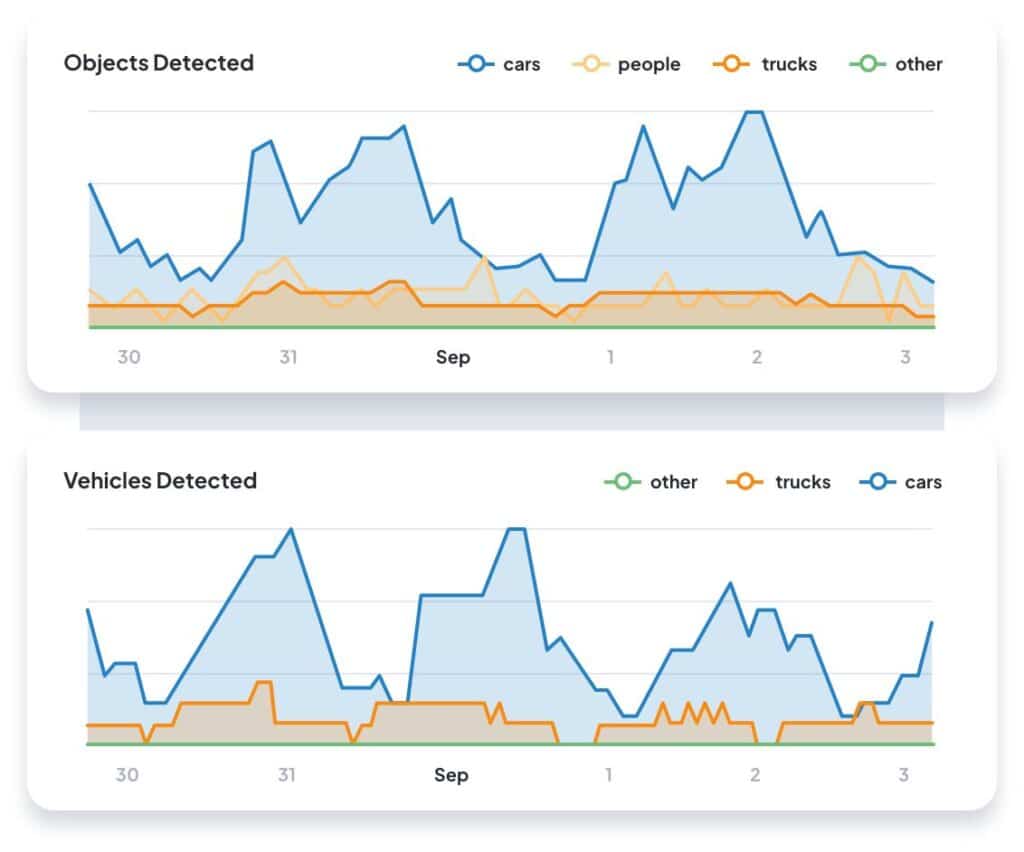
When disputes arise over schedule delays, differing site conditions, or subcontractor work quality having a documented visual record from an AI camera system can resolve them quickly and cheaply, without litigation.
Do AI Construction Cameras Work Without WiFi?
Yes, and this is a critical feature for most commercial construction sites. The majority of sites don’t have reliable broadband internet during active construction, especially in the early phases before a building is enclosed.
The best AI construction camera systems include built-in 4G LTE cellular modems, which means the camera connects to the cloud over the cellular network, the same way a smartphone does. No WiFi router, no hardwired Ethernet run, no IT coordination. The camera goes up, powers on, and it’s live.
TrueLook cameras ship with a built-in 4G LTE modem standard. Customers consistently report going live in under five minutes — plug-and-play right out of the box.
What to Look for in an AI Construction Camera System
Not all construction cameras are built the same. Here’s what to evaluate when comparing systems:
AI Capabilities
- PPE detection (hard hats, vests, gloves)
- Intrusion and perimeter detection
- Vehicle and equipment classification
- Smart motion classification (to reduce false alarms)
Connectivity
- Built-in 4G LTE modem (avoid systems that require jobsite WiFi)
- Cloud-based platform with browser access — no plugins, no VPN
Hardware Durability
- Weather-resistant housing rated for outdoor construction environments
- Night vision or low-light capability for after-hours monitoring
Software and Integrations
- Integration with Procore, Autodesk Construction Cloud, or other platforms in your tech stack
- Multi-site dashboard for portfolio-level visibility
- Role-based access so owners, subs, and stakeholders see only what they need
Cloud Storage and Archiving
- Long-term retention for documentation and dispute resolution (look for at least 1-year archive, with options for longer)
Support
- US-based support team with real response times
How TrueLook Fits Into the AI Camera Picture
TrueLook Construction Cameras delivers enterprise-grade jobsite visibility with AI-powered features built for real GC workflows. The platform includes PPE detection, smart motion classification, vehicle and object recognition, and 24/7 security monitoring — all running on cameras with built-in 4G LTE and a plug-and-play setup.
On the software side, TrueLook’s platform connects directly with Procore and Autodesk Construction Cloud, so camera data lives alongside the rest of a project’s documentation. The multi-site dashboard lets PMs and project executives monitor all active jobsites from one place, and the Sharing Center makes it easy to give owners and stakeholders a live feed link or time-lapse without exporting files manually.
TrueLook’s US-based support team is consistently praised for fast response times — whether it’s initial setup guidance, equipment replacements, or questions about integrations. For GCs who’ve been burned by vendors that disappear after the sale, that matters.
Frequently Asked Questions
AI cameras for construction are jobsite monitoring systems that combine high-definition camera hardware with artificial intelligence software to automatically detect and classify people, equipment, vehicles, and safety events. They provide real-time alerts, automated documentation, and continuous surveillance without requiring manual review of footage. Unlike standard security cameras, they analyze what they see and take action.
Yes. AI cameras trained on construction imagery can identify whether workers are wearing required PPE — including hard hats, high-visibility vests, safety glasses, and gloves. When a violation is detected, the system automatically logs it and can send an alert to the safety manager or superintendent. This enables proactive safety management without requiring a physical walkthrough.
The best systems do. Leading AI construction cameras include built-in 4G LTE modems that connect directly to the cellular network, eliminating the need for jobsite WiFi or hardwired internet. This is essential for early-phase construction when broadband isn’t available, or for remote sites where connectivity is limited.
AI cameras automatically generate timestamped photo archives, time-lapse videos, and after-hours footage logs that create a continuous visual record of jobsite progress. This documentation supports dispute resolution, OSHA compliance, daily reporting, and project closeout deliverables like time-lapse videos for owners.
Modern AI construction cameras detect PPE compliance violations, after-hours intrusions, vehicle and equipment movement, perimeter breaches, and environmental conditions. Some systems also identify materials or objects left in unauthorized areas, open excavations near walkways, and safety netting removal. The specific detection capabilities vary by system and AI training data.
AI cameras use smart motion classification to distinguish between normal site activity (wind, animals, shadows) and genuine intrusion events. When a real event is detected, the system sends an alert immediately. TrueLook’s after hours security monitoring has helped catch criminals on active jobsites — a meaningful deterrent for equipment and material theft.
The most useful integrations for commercial GCs are Procore and Autodesk Construction Cloud, which connect camera data to project documentation. Other valuable integrations include Raken (daily reporting) and DroneDeploy (aerial and ground-level site mapping). Native integrations mean less manual exporting and a more complete project record in the systems your team already uses.
With modern plug-and-play systems, setup is measured in minutes, not hours. A 4G LTE-enabled camera typically goes live in under 30 minutes — no IT team, no site WiFi, no complex configuration. The camera powers on, connects to the cellular network, and starts streaming to the cloud platform.
Bottom Line
AI cameras are no longer a nice-to-have for commercial construction. They’re a practical tool for GCs who want better safety compliance, automated documentation, and real-time jobsite visibility without being physically present on every site.
The right system combines durable hardware, intelligent detection, and a platform that fits into the workflows your team already uses. TrueLook Construction Cameras delivers all of that, with US-based support and direct integrations with the platforms that run modern construction. If you’re ready to give your team eyes on every site, contact TrueLook for a quote.