For the last two years, every conversation about scaling AI came back to chips. Who has GPUs, who’s waiting on them, who locked up allocation first. That conversation is changing. The harder question now isn’t which processor a company can get. It’s whether there’s enough power to run it.
More than 2,000 gigawatts of proposed power generation and storage capacity are sitting in U.S. grid interconnection queues, according to Lawrence Berkeley National Laboratory. That’s more capacity waiting for approval than the entire installed base of U.S. power plants. Getting a new large-scale connection approved and built out in a major market routinely takes years, not months. A GC can pour a slab and top out a structure faster than a utility can clear a substation upgrade.
That mismatch is reshaping how AI data centers get built and who gets to build them.
Key takeaways
- Clear, timestamped documentation of on-site progress matters more on these projects, since it’s one of the few parts of the schedule a contractor fully controls.
- The binding constraint on new AI infrastructure has shifted from chip supply to grid interconnection and power delivery.
- Data center construction spending is growing much faster than the rest of the private nonresidential market, and contractors expect that to continue through 2026.
- Power buildouts now often run in parallel with site and shell construction instead of ahead of it, which rewrites the usual project sequence and shifts schedule risk upstream of the jobsite.
The bottleneck moved from the chip to the substation
Training a large model is a bounded job. It runs for a defined stretch and then it’s done. Running that model for millions of users afterward is not bounded. It’s continuous draw, every hour, every day, for the life of the facility. That shift from training to inference is part of why data center power demand keeps climbing even as chip supply loosens up.
A data center campus can have its equipment order fully placed and still sit dark for a year or more, waiting on a grid connection. The queue for that connection is a queue. Capital doesn’t move it faster. Neither does urgency. It moves at the pace of utility studies, transformer procurement, and substation construction, all of which have their own separate lead times.
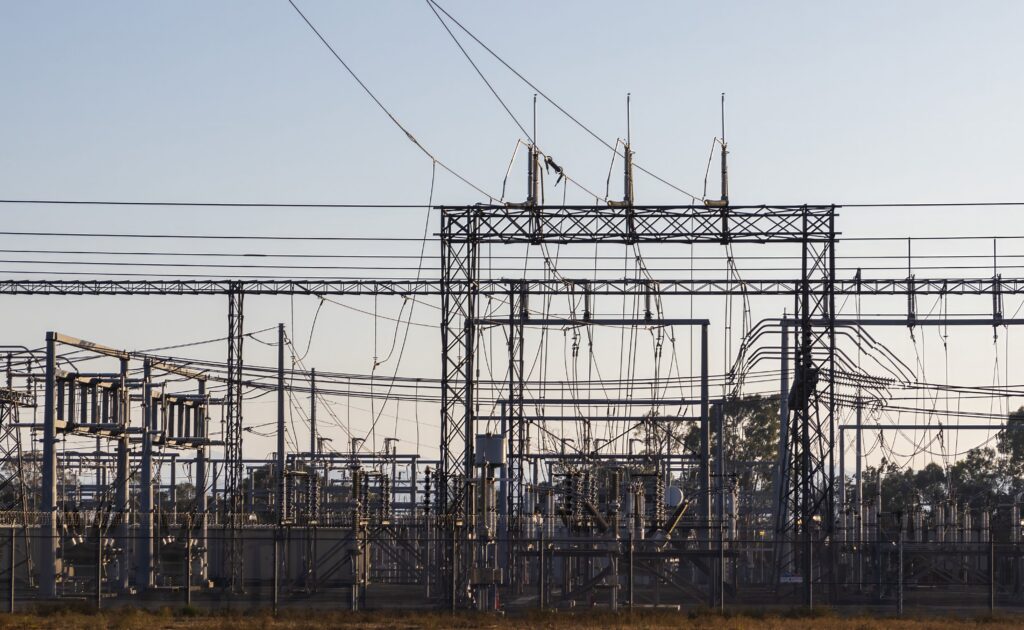
That changes the sequencing on these jobs. The power infrastructure, the substation, the transformers, the switchgear, has to be designed and often built before the building itself is more than a foundation. On a conventional commercial project, power is one of the last systems to come online. On a data center campus, it’s frequently the long pole holding up the whole schedule.
Contractors are already feeling the shift
This isn’t an abstract industry trend. It shows up directly in construction spending data. Data center construction spending reached a seasonally adjusted annual rate of $59.3 billion as of May 2026, up 23 percent from a year earlier, and now accounts for roughly 8 percent of all private nonresidential construction spending in the country, according to the Associated General Contractors of America. Most other private nonresidential categories haven’t kept that pace. Broader private construction spending has been flat to declining for months, with data centers cited as one of the few segments still growing, according to Construction Dive’s reporting on Census Bureau figures.
More than half of contractors surveyed by AGC in 2026 expect the dollar value of data center work available to them this year to exceed what they saw in 2025. That’s a real backlog of work for GCs, electrical subcontractors, and the trades that support them, even while the rest of the commercial market cools.
The catch is that this growth is arriving alongside the power constraint, not after it gets solved. Contractors are being asked to build faster on projects where the utility side of the equation is the part nobody on the jobsite controls.
What this means for how these projects get run
A few things follow from a bottleneck that sits outside the general contractor’s control:
- Sequencing gets rewritten. Site work, foundations, and shell construction now often proceed in parallel with a multi-year utility interconnection process instead of after it. That means more moving pieces running at once, on a site that has to stay coordinated across power, civil, and building trades that are usually sequenced one after another.
- Schedule risk shifts upstream. A delay in an interconnection agreement or a transformer order can push a completion date by months, independent of anything happening on site. Owners and lenders want to see that the on-site work is staying on pace even when the off-site power timeline slips.
- Documentation becomes leverage. On a job where the power side is a multi-year, multi-party process involving a utility, an ISO, and sometimes a separate power developer, having a clear, timestamped visual record of what happened on site, and when, matters more than usual. It’s the difference between a schedule dispute you can resolve with a look at the record and one that turns into a drawn-out argument about whose delay caused whose delay.
Where visibility fits into a power-constrained build
Data center campuses are large, multi-phase, multi-contractor sites, often running for two to three years with dozens of subcontractors moving through overlapping scopes. A jobsite intelligence platform that verifies milestones as they happen, concrete pours, structural steel, equipment sets, gives project teams a documented record they can point to when a schedule question comes up. On a project where the power buildout is already the thing everyone is watching most closely, having a clean answer for what happened on the construction side removes one more variable from the conversation.
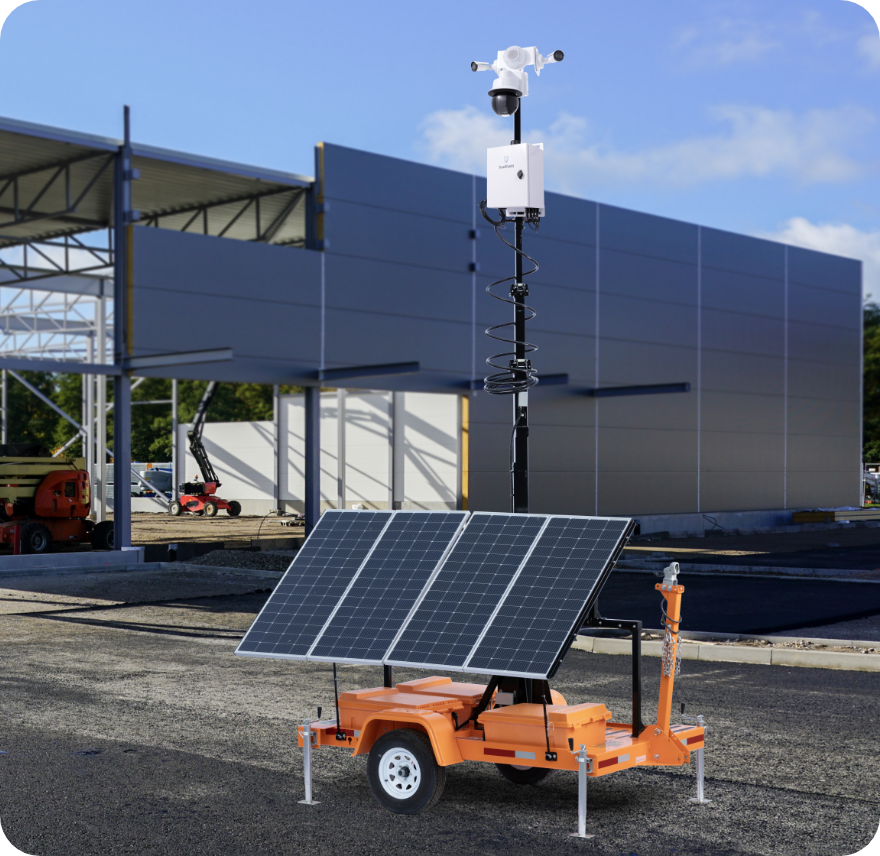
It also matters for the parties who aren’t walking the site. Owners, investors, and utility partners on these projects often need visibility into progress without being physically present, and multi-site oversight tools let a project executive check status across several campuses from one dashboard instead of driving between them. AI-driven analytics that flag equipment activity and crew presence can also help confirm that a site is progressing on the civil and structural side while everyone waits on the utility.
Frequently Asked Questions
Chip supply has loosened up over the past year, while grid interconnection has not. Getting a large new load connected to the grid in a major market now takes years of utility studies, equipment procurement, and construction, a timeline that doesn’t shorten with more capital or urgency.
It varies by region and utility, but multi-year timelines are common in congested markets, driven by interconnection studies, permitting, and long lead times on equipment like transformers and switchgear.
Yes. Data center construction spending has been growing much faster than most other private nonresidential categories, even as overall private construction spending has been flat or declining.
Power infrastructure now often has to be designed and built in parallel with, or ahead of, the building itself, rather than as one of the last systems installed. That changes sequencing, staffing, and schedule risk on the project.
The takeaway
The constraint on AI infrastructure has moved off the chip and onto the grid. That’s a change in kind, not just degree. A GPU shortage is a supply problem that eventually gets solved by more fabs and more allocation. A grid interconnection queue is a physical, regulatory, and engineering problem that doesn’t respond to the same fixes. For contractors, that means more data center work is coming, but it’s coming with a build sequence and a risk profile that looks different from a standard commercial job.
If your team is running a large-scale build where the power timeline and the construction timeline don’t move at the same speed, a multi-site jobsite camera system is a straightforward way to keep a documented, always-current record of the part of the project you do control.