Jobsite intelligence is the use of cameras, sensors, and AI-powered analytics to give construction teams real visibility into what is actually happening on a site: crew activity, equipment utilization, safety compliance, and schedule progress. It is different from a standard jobsite camera because it does not just record. It analyzes, alerts, and surfaces the information that matters without anyone having to manually scrub hours of footage.
Why Is Jobsite Intelligence Becoming a Standard Practice for GCs?
If you walk onto any major commercial jobsite today, you’ll likely see cameras mounted to trailers, cranes, or poles. But there is a massive shift happening right now in how general contractors use them.
We are moving away from passive recording and entering the era of jobsite intelligence.
Jobsite intelligence uses connected cameras, sensors, and AI-powered analytics to give construction teams real-time and historical visibility into everything happening on a project. It tracks crew activity, equipment, safety compliance, and schedule progress.
The Core Distinction: Active Management vs. Passive Recording
Simply put, a traditional jobsite camera just records footage. A jobsite intelligence platform answers questions, flags anomalies, and delivers operational insights. Instead of forcing a project manager or superintendent to manually scrub through hours of video to find a specific event, the system handles the heavy lifting automatically.
Why Jobsite Intelligence Is Becoming a Standard Practice for GCs
Over the past five years, jobsite intelligence has evolved from a high-tech luxury to a baseline expectation on mid-to-large commercial projects.
In fact, construction has historically been one of the least data-rich industries in the U.S. economy. At the same time, project complexity is skyrocketing. GCs are constantly balancing multi-trade coordination, compressed schedules, and escalating labor costs.
According to the Associated General Contractors of America (AGC), labor productivity in commercial construction has lagged behind other industries for decades. GCs are adopting jobsite intelligence to reverse this trend, giving superintendents and project managers the visibility they need to catch and correct inefficiencies on the fly. Contractors who deploy these systems see measurable improvements in three main areas:
- Schedule verification: Instant proof of when work happened.
- Safety documentation: Continuous monitoring for risk management.
- Client communication: Transparent updates that build trust.
What Drives GCs to Implement Jobsite Intelligence?
The most common triggers for putting these platforms to work include:
- Subcontractor schedule disputes: When a sub claims work was completed on time or delayed by another trade, you have a timestamped, visual record.
- Owner reporting requirements: Developers and institutional owners increasingly demand documented site activity before approving draw requests and verifying milestones.
- Safety incident documentation: OSHA 29 CFR 1926 requires comprehensive recordkeeping. Jobsite cameras provide objective documentation for incident investigations.
- Remote project oversight: Executives, owners, and investors who can’t make it to the site every week still get reliable, current visibility into project status.
- Marketing time-lapses: High-quality project time-lapses are now a standard deliverable on high-profile commercial, institutional, and infrastructure projects.

How Does Jobsite Intelligence Work?
A functional jobsite intelligence platform relies on three interconnected layers:
Hardware Layer
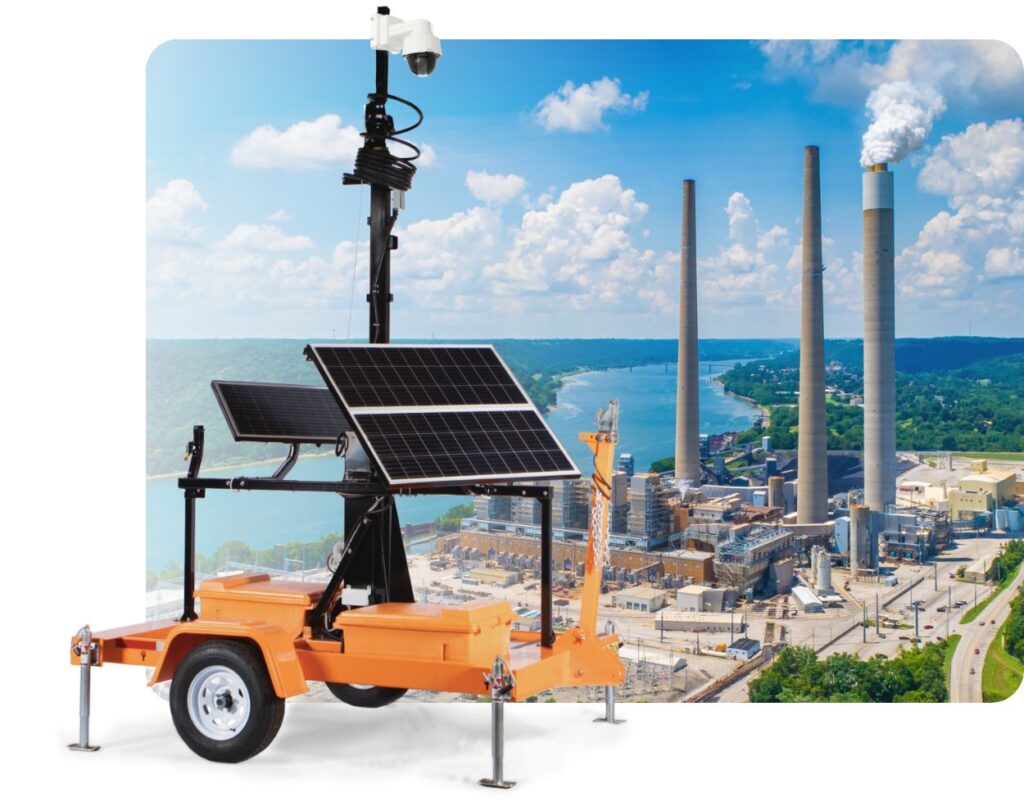
Cameras used for jobsite intelligence differ from consumer-grade security cameras in several important ways. Construction environments are harsh. Equipment vibration, extreme temperature swings, airborne dust, and rain are standard conditions. Cameras deployed in these environments require IP65 or IP66 ratings at minimum for dust and water resistance. For outdoor deployments in exposed locations, IP67 or IP68 ratings are recommended.
Pan-tilt-zoom (PTZ) cameras give superintendents the ability to inspect specific areas of a large site remotely, reducing the need for physical walk-throughs that consume 1–2 hours of a superintendent’s day on large projects.
Connectivity and Cloud Layer
Site cameras transmit footage and data to cloud-based platforms where it is stored, analyzed, and made accessible to authorized users (project managers, owners, and executives) from any device. As a result, this eliminates the gap between what’s happening on a job and what leadership knows about it.
AI and Analytics Layer
This is where jobsite intelligence truly separates from basic jobsite cameras. The AI layer analyzes footage to detect:
- Worker presence and activity patterns: how many people are active on site and when
- Safety compliance: hard hat and high-visibility vest detection, typically validated against OSHA PPE requirements under 29 CFR 1926.95–1926.102
- Equipment utilization: whether cranes, lifts, and heavy equipment are active or idle
- Schedule milestone verification: confirming that specific scopes (concrete pours, steel erection, roofing) occurred within the documented project timeline
What’s the Difference Between Jobsite Intelligence and a Jobsite Camera?
At its core, a jobsite camera captures footage. Jobsite intelligence extracts meaning from that footage. The distinction matters because the volume of raw footage generated on a commercial project makes manual review impractical, even with a single camera. A 12-hour construction day generates 12 hours of footage per camera. A site with 6 cameras generates 72 hours of footage daily. As a result, no project team has the bandwidth to watch that footage manually.
Jobsite intelligence platforms solve this with automated analysis. Instead of reviewing footage, the project team receives alerts, reports, and dashboards that surface what matters: an unauthorized person on-site after hours, a safety non-compliance event, crew counts below the level required to meet a schedule milestone, or a time-lapse that confirms a concrete pour occurred on the day it was scheduled.
| Jobsite Camera | Jobsite Intelligence Platform | |
|---|---|---|
| Primary function | Record and store footage | Analyze and surface actionable data |
| User interaction | Manual review required | Automated alerts, dashboards, reports |
| Safety monitoring | Passive | Active PPE and zone detection |
| Schedule support | Indirect (visual reference) | Direct (milestone tracking, crew verification) |
| Owner reporting | Footage clips | Structured reports and time-lapses |
| Remote access | Basic live view | Full platform access with analytics |
What Can Jobsite Intelligence Actually Do? Core Capabilities
Real-Time Site Visibility
Project managers and superintendents can view live camera feeds from any device: phone, tablet, or desktop. Live remote access to jobsite cameras reduces the need for in-person site visits by owners, lenders, and executives, which can save 4–8 hours per week on large multi-site projects.
Time-Lapse Documentation
Premium time-lapse is one of the highest-value deliverables in jobsite intelligence. Automated time-lapse systems compile thousands of still frames into a compressed video record of the project from ground-break to certificate of occupancy. This documentation serves multiple purposes simultaneously:
- Legal protection: a visual record of when work was performed and what conditions existed
- Owner communication: project stakeholders receive a compelling, easy-to-understand progress update without requiring site visits
- Marketing: completed project time-lapses are now standard in GC qualification packages and RFP submissions
After-Hours Security Monitoring
Jobsite theft costs the U.S. construction industry an estimated $1 billion annually, according to the National Equipment Register and National Insurance Crime Bureau. Jobsite intelligence platforms with motion detection and after-hours alerting allow security teams or on-call personnel to respond to potential theft or vandalism events in real time rather than discovering them the following morning.
Safety Documentation and PPE Detection
AI-powered PPE detection identifies workers on camera who are not wearing required hard hats or high-visibility vests. While this doesn’t replace a dedicated safety program, it provides a scalable way to flag compliance gaps on large sites where no safety officer can visually monitor every area simultaneously.
Progress Documentation for Draw Requests and Disputes
Owners, lenders, and construction managers use jobsite intelligence documentation to verify progress claims for payment draw requests. Timestamped visual documentation of completed scopes reduces friction and risk in monthly pay application reviews.
How Is Jobsite Intelligence Used Across Different Project Types?
Commercial Office and Mixed-Use
GCs managing Class A office, mixed-use, or urban infill projects use jobsite intelligence primarily for owner reporting, schedule documentation, and time-lapse deliverables. Tight urban sites with limited staging area benefit especially from remote visibility, which reduces the frequency of in-person owner and design team visits.
Industrial and Warehouse Construction
Tilt-up and pre-engineered metal building projects often span large footprints (200,000 to 1,000,000+ SF) where manual site walks are time-consuming and miss activity happening simultaneously across the site. Wide-angle and panoramic cameras give industrial GCs complete site coverage without multiple camera installations, enabling crew tracking and equipment utilization monitoring across the full footprint.
Infrastructure and Vertical Construction
Bridge, roadway, and vertical construction projects benefit from jobsite intelligence as a tool for both safety documentation and public accountability. Institutional owners (municipalities, universities, hospitals, transit authorities) increasingly require structured progress reporting that jobsite intelligence platforms deliver automatically.
Data Center Construction
Data center projects operate under heightened security requirements. Controlled site access, restricted photography policies, and 24/7 operational demands make purpose-built jobsite intelligence cameras with role-based access controls essential on hyperscale and colocation data center builds. Standard consumer security cameras are insufficient for these environments.

What Does Jobsite Intelligence Cost?
Jobsite intelligence platforms typically range from $300 to $1,500 per month per camera position, depending on hardware specifications, AI feature set, and contract length. Pricing structures vary by provider: some charge per camera, others per project, and others on an annual platform license basis.
Cost factors that influence pricing include:
- Camera hardware tier: fixed vs. PTZ, standard vs. panoramic
- Connectivity method: cellular vs. site WiFi vs. wired ethernet affects both hardware and monthly data costs
- AI features included: basic live view and time-lapse vs. full PPE detection, activity analytics, and safety reporting
- Storage duration: how long footage is retained in cloud storage (30 days vs. full project duration)
- Number of camera positions: multi-position projects typically benefit from volume pricing
For example, a typical commercial project with 3–6 camera positions and full AI analytics, GCs should budget $1,500–$6,000/month for a complete jobsite intelligence deployment. On a $10M+ commercial project, this cost represents less than 0.1% of total project value, and the documentation value alone often justifies it in the event of a single dispute or claim.
Frequently Asked Questions About Jobsite Intelligence
Jobsite intelligence is the integration of cameras, sensors, and AI-powered analytics on a construction site to give project teams real-time visibility and data-driven insights into site activity, safety compliance, equipment utilization, and schedule progress. It goes beyond basic security cameras by actively analyzing footage and delivering structured reports rather than requiring manual video review.
A security camera records footage for later review. A jobsite intelligence platform processes that footage automatically, generating alerts, dashboards, and time-lapse documentation without manual intervention. Jobsite intelligence is purpose-built for construction workflows — including progress documentation, owner reporting, and schedule verification — while security cameras are designed for after-the-fact incident review.
Common AI capabilities include PPE detection (hard hats, safety vests), worker presence and activity tracking, after-hours motion alerts, automated time-lapse generation, and milestone verification reporting. More advanced platforms are beginning to add equipment utilization tracking and predictive schedule risk signals.
Projects over $5M in value, projects with multiple remote stakeholders, or projects where schedule disputes or safety documentation are a known risk are the strongest candidates for jobsite intelligence deployment. Smaller tenant improvement projects in occupied buildings may find the ROI less compelling, though even in these cases time-lapse documentation and owner-facing progress visibility add measurable value.
Most jobsite intelligence platforms can be installed and operational within 24–48 hours of hardware delivery. Camera installation on a standard commercial site typically takes 2–4 hours for a licensed technician. Cloud configuration and user access setup is usually completed same-day. Some providers offer self-install hardware that eliminates the need for a technician entirely.
Virtually all modern jobsite intelligence platforms store footage in cloud infrastructure, not on local on-site hardware. In addition, cloud storage eliminates the risk of footage loss from hardware theft or failure — common risks on active construction sites — and enables remote access by all authorized project stakeholders without VPN or on-site server configuration.
The Bottom Line: What General Contractors Need to Know About Jobsite Intelligence
- Jobsite intelligence transforms passive cameras into active project management tools by layering AI analytics on top of live and recorded footage
- The three highest-ROI applications for GCs are time-lapse documentation, after-hours security monitoring, and owner progress reporting — all of which reduce project risk and improve client relationships
- Expect to budget $300–$1,500 per camera position per month for a full-featured jobsite intelligence deployment with AI analytics and cloud storage
- PPE detection and safety documentation capabilities are increasingly relevant to OSHA compliance programs under 29 CFR 1926, providing a scalable supplement to on-site safety officer coverage
- Jobsite intelligence is now a standard capability expectation on commercial projects over $5M — GCs who haven’t adopted it are increasingly at a disadvantage in competitive bid environments where owners and CMs expect structured digital documentation
- TrueLook’s jobsite intelligence platform combines purpose-built construction cameras with AI-powered site analytics, automated time-lapse, and remote monitoring — purpose-designed for the specific conditions and workflows of commercial construction