Key Takeaways
- Construction safety has a direct impact on worker well-being, project efficiency, and your company’s bottom line.
- The most common hazards, such as falls, struck-by injuries, and electrocution, are preventable with proper protocols.
- Modern technology, like AI-powered PPE detection and construction cameras, helps enforce safety standards 24/7.
- Building a safety-first culture requires ongoing training, leadership commitment, and crew involvement.
Construction remains one of the most dangerous industries in the world, with workers facing life-threatening risks daily. Beyond the devastating human cost, unsafe jobsites drain resources through injuries, project delays, and skyrocketing insurance premiums.
Today, we discuss the essential safety measures every construction professional should know, explore how technology strengthens jobsite safety, and provide practical steps your company can take. Let’s review what makes a jobsite safer and how you can protect your workforce from the start.
Why Construction Safety Matters More Than Ever
The U.S. Bureau of Labor Statistics reports that one in five worker deaths in the United States occurs in construction. These deaths represent real people, families, and communities, forever affected by preventable tragedies.

Unsafe jobsites create a ripple effect throughout your business. Worker morale plummets, insurance rates climb, and projects face costly delays while you deal with investigations and compliance issues.
Legal liability is intense as regulatory agencies increase scrutiny of construction safety practices. Courts are holding companies accountable not just for obvious violations, but for failing to take reasonable preventive measures.
Top Safety Hazards on Construction Sites
Construction sites present numerous dangers that can result in serious injuries or death. Below, we explore the most common hazards and what causes them.
Falls from Height
Falls remain the leading cause of construction fatalities, accounting for over one-third of all deaths in the industry. Falls typically occur due to inadequate fall protection systems, unstable working surfaces, or gaps in guardrails and safety nets.
Falls can leave workers with permanent disabilities and create psychological trauma that affects their ability to return to work. Companies face workers’ compensation claims, OSHA fines, and potential criminal charges if gross negligence is proven.
Struck-by Injuries
Workers get struck by falling objects, swinging equipment, or moving vehicles daily on construction sites. These incidents happen when overhead work isn’t properly secured, equipment operators lack clear visibility, or traffic control measures are insufficient.
A single struck-by incident can result in traumatic brain injuries, broken bones, or death. Projects often shut down during investigations, resulting in schedule delays and financial losses that ripple through the entire construction timeline.
Electrocution
Contact with power lines and faulty electrical equipment claims the lives of hundreds of construction workers annually. Electrocutions occur when crews work too close to overhead power lines, use damaged tools, or fail to follow lockout/tagout procedures.
Electrical injuries cause severe burns, cardiac arrest, and neurological damage that may not be immediately apparent. Survivors often face months of recovery and permanent physical limitations that end their construction careers.
Caught-in or Between Hazards
Workers get caught in machinery, compressed between equipment and fixed objects, or buried in trench collapses. These accidents happen during excavation work without proper shoring, when workers remove machine guards, or during equipment maintenance without lockout procedures.
Caught-in incidents are among the most gruesome construction accidents, often resulting in amputations or crushing injuries. Rescue operations are complex and time-sensitive, with survival rates dropping dramatically as minutes pass.
Heat- and Weather-Related Illnesses
Extreme temperatures, especially heat, send thousands of construction workers to emergency rooms each year. Heat exhaustion and heat stroke develop when crews work long hours in direct sunlight without adequate hydration breaks or when supervisors push through extreme weather to meet deadlines.
Weather-related illnesses can quickly become life-threatening, particularly for older workers or those with underlying health conditions. Lost productivity from heat illness costs the construction industry billions annually, in addition to the human suffering.
Improper PPE Usage
Personal protective equipment only works when workers wear it correctly and consistently. PPE failures occur when equipment doesn’t fit properly, crews don’t have proper training, or workers remove protection because it’s uncomfortable or slows them down.
A missing hard hat or safety harness creates vulnerability during the exact moment an accident occurs. What seems like a minor shortcut can mean the difference between walking away unharmed and suffering a catastrophic injury.
Equipment Operation Errors
Heavy machinery operated by untrained or fatigued workers poses a danger to everyone on site. Operator errors occur when workers lack proper certification, teams fail to maintain equipment according to manufacturer specifications, or operators rush to complete tasks.
Equipment accidents often involve multiple victims and cause extensive property damage, in addition to human injuries. A single crane collapse or equipment rollover can devastate an entire project and damage a company’s reputation.
Core Construction Site Safety Measures
Implement these foundational protocols to create a safer jobsite:
- Comprehensive site safety plans: Develop written safety plans specific to each project that identify hazards and outline prevention strategies.
- Daily toolbox talks and safety briefings: Conduct short, focused safety discussions before shifts to address immediate concerns and reinforce safe practices.
- Proper use and enforcement of PPE: Require the use of appropriate personal protective equipment for all workers and enforce compliance consistently.
- Fall protection systems: Install guardrails, safety nets, and personal fall arrest systems wherever workers face fall hazards.
- Clearly marked hazard zones and signage: Use visible barriers and warning signs to identify dangerous areas and restricted zones.
- Regular safety audits and walkthroughs: Schedule frequent inspections to identify new hazards before they cause injuries.
- Certified equipment operation only: Verify that all equipment operators hold current certifications and restrict access to qualified personnel.
- First aid stations and emergency response plans: Establish accessible medical stations and train crews on emergency procedures, including evacuation routes.
- Incident reporting systems: Create clear procedures for reporting near-misses and injuries to identify patterns and prevent future accidents.
- Weather monitoring protocols: Track conditions and establish thresholds for suspending work during extreme heat, cold, or storms.
How to Strengthen Safety Through Technology
Modern technology enables construction teams to identify safety issues before they lead to injuries. Digital tools provide visibility and documentation that manual walkthroughs can’t match.
- Wearable devices for heat and movement monitoring: Track worker vitals and alert supervisors when someone shows signs of heat stress or exhaustion. These devices help prevent medical emergencies by catching problems early.
- Digital incident reporting systems: Make it easier for crews to report safety concerns and near-misses from their phones. Quick reporting leads to faster responses and helps identify patterns across multiple jobsites.
- Construction cameras with time-lapse and live viewing technology: Document jobsite activity continuously, creating a visual record of safety compliance and potential hazards. Time-lapse footage helps teams review incidents, identify unsafe practices, and provide evidence for insurance claims or investigations.
- AI-powered PPE detection systems: Automatically analyze images to verify workers are wearing required safety equipment. TrueLook’s TrueAI PPE technology checks for hard hats, safety vests, and other protective gear by analyzing images every minute—catching compliance issues that supervisors might miss during periodic walkthroughs.
- Mobile safety apps for field teams: Put safety checklists, equipment manuals, and emergency contacts in workers’ pockets. Instant access to information helps crews make safer decisions in the moment.
- 24/7 security recordings: Document incidents for investigations and provide real-world footage for internal safety training. Reviewing actual jobsite scenarios creates more impactful learning than generic safety videos.
Ready to strengthen safety compliance on your jobsite?
TrueLook’s TrueAI PPE detection automatically monitors protective equipment usage, giving you continuous visibility into safety practices.
Continuous Monitoring vs. Periodic Walkthroughs
Traditional safety walkthroughs catch only a snapshot of jobsite activity at scheduled times. Workers may wear PPE during inspections, but remove it once supervisors leave, creating gaps in protection.
TrueAI PPE detection analyzes jobsite images as often as every minute, providing visibility into safety compliance throughout the day. This automated approach catches issues that occur between walkthroughs and creates accountability 24/7.
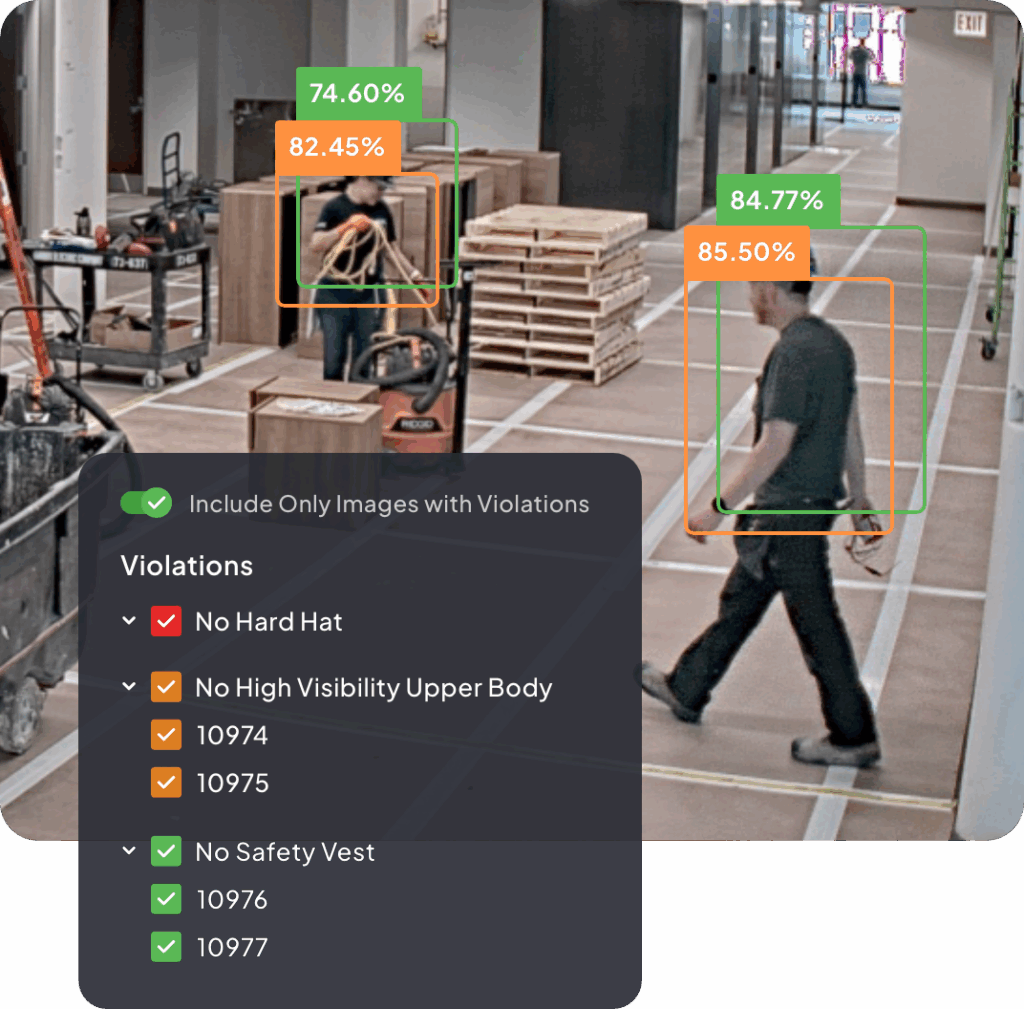
The technology identifies when workers are missing required equipment, such as hard hats, safety vests, and high-visibility gear. Real-time data helps safety managers identify patterns, such as one crew consistently removing PPE during specific tasks or compliance issues occurring during afternoon shifts.
How to Build a Safety-First Culture
Building a culture where safety comes first requires intentional action at every level of your organization. Here’s a practical process to shift from safety compliance to genuine safety commitment:
- Involve your crews in safety planning: Workers performing tasks daily often spot hazards that office-based managers may miss. Create regular opportunities for crew feedback through safety committees, anonymous reporting systems, and open-door policies, where concerns are taken seriously and addressed promptly.
- Make safety visible through recognition: Celebrate safety milestones, such as “100 days incident-free,” and publicly recognize workers who consistently follow protocols or report hazards. When teams see that safe behavior earns praise and respect, safety becomes something to take pride in rather than just another box to check.
- Build safety into performance metrics: Include safety records in KPIs, performance reviews, and bonus structures alongside productivity and budget targets. When promotions and compensation depend partly on maintaining safe jobsites, everyone from executives to project managers understands that safety truly matters to the company.
- Learn from incidents without blame: Conduct post-incident reviews focused on fixing system failures rather than punishing individuals. When workers see that mistakes lead to improved processes rather than termination, they report problems honestly and help prevent future accidents.
Protecting Your Workforce Starts Now
Safety is an investment in your people and your business, not an expense to minimize. Every dollar spent on prevention saves multiples in injury costs, delays, and reputation damage.
By combining proven safety protocols with modern technology like AI-powered PPE detection and construction cameras, firms can dramatically reduce incidents while protecting their teams.
Assess your current safety practices honestly and identify gaps where workers remain vulnerable. Then take concrete steps this week to strengthen those weak points, whether that’s better training, upgraded equipment, or improved visibility through technology.
TrueLook’s TrueAI PPE technology automatically verifies workers are wearing required protective equipment by analyzing jobsite images as often as every minute. Get a quote today and see how construction cameras with AI-powered PPE detection can help you build a safer jobsite.