Construction equipment theft costs the U.S. industry an estimated $300–$1 billion annually, with recovery rates below 25%. The most effective approach layers anti-theft devices for construction equipment that go directly on your equipment, such as GPS trackers, immobilizers, and locks, with perimeter-level deterrents like construction security cameras backed by live monitoring teams that can stop a trespasser from stealing.
Key Takeaways
- Equipment-mounted devices (GPS trackers, immobilizers, kill switches) slow thieves down and improve recovery rates, but they don’t prevent theft before it happens.
- Perimeter-level deterrents like construction security cameras stop theft before equipment is ever touched.
- Live jobsite monitoring paired with a camera system can detect an intruder, verify the threat, and dispatch police in under 10 minutes.
- Layering multiple anti-theft devices on the equipment and at the site level is the most reliable protection strategy.
- Clear video footage from a jobsite camera becomes critical evidence for insurance claims and prosecutions after an incident.
Why Equipment Theft Is So Hard to Stop
Heavy equipment is valuable, often left unattended overnight, and in many cases, easy to operate without a key. Excavators, skid steers, and compact track loaders are especially common targets. A determined thief can drive a truck to the site and load a piece of equipment onto a trailer in under 5 minutes.
That’s why the most effective anti-theft strategy for construction equipment combines two layers: devices that physically stop or track stolen equipment, and systems that detect and respond to intrusions before a theft completes.
Anti-Theft Devices That Go Directly on Construction Equipment
These devices mount on or integrate with individual machines. They’re your last line of defense if someone reaches the equipment, and your best recovery tool if a machine is taken.
1. GPS Trackers
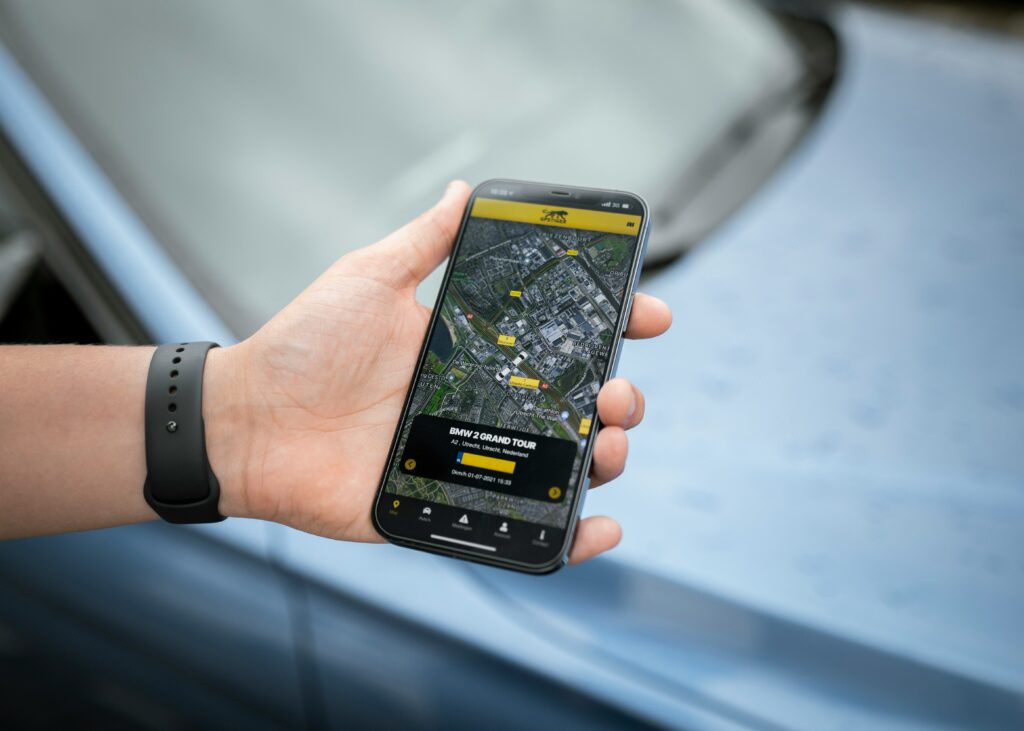
GPS trackers are the most widely used equipment-level anti-theft device. Units like Caterpillar’s Product Link, John Deere’s JDLink, Komatsu’s KOMTRAX, and third-party options like LoJack or CalAmp transmit a machine’s real-time location via cellular or satellite network.
What makes them effective:
- Real-time location reporting to your phone or fleet management platform
- Geofence alerts that notify you immediately when equipment leaves a defined boundary
- Historical movement logs that document unauthorized use
- Covert installation options that are harder for thieves to locate and disable
The limitation: GPS trackers help you recover stolen equipment. They don’t stop the theft from happening.
2. Equipment Immobilizers
Immobilizers prevent a machine from starting without the correct credentials, such as a PIN, a key fob, or a smart card. Many OEMs offer factory-installed options, and aftermarket systems are available for older equipment.
How they work:
- Disable the fuel system, ignition, or hydraulics until the correct credentials are presented
- Some systems allow remote deactivation via cellular signal
- Can be paired with GPS, so a stolen machine can be both tracked and remotely shut down
Immobilizers significantly raise the difficulty of theft, especially for opportunistic thieves. Sophisticated operators, however, may know how to bypass older systems or simply load equipment onto a trailer without attempting to start it.
3. Steering Wheel and Control Locks
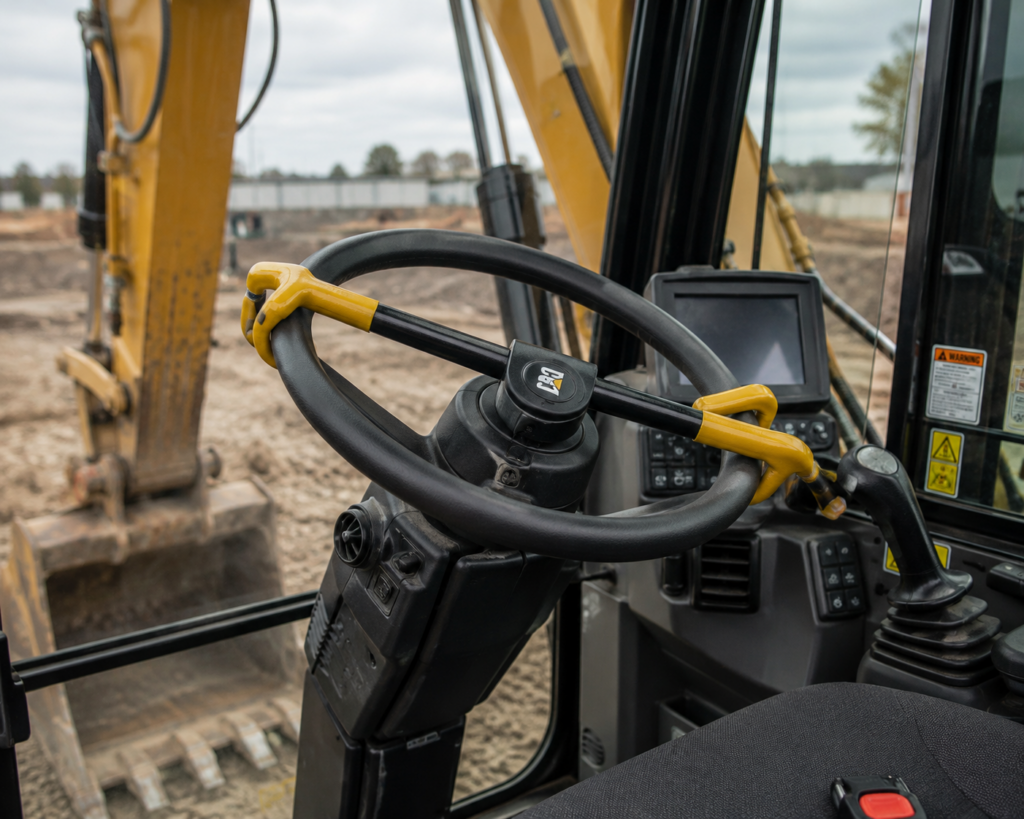
Physical locks, such as wheel locks, joystick locks, and bucket locks, add a visible, time-consuming obstacle. They won’t stop a determined thief with the right tools, but they increase the time and risk associated with the theft attempt.
Best uses:
- Short-term protection on low-surveillance sites
- Secondary layer on lower-value equipment
- Visual deterrent that signals the site is security-conscious
4. Kill Switches
A hidden kill switch cuts power to the fuel pump, ignition, or starter motor. Without knowing where the switch is, a thief can’t start the machine. They’re inexpensive to install, difficult to detect, and effective for opportunistic theft.
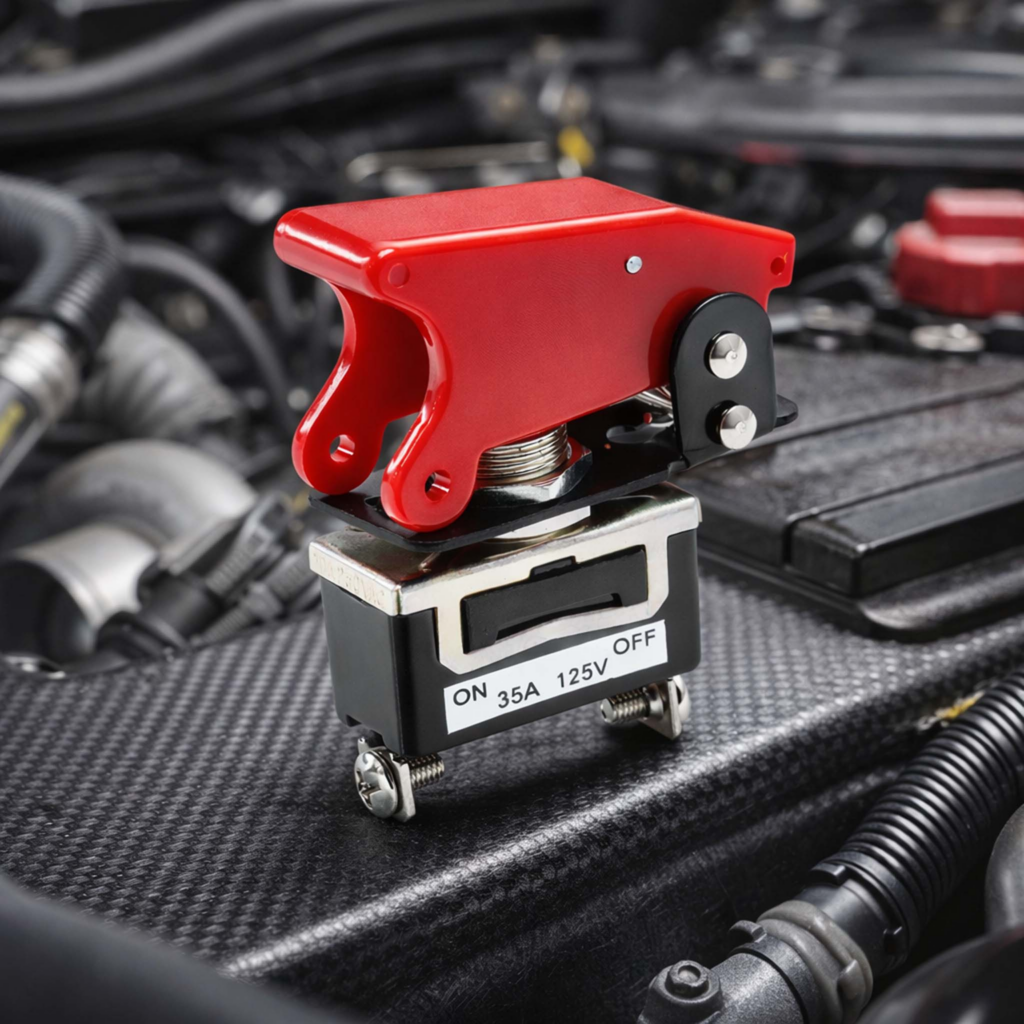
The caveat: a thief who loads the machine onto a trailer rather than driving it away renders a kill switch irrelevant.
5. Equipment ID Marking and RFID Tags
Marking equipment with a VIN, company name, or unique ID, through paint, engraving, or covert RFID tags, doesn’t deter theft but significantly improves recovery rates and makes re-selling stolen equipment harder. Some contractors use UV marking invisible to the naked eye that shows up under inspection.
The Limitation of Equipment-Only Protection
Devices mounted on equipment protect individual machines, but they share a critical flaw: they’re reactive. By the time a GPS geofence fires or a stolen machine needs to be tracked down, you’ve already experienced the disruption, the lost productivity, the insurance claim, and the delayed project schedule.
Construction site theft rarely announces itself in advance. The most effective protection stops the attempt before the equipment is ever reached.
Construction Security Cameras: Deterrence Before the Theft Happens
A visible, high-resolution construction security camera changes the risk calculation for would-be thieves. It signals that the site is watched, that footage is recorded, and that any unauthorized activity will be captured. For many opportunistic thieves, that’s enough.
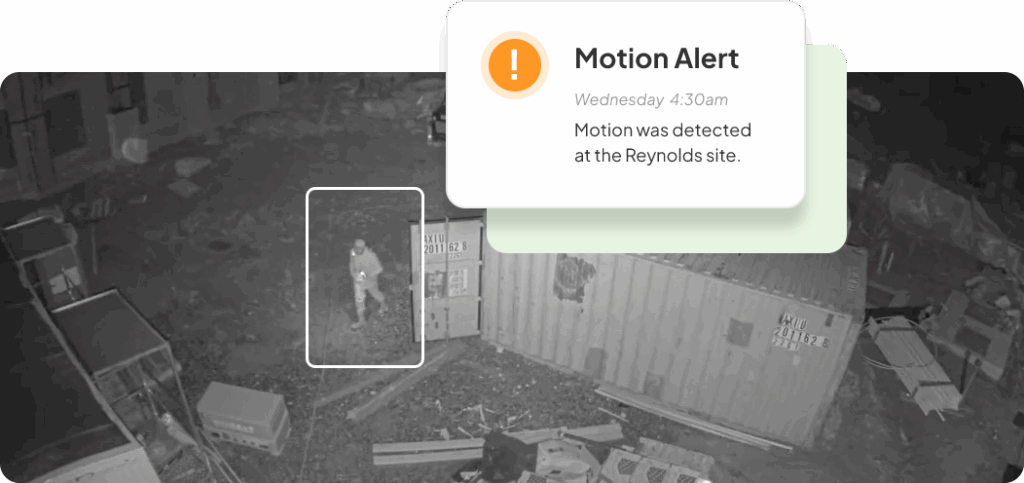
But cameras do more than deter. When paired with a live monitoring team, they become an active intervention system catching intrusions in real time and dispatching police while the theft is still in progress.
See how TrueLook’s jobsite security cameras protect construction sites →
How TrueLook’s Jobsite Monitoring Stops Theft in Progress
TrueLook’s 2K IR PTZ and 4K IR PTZ cameras provide 360-degree coverage of a jobsite with infrared capability for clear night imaging, exactly when equipment theft most often occurs.
When motion is detected after hours, TrueLook’s U.S.-based monitoring partner, Noonlight, verifies the threat in real time and contacts police. There’s no waiting for an alarm company to call back, and few false alarm delays.
The results are documented.
At 1:30 a.m., someone entered a Kirlin Way construction project and attempted to drive an excavator off the site. Here’s how the response unfolded:
The police chased down the excavator and made an arrest. The entire incident was captured on camera, supporting both recovery and insurance follow-up.
Kirlin Way VP Dominic Summers summed up the system’s value:
Read the full Kirlin Way case study →
What Makes Construction Security Cameras Effective for Theft Prevention
The right camera system does more than record. For construction sites, effectiveness depends on:
- Coverage and resolution: A PTZ camera covers wide areas with optical zoom, which can help you identify people, vehicles, and equipment. Fixed cameras provide continuous documentation of specific zones, such as equipment storage areas, entrances, and material laydown areas.
- After-hours capability: Most construction equipment theft happens between 11 p.m. and 3 a.m. Infrared and low-light imaging are non-negotiable for perimeter security.
- Real-time alerts: Motion-triggered alerts without a monitoring team still require someone to respond. A live monitoring service removes that dependency — the response happens whether or not a superintendent is checking the live feed at 1:30 a.m.
- Video evidence: Insurance claims and prosecutions both depend on clear, timestamped footage. TrueLook’s cloud storage retains footage for 1 to 3 years, depending on the plan, with unlimited retention available.
Building a Complete Anti-Theft Strategy for Your Jobsite
The most protected jobsites layer all of these tools together. Here’s how to think about it:
- Perimeter level (site-wide): Construction security cameras with 24/7 monitoring, motion detection, and real-time police dispatch.
- Access control level: Fencing, locked gates, and lighting that extends camera visibility and slows entry.
- Equipment level: GPS trackers with geofencing, immobilizers or kill switches on high-value machines, visible physical locks as secondary deterrents.
- Documentation level: Equipment ID marking, RFID tags, and photographic inventory for insurance and recovery purposes.
No single device in this stack is sufficient on its own. GPS trackers tell you where your excavator went, but they don’t tell police in time to stop the theft. A kill switch stops a machine from starting, but not from being loaded onto a trailer. A camera without monitoring records what happened, but doesn’t dispatch help.
The Kirlin Way outcome: arrest made, equipment recovered, and zero project disruption was the result of a system that could detect, verify, and respond faster than a thief could complete the theft.
FAQ: Anti-Theft Devices for Construction Equipment
No single device is most effective. The best protection combines equipment-mounted devices (GPS trackers, immobilizers) with perimeter-level systems like construction security cameras from TrueLook backed by live monitoring. This layers deterrence, detection, and real-time response into a complete strategy.
GPS trackers improve recovery rates significantly, but don’t prevent theft from happening. They notify you when equipment crosses a geofenced boundary, but by that point the machine is already moving. They work best as part of a multi-layer security approach alongside deterrence systems like security cameras.
Visible cameras signal to potential thieves that the site is monitored and that any activity will be captured on record. Combined with real-time motion detection and a live monitoring service, they move from passive documentation to active deterrence — a threat can be detected and police dispatched before a theft completes.
A security solution is the best option for construction equipment security. Security solutions from TrueLook include one to three cameras, strobes, sirens, and a talkdown bullhorn, along with a live monitoring team.
Response time depends on the monitoring service. In the Kirlin Way case, TrueLook’s monitoring team verified the threat in 33 seconds and notified police within 1 minute and 13 seconds of initial detection. Police arrived approximately 9 minutes after the camera first detected motion.
Many insurers offer reduced premiums for construction equipment protected by GPS trackers, immobilizers, or monitored camera systems. Check with your broker — documentation of security measures and any prior incidents captured on camera also supports faster claims processing.
Bottom Line
The most effective anti-theft devices for construction equipment work in layers. GPS trackers, immobilizers, kill switches, and physical locks protect individual machines and improve recovery rates. Construction security cameras with live jobsite monitoring protect the entire site and detect intrusions before equipment is ever reached, and put a live response team between a thief and your machinery.
When Kirlin Way needed both security and project documentation, TrueLook delivered both in a single platform and stopped an excavator theft cold at 1:30 a.m.
Ready to protect your jobsite? Get a quote from TrueLook →