Most construction projects don’t last forever and neither should their security setup. Temporary construction site security is one of the most overlooked parts of project planning, yet theft, vandalism, and liability incidents on unmonitored job sites cost the construction industry an estimated $1 billion annually in the United States alone.
If your project runs anywhere from 6 to 24 months, installing permanent surveillance infrastructure doesn’t make financial sense. You need scalable, deployable security that moves with your project, not a system that gets left behind when you break ground somewhere new.
This article covers the real challenges of securing temporary sites and the practical solutions contractors, project managers, and site supervisors use to protect their investments without overpaying.
Why Temporary Construction Site Security Is a Unique Challenge
A short-term job site is fundamentally different from a permanent facility. You’re dealing with a constantly changing environment, new subcontractors coming and going, shifting perimeters, equipment staging areas that move weekly, and no existing infrastructure to hang a camera on.
The challenges compound quickly
No power grid access
During early construction phases, there’s no electrical infrastructure to power wired cameras or access control systems.
Early phaseNo permanent fencing or controlled entry
Controlled perimeters don’t exist until site development progresses, leaving boundaries open to unauthorized access.
Access controlHigh-value equipment left overnight
Excavators, generators, and materials are stored on-site with minimal protection — prime targets during off-hours.
Theft riskOpen perimeters — difficult to fully fence
Fully fencing a site from Day 1 is costly and often impractical, leaving wide gaps in physical security coverage.
Perimeter gapRotating workforce complicates credentialing
Subcontractors cycle in and out continuously, making it hard to track who is on-site and enforce access control policies.
WorkforceIn our experience working with contractors across multi-phase commercial builds, the highest-risk windows are the first 30 days on site and weekends when activity drops to zero. That’s when thieves, often organized crews familiar with construction schedules, move in.
Temporary site security has to be fast to deploy, flexible to relocate, and effective without requiring a full infrastructure buildout.
Mobile Security Cameras vs. Security Guards: What Actually Works
The two most common approaches to job site security are boots on the ground (security guards) and technology-based surveillance (mobile cameras and monitoring). Each has trade-offs.
Security Guards
Guards provide a visible deterrent and can physically respond to incidents. But for a temporary construction site, the economics are difficult:
- 24/7 guard coverage costs $8,000–$15,000+ per month, depending on location and hours
- Guards have limited field of view and can’t monitor multiple entry points simultaneously
- Turnover is high in the security industry, meaning inconsistent coverage
- A guard alone provides no documented evidence unless they’re also operating cameras
For short-term projects under 12 months, full guard coverage often isn’t justifiable unless the site holds extremely high-value materials or is in a high-crime area.
Mobile Surveillance Trailers
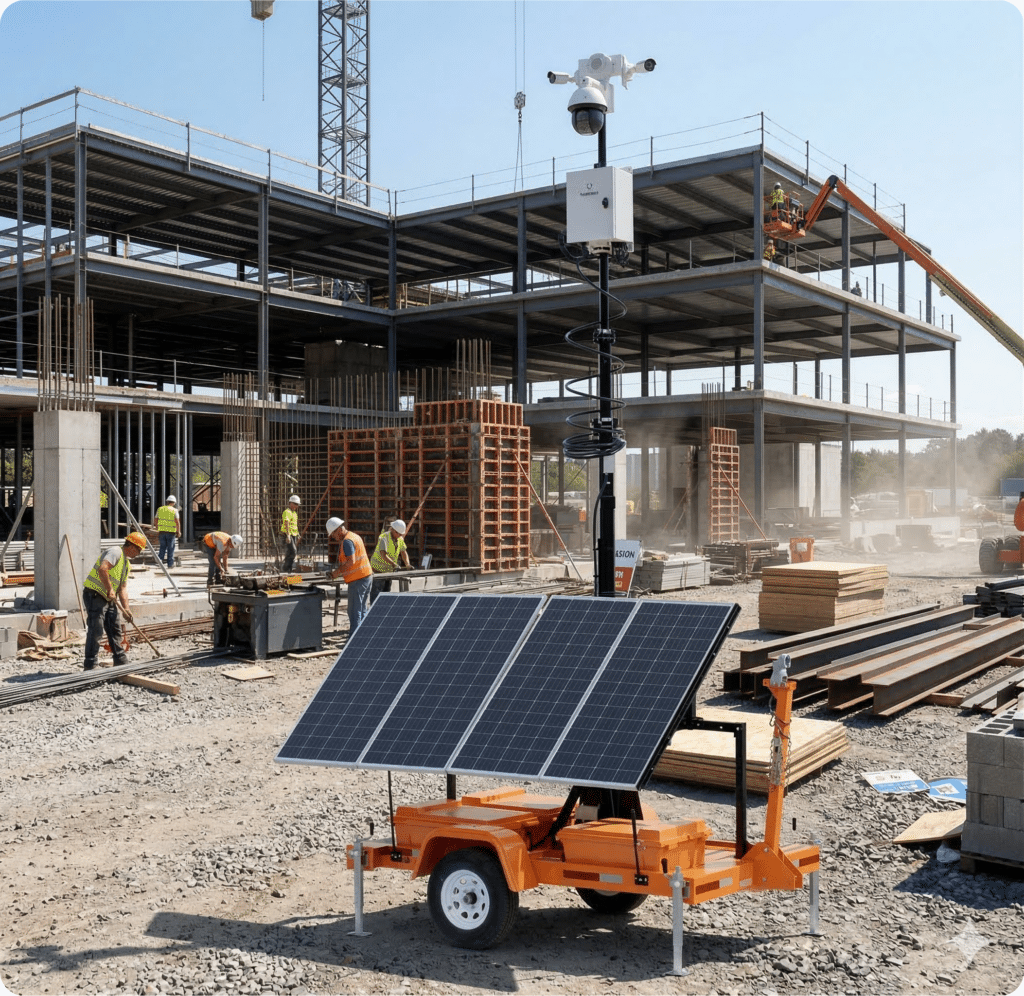
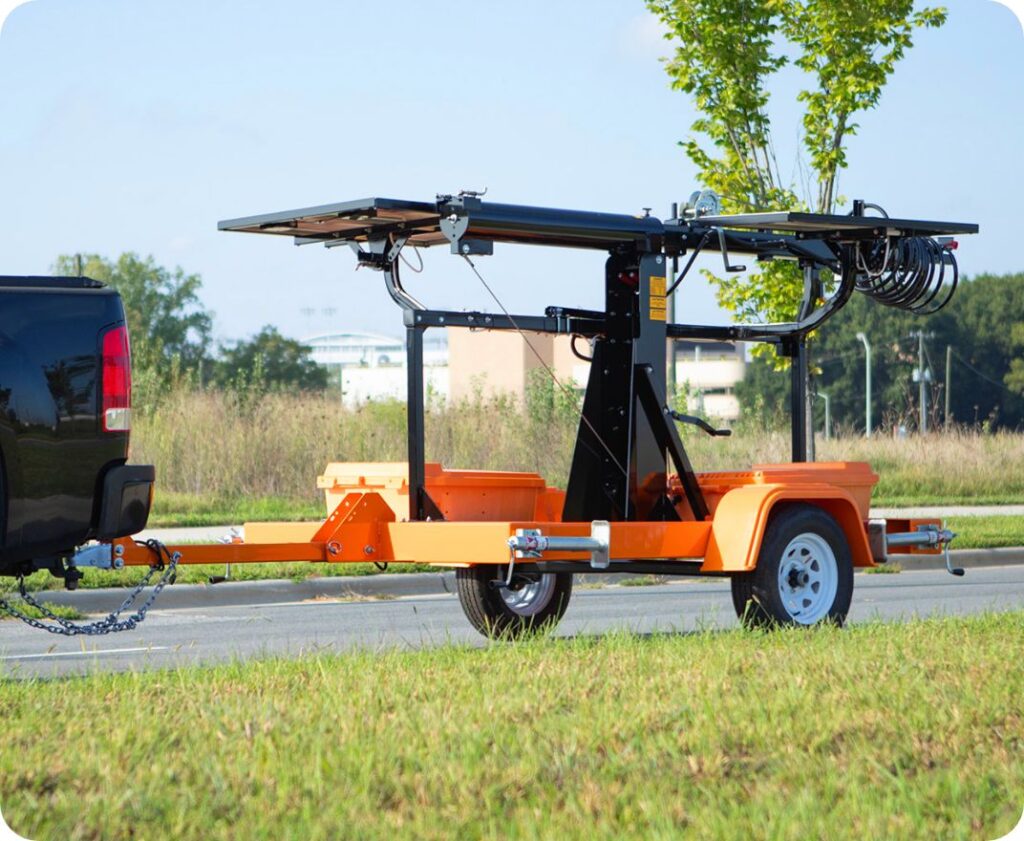
Mobile surveillance trailers are self-contained units that provide broad coverage, documented footage, and can be deployed in hours without any infrastructure. Because solar power is built directly into the trailer, there’s no need for grid access — the unit generates and stores its own power and is operational the same day it arrives on site.
Each trailer includes:
- A telescoping camera mast (typically 20–30 feet)
- One or more PTZ (pan-tilt-zoom) cameras with HD or 4K video and night vision
- Integrated solar panels with battery backup (capable of 3–7 days of operation without sun)
- Onboard cellular modem for live streaming and remote access (no Wi-Fi required)
- Motion-triggered recording, alerts, and tamper alarms
- Lockable equipment cabinet
They’re towable by a standard pickup truck and operational within 15–30 minutes of placement.
The cost difference vs. guards is significant. Mobile surveillance trailers typically run $500–$2,500/month per unit — a fraction of guard costs, and they don’t call in sick.
Why They’re the Workhorse of Temporary Site Security
Mobile surveillance trailers solve the two biggest infrastructure problems on temporary sites: no power and no mounting points. You can place one at a site that has nothing (no electricity, no permanent structures) and have wide-area coverage running immediately.
They’re also easy to reposition. As your site perimeter evolves or staging areas shift, you simply move the trailer. No electrician. No conduit. No rework.
Key specifications to look for:
- Minimum 300W solar capacity with 200Ah battery backup
- 4G LTE or 5G connectivity for live remote monitoring
- 360° PTZ coverage or multi-camera configuration
- IP66 or higher weatherproofing
- Tamper alerts and GPS tracking on the trailer itself
For temporary sites, rental programs (month-to-month) typically make more financial sense than ownership, especially when you factor in maintenance and storage between projects.
Remote Monitoring Services: Eyes on Your Site 24/7
Deploying cameras is only half the equation. A camera that records footage after an incident is useful for insurance claims — but it doesn’t stop theft or vandalism in progress.
Remote video monitoring services connect your cameras to a live monitoring center staffed by trained security operators around the clock. When motion is detected in a defined zone, an operator reviews the live feed in seconds and can:
- Issue an audio warning through an on-site speaker (“Attention: This site is monitored. Security has been notified.”)
- Escalate to local law enforcement with real-time footage
- Notify the site supervisor or project manager directly
Studies in the security industry consistently show that audio intervention stops the majority of intrusions before they escalate, most trespassers leave the moment they hear a live warning.
What to Look for in a Monitoring Provider
Not all monitoring services are equal. For construction site applications, prioritize:
- Verified response protocols: operators who visually confirm a threat before escalating (reducing false alarms)
- Construction-specific experience: they should understand shift changes, material delivery windows, and normal vs. abnormal activity patterns
- Integration with your camera system: some providers lock you into proprietary hardware
- Reporting and documentation: monthly activity reports, incident logs, and footage retention policies for insurance and liability purposes
Remote monitoring turns passive surveillance into active deterrence — the most effective posture for sites that are vacant 12–16 hours a day.
Frequently Asked Questions
Mobile surveillance trailers are the most practical solution. They generate and store their own power, require no grid connection, and can operate for multiple days on battery backup during cloudy weather. Cellular connectivity means no Wi-Fi infrastructure is needed either.
Requirements vary by jurisdiction, but OSHA and many local building codes mandate site access controls to prevent unauthorized entry, particularly to protect the public from hazards. Beyond compliance, your general liability and builders risk insurance policies may include security requirements that affect coverage.
Costs vary by solution. Solar surveillance trailer rentals typically run $500–$2,500/month per unit. Remote monitoring services add $200–$600/month depending on the number of cameras and response protocols. Guard services cost significantly more. Most contractors find camera-plus-monitoring to be the most cost-effective combination for projects under 24 months.
Copper wire and metal materials, power tools and equipment, fuel from generators and heavy machinery, and catalytic converters from vehicles are the most frequently targeted. Equipment with no GPS tracking or visible deterrents is at highest risk, especially during weekends and holidays.
Yes. Most modern mobile camera systems and solar surveillance trailers support remote access via a mobile app or web browser. You can view live footage, review recorded clips, and receive motion alerts from anywhere with a cellular signal.
Mobile trailers can be operational within 15–30 minutes of placement. Pole-mounted mobile cameras take slightly longer to configure but are typically live within a few hours. This rapid deployment makes them ideal for projects that need immediate coverage.
Conclusion
Temporary construction site security doesn’t have to mean permanent infrastructure or a permanent budget line. The combination of mobile surveillance trailers, 4K cameras, and professional remote monitoring gives short-term projects the same level of deterrence and documentation as a facility that’s been in place for decades — at a fraction of the cost.
The math is straightforward: one piece of stolen equipment or one liability incident can cost far more than a full year of proper surveillance. For projects lasting 6–24 months, investing in the right temporary security setup isn’t optional, it’s essential risk management.
Learn more about the full range of options available for your job site on our Construction Site Security Cameras page and find the right system for your project’s size, timeline, and budget.