
- Purpose-built beats off-the-shelf. Consumer cameras fail on active construction sites.
- Mobile matters. Solar-powered construction camera trailers with 4G/5G cellular give you full security coverage from day one, even before site power is available.
- Security and documentation are the same budget line. Timelapse and live monitoring from one system means you’re not paying twice for two problems.
- Insurance premiums can drop with documented video surveillance.
- Visible signage is not optional. Cameras with posted surveillance signage reduce theft incidents.
Temporary security cameras for construction sites are not the same as consumer home cameras, and choosing the wrong type costs contractors in theft losses, insurance claims, and missed documentation. Whether you’re monitoring a remote excavation, a multi-phase commercial build, or a vacant property during renovation, the right temporary camera system combines cellular connectivity, tamper-resistant mounting, solar power, and remote access in a single deployable unit.
Construction site theft costs the U.S. industry an estimated $1 billion annually, according to the National Equipment Register, making jobsite surveillance one of the highest-ROI investments a project owner or GC can make, especially on sites without permanent power or internet infrastructure.
What Makes a Camera “Temporary” on a Construction Site?
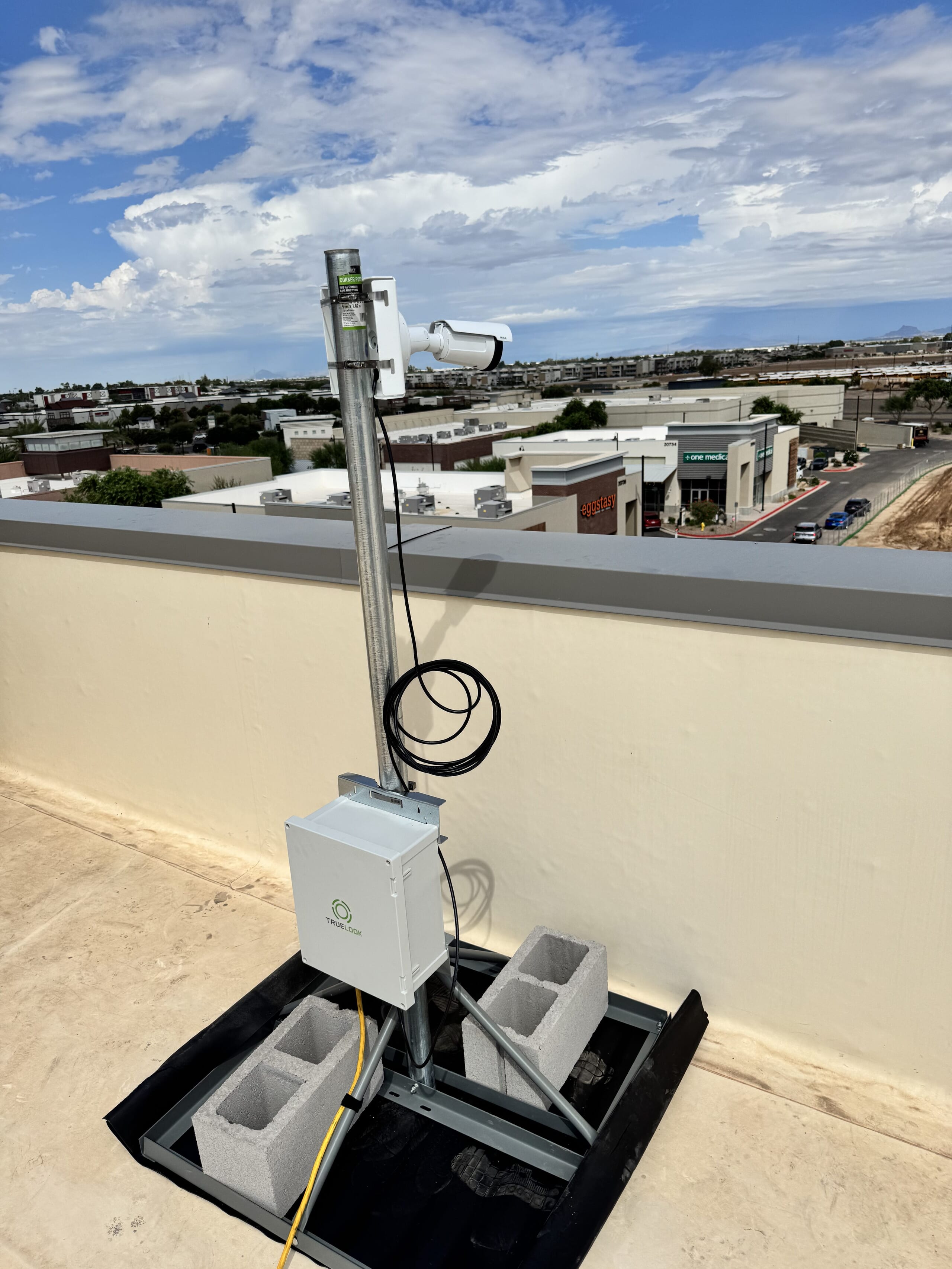
A truly temporary construction camera doesn’t require hardwired power, a permanent internet connection, or structural mounting that damages the building under construction. The best temporary security camera systems for construction are self-contained units that deploy in under an hour, run on solar or battery power, transmit over 4G/5G cellular networks, and relocate as project phases shift.
This is fundamentally different from what works for apartments or home use. Consumer-grade battery and Wi-Fi cameras are designed for stable indoor environments with reliable home networks, conditions that rarely exist on an active commercial jobsite, remote land parcel, or building mid-renovation.
What Are the Best Temporary Security Cameras for Construction Sites?
For Professional Jobsite Monitoring: Purpose-Built Construction Cameras
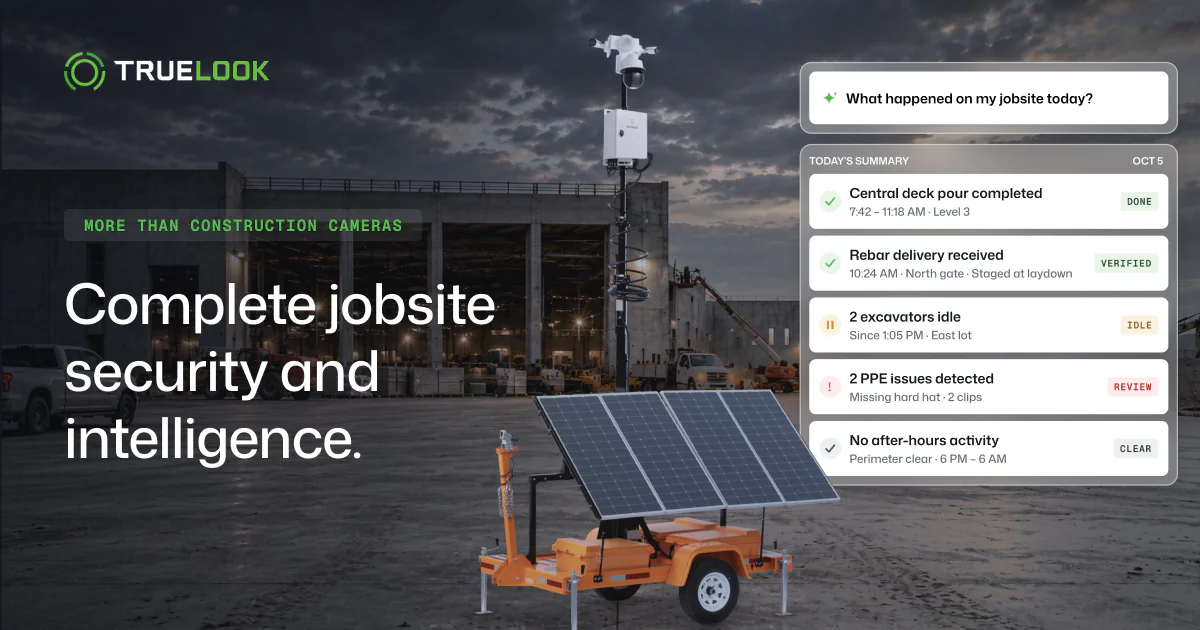
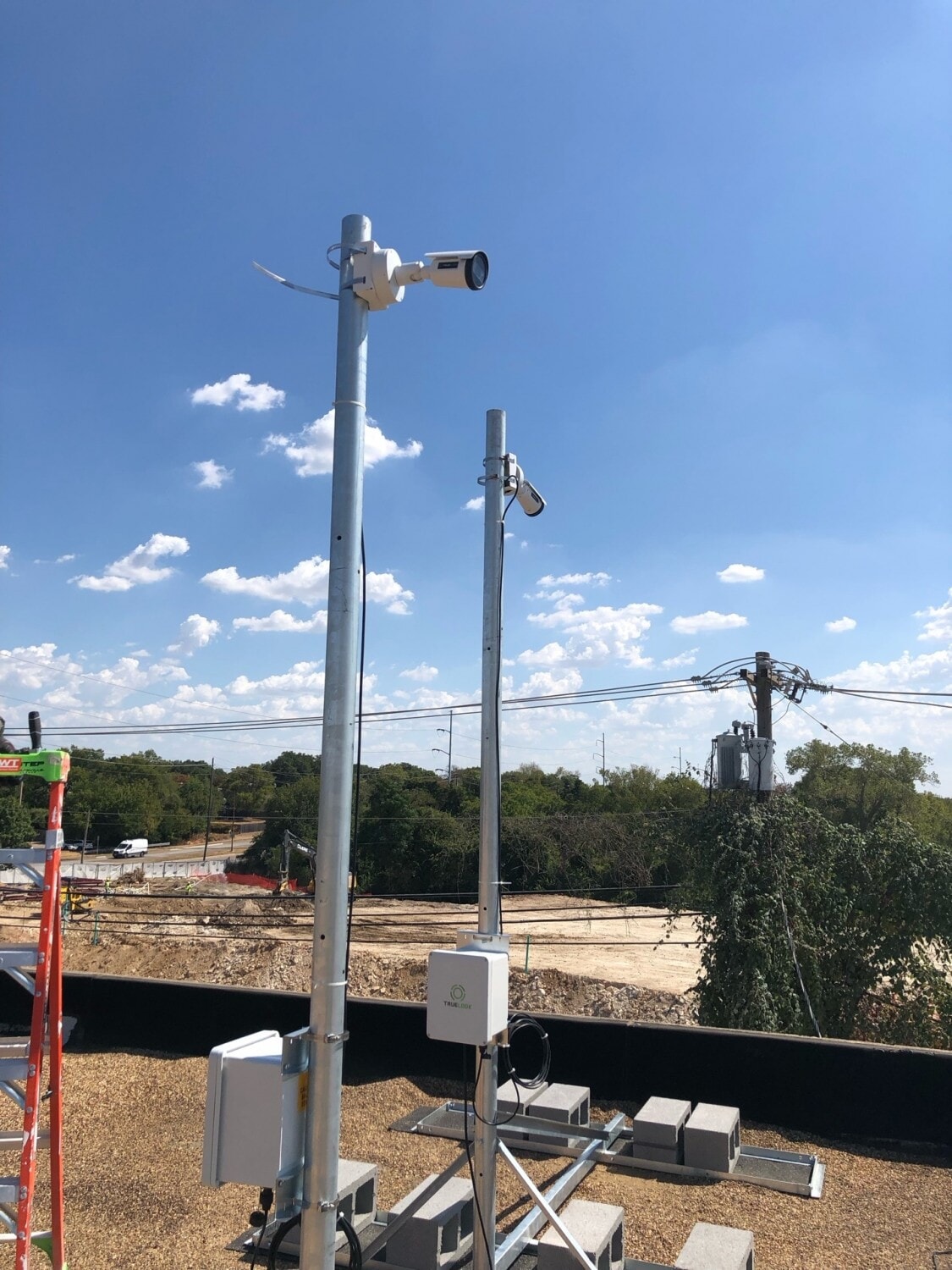
TrueLook construction cameras are purpose-built for temporary deployment on active commercial and civil jobsites, combining 4G/5G cellular transmission, integrated solar panels, tamper-resistant enclosures, and cloud-based remote access in a single trailer-mounted or pole-mounted unit. Unlike consumer cameras, TrueLook systems include HD timelapse documentation alongside live security monitoring, meaning every project gets both a security record and a construction progress archive in one system.
TrueLook units deploy without Wi-Fi, without shore power, and without a permanent foundation. A typical trailer-mounted unit is fully operational within 60–90 minutes of arriving on site. For GCs managing multiple simultaneous projects, TrueLook’s platform allows all cameras across all sites to be monitored from a single dashboard, with motion alerts, live PTZ control, and archived footage accessible from any device.
For temporary security on commercial construction sites, a professionally managed cellular camera system like TrueLook typically runs $200–$500/month per unit, depending on camera configuration, contract length, and whether timelapse or advanced motion detection is included. That’s a fraction of the cost of a single equipment theft event. See TrueLook’s rental options for current pricing by project type.
Why Off-the-Shelf Consumer Cameras Fall Short on Jobsites
Consumer battery-powered Wi-Fi cameras are marketed as “wireless” and “easy to install.” They have two fundamental limitations that make them impractical for most commercial construction environments.
First, they require Wi-Fi. An active construction site — particularly in early phases — has no internet infrastructure. Open-site perimeter monitoring over a temporary hotspot is unreliable at best and impossible at distance.
Second, they aren’t built for jobsite conditions. Consumer camera enclosures are designed for residential eaves and patios, not the dust, vibration, weather exposure, and theft-risk environment of a commercial jobsite. A consumer camera mounted on a construction site perimeter is typically defeated within weeks by weather, tampering, or connectivity loss, leaving the project unprotected without the owner knowing.
For Remote Land & Low-Stakes Properties: Off-Grid Cellular Cameras
For vacant land parcels, small renovation projects, or rural properties where a professional rental system is cost-prohibitive, off-the-shelf solar cellular cameras transmitting over 4G LTE are a step up from Wi-Fi models. These units run without internet and connect via a SIM card data plan.
The tradeoff: these cameras lack the tamper resistance, image resolution, remote management, and timelapse capability of a professional system. For any project over $500,000 in value, a professional-grade monitored system is worth the incremental monthly cost. A single tool or equipment theft event typically exceeds six months of camera rental fees.
For Site Trailers and Temporary Interior Offices
For finished-but-unoccupied interiors, site trailers, or temporary offices where Wi-Fi exists and physical security risk is lower, small consumer Wi-Fi cameras are a practical and affordable supplemental option. These are not appropriate for perimeter security or open-site monitoring. Use them as interior-only tools where connectivity is guaranteed.
Do Temporary Cameras Reduce Insurance Costs?
Many commercial property insurers offer premium reductions for monitored camera systems on vacant or under-construction properties.
Documented video surveillance can reduce commercial construction site insurance premiums by 5–15% depending on carrier and coverage type, and provides documented evidence for theft or vandalism claims that significantly accelerates claim resolution. The Associated General Contractors of America recommends on-site surveillance as a core risk management practice for commercial projects.
OSHA’s 29 CFR 1926 standards don’t mandate cameras, but several large GCs and risk management firms now require documented site surveillance as a condition of subcontractor agreements on projects above certain value thresholds. Always verify with your project’s insurance carrier whether camera deployment qualifies for a premium adjustment before deployment.
What Are the Biggest Mistakes When Choosing a Temporary Security Camera?
Consumer cameras are not weatherproofed to construction standards, lack tamper-resistant mounting, and depend on Wi-Fi that typically doesn’t exist on an open site. Using a consumer home camera for commercial construction site security is a false economy. The camera won’t cover the perimeter, will fail in adverse weather, and produces footage that’s often too low-resolution to support an insurance claim or law enforcement investigation.
Not all rural construction sites have strong 4G/5G coverage. Before ordering any cellular camera system, verify carrier signal at the specific GPS coordinates of your site. TrueLook conducts a connectivity assessment before every deployment to confirm reliable transmission, a step that consumer camera purchases skip entirely.
The most cost-effective temporary camera systems serve dual duty: perimeter security and construction progress documentation. Timelapse footage creates a complete visual record that supports dispute resolution, owner reporting, and marketing, value that a pure-security camera never delivers. See how TrueLook customers use both features on active projects.
Camera visibility deters theft. Posting “Video Surveillance in Progress” signage at site entry points reduces theft incidents by an estimated 50–60% on monitored construction sites, according to data from the Associated General Contractors. Cameras without signage are measurably less effective regardless of system quality.
Frequently Asked Questions
How do temporary construction cameras work without power or Wi-Fi?
How quickly can a temporary construction camera be set up?
Can temporary construction cameras record timelapse footage?
What’s the difference between renting and purchasing a construction camera?
Are temporary construction cameras legal to use?
What camera resolution is required for construction site security footage?