Construction disputes over delays and change orders routinely turn into he-said-she-said arguments, and without documentation, the burden of proof falls on whoever has the weaker paper trail. Time-lapse photography solves that problem by default: it’s always running, it never forgets, and it turns “we think this happened” into “here’s exactly what happened, timestamped.”
That’s the real case for time-lapse on a jobsite; not novelty footage for a sizzle reel. It’s a continuous, defensible record that protects budgets, timelines, and relationships with owners and subcontractors.
Key Takeaways
- Time-lapse footage creates a timestamped record that resolves delay disputes and change order disagreements without relying on memory or conflicting accounts.
- It gives project managers, owners, and lenders remote visibility into progress without a site visit — the same “I don’t have to be there to know what’s happening” value that makes daily jobsite monitoring worth it.
- Continuous capture costs less than manual documentation, since it replaces the labor of someone walking the site to take progress photos with a system that’s always running.
- The same footage captured for documentation doubles as a marketing asset — sales reels, case studies, social content — without any extra shoot, since it’s already being recorded.
- Unlike a single site visit or spot-check photo, time-lapse captures the full sequence of work, which is what actually holds up when a claim or dispute goes to review.
The Real Cost of “He Said, She Said” on a Jobsite
Every unresolved dispute has a cost attached to it. A subcontractor claims a delay wasn’t their fault. An owner questions whether work was completed on schedule. A change order gets contested because nobody can agree on when a condition was discovered. Every one of these arguments eats time, and time on a construction claim is money: legal review, stalled payment, strained relationships with the people you need on the next project too.
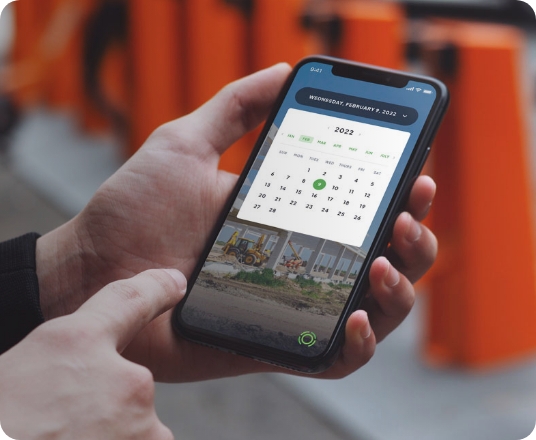
Project managers who’ve lived through this tend to land on the same conclusion: the pictures don’t lie. A continuous visual record removes the argument entirely, because there’s nothing left to interpret. Many contractors now treat their camera archive the same way they treat RFIs and submittals, as part of the project’s official record.
Where Time-Lapse Actually Pays Off
- Settling delay and change order disputes. When a claim comes in, the question is almost always “when did this actually happen, and what did the site look like at the time?” Time-lapse footage answers that directly, with a timestamp attached, instead of requiring someone to reconstruct events from memory or scattered site photos.
- Protecting against unfounded liability claims. Weather delays, third-party damage, disputed site conditions: a continuous record shows what actually occurred and when, which matters when liability is being assigned after the fact.
- Verifying progress for owners and lenders. Draw requests and progress payments often depend on proving work was completed on schedule. A visual timeline is harder to dispute than a status report.
- Surfacing inefficiencies you can’t see day-to-day. Watched in real time, a bottleneck (a crew waiting on material delivery, equipment sitting idle between phases) is easy to miss. Compressed into a time-lapse, the same gap is obvious, which makes it a genuinely useful tool for tightening sequencing on the next phase or the next project. Newer camera platforms take this further with AI layered on top of the visual record. TrueLook’s TrueAI, for example, analyzes footage to track activity patterns and flag PPE violations, surfacing schedule and safety risk earlier than a manual review would catch it.
- Giving remote stakeholders real visibility. Owners, executives, and PMs juggling multiple sites can’t be everywhere. Time-lapse turns “how’s it going out there?” into a footage review instead of a scheduled site visit, the same reason PMs keep live camera feeds up all day, just compressed into a progress narrative anyone can watch in minutes.
- Costing less than manual documentation. Someone walking a site daily to shoot progress photos is a recurring labor cost, and it’s inconsistent by nature: vacation days, busy weeks, and forgotten walkthroughs all create gaps. A camera capturing on a fixed interval doesn’t skip days, and it doesn’t require anyone’s time to operate once it’s set up.
It Works the Same Way Regardless of Project Type
Commercial builds, residential developments, road and site work, ground-up projects, and renovations: the value doesn’t change with project type.
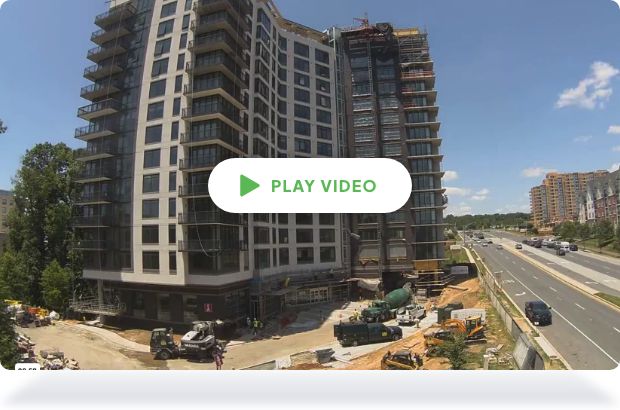
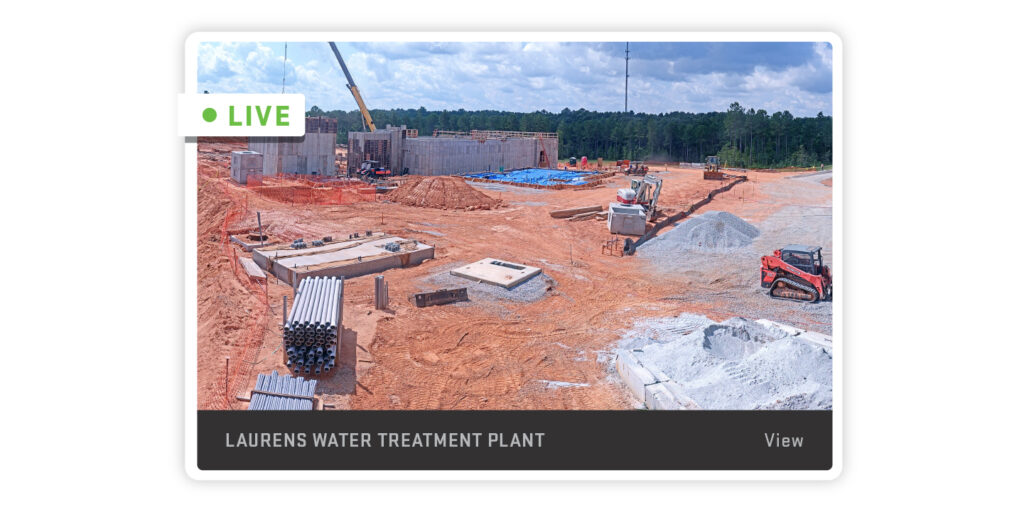
Any job where disputes can happen, stakeholders need remote visibility, or someone would otherwise have to manually document progress benefits from a continuous record, including the importance of time-lapse photography on infrastructure projects, where downtime and compliance failures carry outsized costs. The camera doesn’t care what’s being built; it just captures what happened, reliably, the whole time.
See how continuous jobsite documentation works on a live camera system. Get a quote →
What Makes Time-Lapse Documentation Actually Defensible
Not all time-lapse footage holds up equally well. The value of the record depends on a few things:
- Continuity — gaps in coverage create gaps in the story. A record that’s missing the exact window in question isn’t much better than no record at all.
- Timestamp accuracy — footage needs a reliable, tamper-evident timestamp to be useful in a dispute, not just a general sense of “around that time.”
- Accessibility — documentation only helps if the people who need it (PMs, owners, legal) can actually pull the relevant footage quickly, rather than digging through storage after the fact.
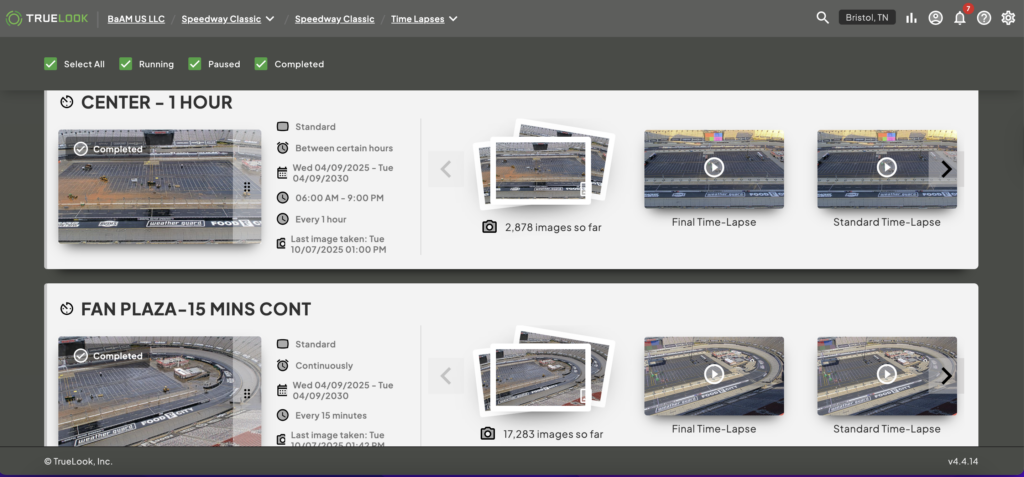
This is where a purpose-built jobsite camera system earns its cost back: the footage is continuous by default, timestamped automatically, and searchable when a dispute actually comes up, instead of depending on someone remembering to document the moment it happened.
If you’re comparing camera types, resolution needs, or setup options for your specific site, TrueLook’s construction time-lapse camera guide walks through how to choose and deploy the right system.
A Marketing Asset That Builds Itself
Because the footage is already being captured for documentation, it’s sitting there as a finished asset for anything else the business needs: a compressed project reel for a proposal, before-and-after footage for a case study, social content that shows real work instead of stock photography.
No separate shoot, no marketing budget line item. The team documenting the project for legal and progress purposes is, without extra effort, also building the footage library marketing would otherwise have to schedule and pay for separately.
Proof Beats Memory
Time-lapse photography isn’t a marketing extra. It’s a documentation tool that pays for itself the first time it settles a dispute that would otherwise have cost weeks and legal fees. Whatever the project, a continuous visual record is the difference between defending your position with evidence and defending it with memory.
FAQs About the Advantages of Time-Lapse Photography in Construction
Timestamped, continuously captured footage is generally more defensible than reconstructed accounts, because it wasn’t created after the fact. Many contractors include camera footage as part of their documentation package for claims and disputes, though admissibility ultimately depends on the specifics of the case.
Many contractors retain footage for the life of the project plus a window afterward to cover warranty periods and potential disputes — often one to two years post-completion, though retention needs vary by project type and risk tolerance.
Ready to put a continuous record on your next project? Get a quote →