Utility construction covers the build-out and upgrade of the systems that move power and water; substations, transmission and distribution infrastructure, water and wastewater treatment plants, and the grid modernization projects connecting them all. It’s one of the busiest corners of commercial construction right now, and the reason is simple: the grid wasn’t built for the load it’s about to carry.
Key Takeaways
- Utility construction spans four core categories: electrical substations, transmission/distribution, water and wastewater treatment, and grid modernization projects that tie them together.
- Data center demand is the single biggest driver of new utility construction activity. Hyperscale and AI data center campuses need dedicated substations and, in many cases, new transmission capacity before a single server rack goes online.
- Utilities and the GCs who build for them are now operating on compressed timelines, with interconnection queues and equipment lead times (especially large power transformers) acting as the real bottleneck, not labor or land.
- Risk management looks different on utility projects than on commercial builds. A documentation gap on a substation or treatment plant project can mean regulatory exposure, not just a schedule slip.
- Remote visibility and time-stamped documentation have become standard practice on utility jobsites, both for safety compliance and for proving project status to utility owners and regulators who can’t be on-site daily.
What Is Utility Construction?
Utility construction is the design and build of infrastructure that delivers essential services, primarily electricity and water, at scale. It includes new construction (greenfield substations, new treatment plants) and modernization of existing systems (grid upgrades, plant expansions, transmission line rebuilds).
Unlike vertical commercial construction, utility projects are infrastructure-first. The “building” is often secondary to the equipment it houses: transformers, switchgear, filtration systems, and pumps. Permitting runs through utility commissions and environmental agencies rather than (or in addition to) local zoning boards, and the owner is frequently a utility company or municipality with its own engineering and compliance standards layered on top of standard building codes.
Most utility construction is owned by one of three entity types, and each brings a different funding and approval process. Investor-owned utilities (the Duke Energys and Dominion Energys of the world) fund construction through rate cases approved by state public utility commissions, which means project budgets and timelines are often set years before a shovel hits the ground. Municipal and public utilities fund projects through bonds, grants, or rate revenue, with construction decisions running through public boards and, frequently, public comment periods. Increasingly, a third model is emerging: data center developers and hyperscale operators directly funding or co-funding dedicated substation and transmission infrastructure to accelerate their own interconnection timelines, working alongside the utility rather than waiting in the standard queue.
Project delivery method shapes how the work gets built and who carries risk. Design-bid-build remains common on smaller substation and distribution projects, where the utility’s engineering team designs the project and bids it out separately. Larger and more complex builds, particularly treatment plants and major substations, increasingly use design-build or CMAR (construction manager at-risk), which brings the contractor in earlier and shifts more schedule and cost risk onto the construction team. EPC (engineering, procurement, and construction) contracts are common on the largest transmission and generation-adjacent projects, where a single firm owns the entire scope from design through commissioning.
Four categories make up most of the current utility construction pipeline:
- Electrical substations — facilities that step voltage up or down between transmission and distribution networks
- Transmission and distribution infrastructure — the lines, towers, and equipment that move power from generation to substations to end users
- Water and wastewater treatment — plants that treat water for distribution or treat wastewater before it’s returned to the environment
- Grid modernization — the broader effort to upgrade aging grid infrastructure for resilience, capacity, and digital monitoring
Why Utility Construction Is Accelerating Right Now
Utility construction has always been steady, unglamorous work. What’s changed is the timeline pressure. Four forces are converging:
- Data center and AI demand: Hyperscale campuses can require 100+ megawatts of dedicated capacity, often more than the surrounding grid was built to deliver. A single large AI training campus can draw as much power as a mid-sized city. That gap doesn’t get closed with a permit and a crew; it gets closed with new substations, new transmission, and in some cases new generation, all coordinated with the utility years before the data center itself opens. In high-demand markets like Northern Virginia, Texas, and the Southeast, utilities are now fielding interconnection requests that, in aggregate, exceed the existing capacity of entire regional grids, forcing a build-first-ask-questions-later posture that didn’t exist a decade ago.
- Aging infrastructure: A meaningful share of US transmission and distribution equipment is decades past its original design life, much of it built during the post-war grid expansion of the 1950s and 60s. Utilities are replacing it under pressure, not on their own schedule, which is pushing more modernization work into active construction pipelines at once. Storm hardening requirements in hurricane- and wildfire-prone states are compounding this, turning routine replacement into accelerated capital programs.
- Equipment and interconnection bottlenecks: Large power transformers, the single most critical and hardest-to-source component on most substation projects, can have lead times stretching past two years, up from a matter of months a decade ago. Interconnection queues, the process of getting new load or generation approved to connect to the grid, are backed up in most regions, with some grid operators reporting multi-year backlogs of pending requests. The result: utility construction teams are increasingly managing projects where the build itself isn’t the longest pole in the tent. Procurement and approval timelines are.
- Electrification and load growth beyond data centers. Data centers get the headlines, but EV charging infrastructure, industrial reshoring and manufacturing buildouts, and broader electrification of heating and transportation are all adding incremental load to the same constrained grid. Utilities planning capacity today has to model demand growth from multiple directions simultaneously, which is part of why grid modernization has shifted from a long-term planning exercise to an active construction priority.
Building utility infrastructure on a compressed timeline?
TrueLook’s remote jobsite cameras give utility GCs and project owners live visibility into substation, treatment plant, and transmission builds, without adding headcount to the field.
Substation Construction
Substations are the connective tissue of the grid; every megawatt of new demand, whether from a data center, a manufacturing plant, or a growing subdivision, eventually routes through one. Substation construction involves civil work (grading, foundations, grounding grids), structural steel for bus support, and the installation of transformers, switchgear, and protection and control systems, all built to utility-specific engineering standards rather than standard commercial code.
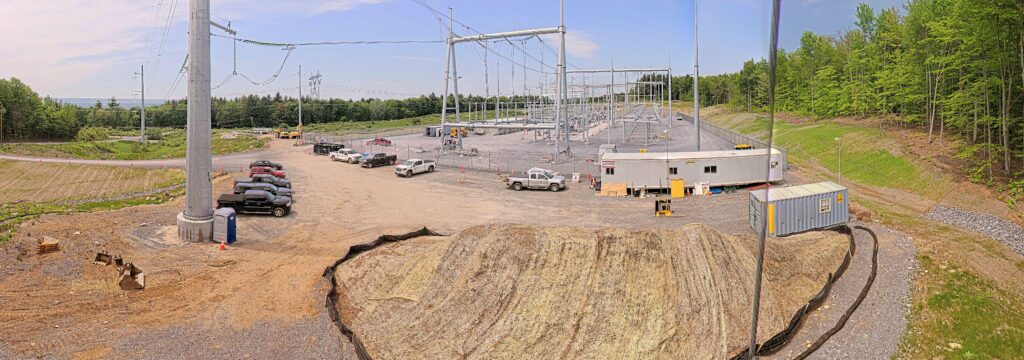
Substation Construction: A Complete Guide to How Substations Are Built → Covers the full build process from site prep through energization, including a substation security case study with LG&E/KU on what substation construction looks like in practice.
Data Center Substations and Power Infrastructure
Data centers don’t just consume power, they often require their own dedicated substation, built and energized before construction on the building itself is even finished. This is the fastest-growing segment of substation work, and it’s reshaping how utilities plan capacity in markets with hyperscale activity.

Data Center Substation Design: What Every Builder Needs to Know → Breaks down the redundancy tiers, cost ranges, and site-selection factors that drive substation design for hyperscale load. Connects to our earlier coverage of data center construction costs and managing data center construction.
Data Center Power Infrastructure: What Gets Built Before the Building → A look at the substations, transformers, and electrical infrastructure that go in years before the data center shell, and why utilities are now the long pole in every hyperscale schedule.
Water Treatment Plant Construction
Water treatment plant construction is utility construction’s other major category, and it runs on a different rhythm than electrical infrastructure. These are heavy civil and process-mechanical builds: intake structures, filtration and treatment trains, clarifiers, and the piping and instrumentation that ties it all together, typically delivered under design-build or CMAR contracts with significant regulatory oversight from state environmental agencies.
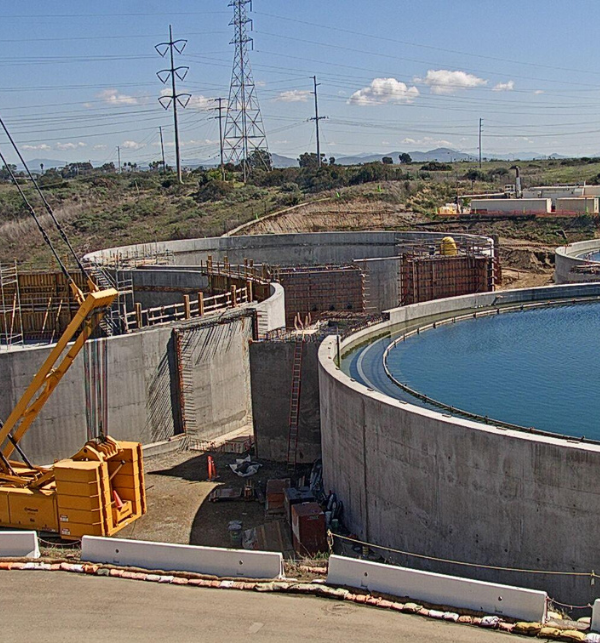
Water Treatment Plant Construction: A Complete Guide → Covers what gets built, how projects are typically delivered, and what makes water treatment construction distinct from other utility work, including wastewater treatment plant construction.
Wastewater Treatment Plant Construction
Wastewater projects carry their own risk profile. Plants are frequently built or expanded while remaining partially operational, regulatory non-compliance carries real financial and legal exposure, and municipal ownership means public funding cycles and public accountability for delays.
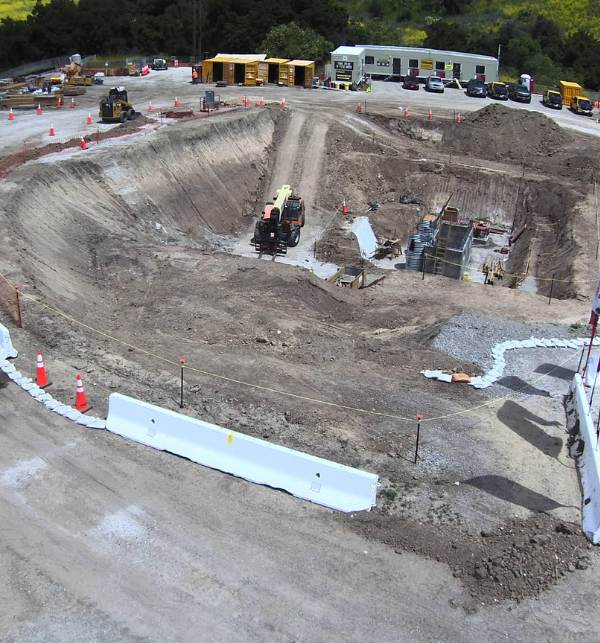
Risk Management on Wastewater Treatment Plant Construction Projects → Covers best practices for managing risk on large municipal wastewater projects, including how documentation and remote oversight reduce exposure, and where construction site security and theft prevention fit into the risk picture.
TrueLook’s time-stamped video record gives GCs and owners a defensible account of site conditions throughout a build, the kind of evidence that matters when a dispute or a regulator asks what happened and when.
Grid Modernization
Grid modernization is the layer that connects everything above. It’s the utility industry’s response to aging infrastructure, increasing demand volatility, and the need for a grid that can absorb both distributed generation and massive point loads like data centers without destabilizing.
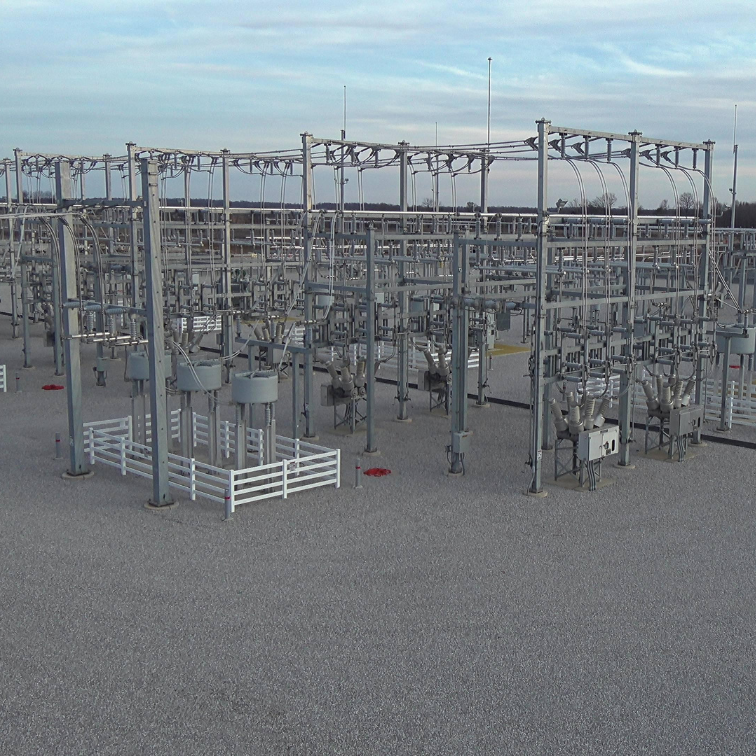
What Is Grid Modernization? A Guide for Utility and Construction Teams → Defines grid modernization, the technologies involved (advanced metering, grid-edge sensors, automated switching), and where construction teams fit into utility modernization plans.
How TrueLook Supports Utility Construction Projects
Utility construction runs on documentation. Regulatory approvals, owner reporting, safety compliance, and dispute resolution all depend on being able to show exactly what happened on-site and when, especially on projects where the owner, the utility, and the regulator may rarely set foot on the jobsite themselves.
TrueLook’s jobsite cameras give utility GCs and project owners live remote viewing, automated time-lapse documentation, and security monitoring across substation, treatment plant, and transmission projects, without requiring jobsite WiFi or daily site visits. For projects spread across multiple locations (a utility modernizing several substations at once, or a GC managing both a treatment plant and a data center substation build), TrueLook’s multi-site dashboard keeps every active project visible from one place.
Frequently Asked Questions
Utility construction is the design and build of infrastructure that delivers electricity and water, including electrical substations, transmission and distribution systems, water and wastewater treatment plants, and grid modernization projects.
Data center and AI infrastructure demand is the primary driver. Hyperscale campuses require dedicated substations and, often, new transmission capacity, pushing utilities to build faster than their typical replacement and upgrade cycles.
Utility construction is infrastructure-first: the equipment (transformers, treatment systems, switchgear) drives the design, permitting runs through utility commissions and environmental agencies, and the owner is typically a utility or municipality with its own engineering standards on top of building code.
Equipment lead times, particularly large power transformers, and interconnection queue delays are the most common bottlenecks, often longer than the physical construction timeline itself.
Data centers are one of the biggest forces accelerating grid modernization. Utilities are upgrading transmission and distribution infrastructure specifically to handle concentrated, large-scale loads that didn’t exist in the grid’s original design.
The Utility Construction Boom
Utility construction used to move at the utility industry’s own pace. Data center demand changed that. Substations, treatment plants, and grid modernization projects are now being built under timelines set by hyperscale customers and interconnection queues, not utility replacement cycles. For the GCs and project owners building this infrastructure, that means less margin for error and more pressure to document, prove, and protect progress at every stage.