For construction firms, worker safety is everything. Keeping crews safe on the jobsite means they go home to their families every night, and that’s what matters most.
Artificial intelligence means computer systems that can do tasks usually done by humans, like spotting hazards, making decisions, and managing risks.. In the context of construction safety, AI is increasingly relevant for automating safety monitoring and improving jobsite outcomes.
But safety lapses don’t just put workers at risk. OSHA violations result in hefty fines, work stoppages, and serious legal liability that can derail projects and damage reputations.
That’s where AI changes the game. AI for construction and AI technologies are now being integrated across the construction industry to enhance safety, efficiency, and decision-making. Construction cameras equipped with artificial intelligence can now detect safety hazards, monitor PPE compliance, document incidents, and record incidents in real time. Advanced AI features in modern safety tools are transforming construction safety by enabling high-precision site monitoring, hazard detection, and progress tracking. These innovations assist construction managers in risk assessment, scheduling, and planning, leading to safer and more efficient jobsites.
The Occupational Safety and Health Administration (OSHA) sets and enforces standards to ensure the safety of American workers. For construction sites, this means following specific regulations regarding fall protection, PPE, hazard communication, scaffolding, electrical safety, and other relevant areas.
Compliance isn’t optional. General contractors, subcontractors, and site owners are all responsible for maintaining safe working conditions, conducting regular inspections, providing proper training, and keeping detailed incident logs.

When firms fall short, the consequences are steep. OSHA penalties start at $16,550, and when combined with more serious charges, such as willful or repeat violations, those fines can exceed millions of dollars. Beyond fines, non-compliance can trigger work stoppages, legal battles, insurance complications, and damage to a company’s reputation.
AI technologies help construction firms develop and refine safety protocols that align with the latest industry standards.
Why AI Is Entering the Construction Industry Safety Conversation
Traditional safety monitoring relies heavily on time-consuming manual inspections and human observation. Site supervisors can’t be everywhere at once, and paperwork-heavy compliance systems lead to inconsistent reporting and reactive incident management.
Construction cameras with AI change that dynamic. They provide continuous monitoring across the jobsite, automatically flagging potential safety issues as they happen rather than after someone gets hurt. Real-time data and data analysis from AI-powered tools enable progress monitoring and hazard detection, allowing safety teams to identify unsafe behaviors, equipment failures, or structural issues instantly and take immediate action.
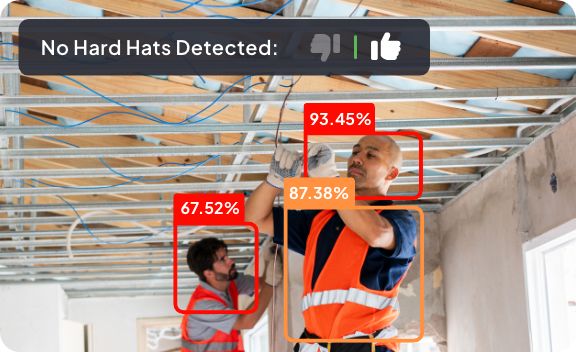
This shift from reactive to proactive safety monitoring makes compliance more scalable and auditable. Instead of relying solely on spot checks and memory, safety teams get documented evidence and trend analysis that help them address risks before they become incidents. By analyzing historical data, AI can recommend updated safety measures based on trends observed in past project data, further enhancing site safety and compliance.
AI-driven analytics can also improve project management by optimizing resource allocation and scheduling.
AI Tools and Use Cases That Support OSHA Compliance
AI remains somewhat controversial, especially as project managers question how it helps them meet expectations. However, AI technologies—including AI-powered cameras, wearables, and drones—are now widely used to automate complex tasks such as site inspection, hazard detection, and safety training, supporting safety management throughout the entire project lifecycle. These technologies enable 24/7 site-wide awareness, reducing construction incident rates by up to 50% according to some reports. Additionally, AI can help track and improve key performance indicators, offering proactive insights into safety performance and operational success. Fortunately, many firms have already deployed AI to assist with various use cases, yielding impressive results.
PPE Detection and Monitoring
One of the most common OSHA violations involves the use of personal protective equipment. Workers forget hard hats, high-visibility vests, gloves, or safety glasses, sometimes out of habit, sometimes because they’re in a rush.
AI technologies can improve worker health monitoring by tracking vital signs such as heart rate and temperature to detect early signs of fatigue or heat stress.
AI-powered construction cameras can continuously monitor live feeds and flag when workers enter zones without required PPE. These systems help protect workers by identifying potential hazards related to PPE compliance, such as missing safety gear or unsafe behaviors, and provide automatic alerts for timely intervention.

These cameras directly support compliance with OSHA’s PPE standards (1910 Subpart I) by creating a consistent enforcement layer. Safety managers can review flagged incidents, coach workers, and maintain documentation proving their PPE program is a top priority.
Hazard Zone Alerts and Access Control
Restricted areas, like trenches, scaffolding zones, or areas with overhead work, require strict access control. But it’s easy for workers to accidentally wander into danger zones, especially on busy sites with changing conditions.
AI vision systems can detect when someone enters a restricted or hazardous area and immediately alert site managers. In addition, AI-powered proximity detection systems on heavy machinery can warn operators and ground workers when they are dangerously close to each other, directly addressing safety concerns in hazardous zones. These extra eyes help construction firms comply with OSHA’s fall protection requirements, confined space regulations, and excavation safety standards.
Automated Incident Documentation
When near-misses or accidents occur, OSHA requires detailed documentation of the incident. Firms must maintain injury and illness logs (Form 300) and be able to produce records during inspections or investigations.
Construction cameras with AI automatically capture and timestamp incidents, creating a reliable audit trail without requiring personnel to manually record everything from memory. Natural language processing can further automate repetitive documentation tasks, allowing safety professionals to focus more on field coaching and safety oversight. Additionally, AI systems can automatically update compliance checklists and protocols in real-time as new regulations come into effect, significantly reducing the administrative burden on safety supervisors. This footage can support OSHA 300 logs, workers’ compensation claims, and internal safety reviews.
Safety Signage and Signal Detection
OSHA mandates proper hazard communication, including visible warning signs, danger tape, and safety barriers. However, signage can become damaged, relocated, or obscured over time, and the absence of signs can result in citations.
AI systems can monitor whether required signage remains visible and legible in key areas. If warning tape gets torn down or a sign falls over, you can catch it on a camera live feed before inspectors do. By ensuring signage is always in place and visible, AI monitoring helps prevent project delays caused by compliance issues.
This helps firms maintain continuous compliance with OSHA’s Hazard Communication Standards (1910.1200) without requiring constant manual checks.
Behavioral Safety Observations
Beyond equipment and signage, worker behavior plays a huge role in safety outcomes. Rushing, improper lifting techniques, and failure to maintain three points of contact on ladders all lead to significant injuries.
AI can enhance safety training programs by analyzing individual performance and suggesting tailored improvements. Generative AI and virtual reality (VR) can create immersive, risk-free training environments where workers practice responding to dangerous scenarios, improving overall workplace safety. Predictive risk analytics models can also flag high-risk periods based on weather logs and project schedules, helping safety managers proactively address potential hazards.
AI can identify patterns in risky behaviors by analyzing video feeds over time. Safety managers get insights into trends they might miss during brief site visits, allowing them to address systemic issues through training or process changes.
TrueLook’s TrueAI PPE Detection automatically monitors construction sites for PPE compliance, documenting when workers do not have on the required safety gear. Contact us to learn how AI-powered cameras can help protect your crew and strengthen your safety program.
Integrating AI with Existing Systems
Integrating AI with existing systems is a critical step for construction companies looking to maximize the benefits of artificial intelligence in their safety programs. Rather than replacing current safety protocols, AI tools can be layered onto established processes to create a more robust safety management framework. By connecting AI-powered systems with existing project management software, construction firms gain a unified view of their construction projects, making it easier for project managers to monitor site safety and identify safety hazards in real time.
This seamless integration allows for the automatic collection and analysis of safety data, helping construction companies streamline project management and safety procedures. AI systems can analyze historical data from previous projects to predict potential safety risks, enabling proactive interventions before incidents occur. As a result, construction firms can enhance safety outcomes, reduce the likelihood of accidents, and improve overall site safety. By leveraging AI alongside existing tools, construction professionals can make more informed decisions, strengthen compliance management, and foster a culture of continuous improvement across all job sites.
Human Roles and Training
The adoption of AI in construction safety is not about replacing people—it’s about empowering them. Construction safety professionals, project managers, and site supervisors remain essential to effective safety management, even as AI tools become more prevalent on construction sites. AI-driven computer vision and machine learning algorithms can process vast amounts of visual data, quickly identifying safety hazards and unsafe practices that might go unnoticed during manual inspections. However, it’s the expertise and judgment of safety professionals that turn these insights into meaningful action.
To fully realize the benefits of AI systems, construction companies must invest in comprehensive training programs. These programs should equip safety managers and construction professionals with the skills needed to interpret AI-generated data, respond to alerts, and integrate new technologies into daily workflows. By fostering collaboration between human intelligence and AI tools, construction firms can enhance construction site safety, improve risk management, and ensure that every worker benefits from the latest advancements in safety technology.
Ethical Considerations
As construction companies embrace AI to enhance construction safety, it’s essential to address the ethical considerations that come with this technology. Protecting worker safety and well-being must remain the top priority. This means ensuring that AI systems are designed and implemented with transparency, fairness, and accountability in mind. Construction firms should establish clear policies around data security and privacy, making sure that sensitive information collected by AI-powered systems is protected and used responsibly.
Another key ethical consideration is the potential for bias in AI decision making. Construction companies must regularly review and audit their AI systems to ensure that safety outcomes are equitable and that no group of workers is unfairly impacted by automated processes. By prioritizing transparency and explainability, construction firms can build trust with their workforce and demonstrate a commitment to ethical AI use. Ultimately, responsible AI integration will help enhance safety outcomes and support a positive safety culture across all construction sites.
Limitations and Risks of AI
While AI offers significant advantages for construction safety, it’s important for construction companies to recognize its limitations and potential risks. AI systems depend on high-quality data to function effectively, and issues such as inaccurate sensors, incomplete data, or algorithmic bias can impact their reliability. Additionally, AI-powered safety tools can be vulnerable to cyber threats, which could compromise the integrity of construction site safety and put sensitive information at risk.
Another risk is the potential for over-reliance on AI, which may lead to complacency or reduced human oversight. Construction firms must ensure that AI is used as a support tool, not a replacement for human judgment and experience. By understanding these challenges, construction companies can implement safeguards—such as regular system audits, robust cybersecurity measures, and ongoing training for safety professionals—to ensure that AI enhances, rather than undermines, construction site safety. With a balanced approach, construction firms can leverage AI to improve safety performance while maintaining the critical role of human expertise in risk management.
Is OSHA Ready for AI? The Regulatory Outlook
OSHA doesn’t require AI. But it does require results. Documented safety programs, PPE compliance, hazard mitigation, and incident reporting are all areas of focus.
AI tools are a proven way to achieve those required outcomes more effectively. They provide the continuous monitoring, consistent enforcement, and detailed documentation that OSHA inspectors look for during audits. In addition, AI can help address labor shortages in construction by automating repetitive tasks, freeing up skilled workers to focus on more complex tasks such as site inspection, progress monitoring, hazard detection, and safety training.
That said, there’s still uncertainty surrounding how AI fits into compliance frameworks in the long term. Construction firms should work with their legal and compliance teams to vet any AI safety tools, especially when cameras are involved.
Privacy protocols matter. Ensure your AI systems respect worker privacy while still providing the necessary safety monitoring. Document how these tools support your existing OSHA protocols, including what data they collect, how they generate alerts, and how they store and review footage.
What Construction Firms Should Do Next
Adopting new technology can be tricky in the best of situations, but AI is a whole different animal. AI is streamlining project management and improving workplace safety throughout the project lifecycle by enabling real-time hazard detection, workforce training, and advanced safety protocols. AI can also enhance jobsite visibility through remote monitoring solutions, allowing for better oversight of multiple projects and more effective planning for future projects. Because of the complexity and sheer capabilities of AI, we recommend you begin your AI safety journey with these steps:
- Start by identifying your highest-risk areas: Where do OSHA violations happen most often? Where have you had near-misses or injuries in the past?
- Evaluate AI-powered construction cameras for safety monitoring: Look for systems that can detect PPE violations, monitor hazard zones, and automatically document incidents. Ensure they integrate seamlessly with your existing safety workflows, rather than adding complexity.
- Work with your legal and compliance teams: Before deploying any AI safety tools, verify they align with your OSHA protocols and respect worker privacy. Create clear policies around data collection, alert handling, and footage retention.
- Document how AI supports compliance: Keep records of alerts generated, incidents captured, and corrective actions taken. This documentation strengthens your safety program and provides evidence during OSHA inspections.
- Train your team: Make sure supervisors and safety managers understand how to use AI tools effectively. The technology is only as good as the response it triggers.
AI Won’t Replace OSHA, But It Will Help You Stay Ahead
AI isn’t a magic solution that eliminates all safety risks or guarantees compliance. It is, however, a powerful tool that enables proactive risk reduction and more consistent safety enforcement. By leveraging artificial intelligence (AI), construction firms can identify potential hazards and address safety concerns at every stage of the project lifecycle, from early planning to ongoing site monitoring.
Construction firms that adopt AI-powered safety monitoring may see fewer incidents, smoother audits, and reduced exposure to costly fines. More importantly, they’re creating safer jobsites where workers face fewer preventable hazards.
TrueLook’s TrueAI* combines live viewing, AI-powered analytics, and automated PPE detection to monitor safety compliance around the clock. See how the right visibility tools can support your OSHA compliance efforts.*