
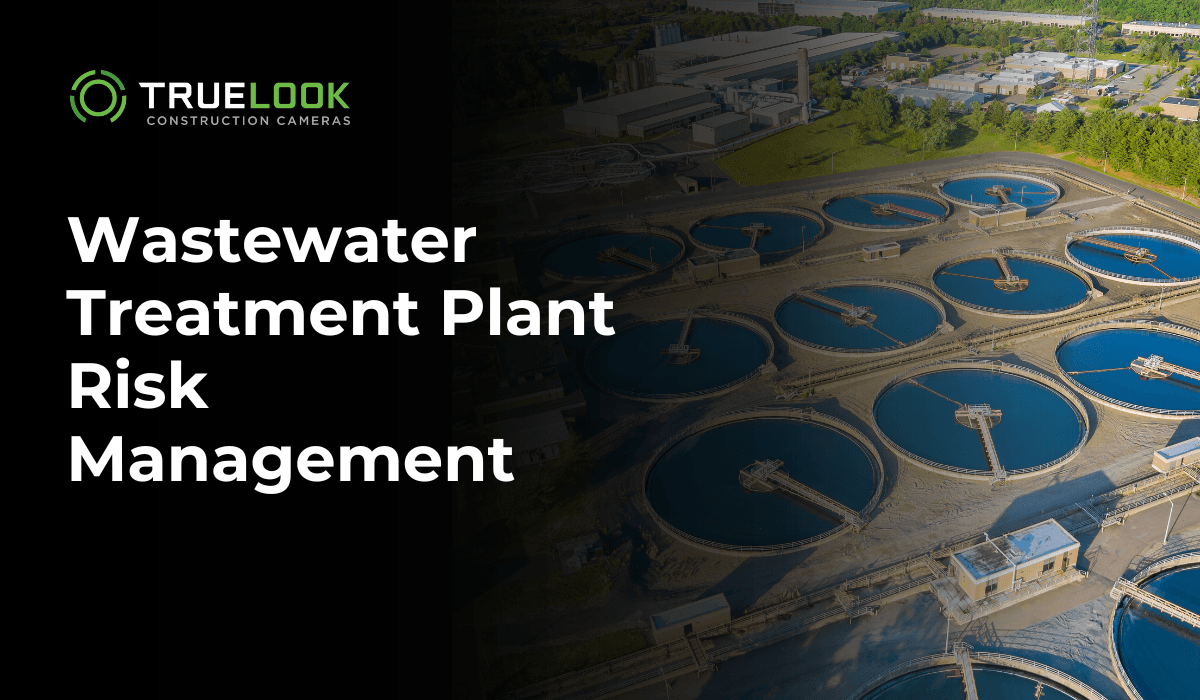
Risk management on a large wastewater treatment plant build comes down to one thing more than any other: having a verifiable, time-stamped record of what happened on site, so disputes, missed inspections, and theft never come down to one person’s word against another’s.
Key Takeaways:
- The core civil and process engineering on large wastewater treatment plant builds is well understood; what actually derails schedules is undocumented change orders, missed regulatory inspection windows, and subcontractor coordination gaps.
- Construction site theft costs the industry $300 million to $1 billion annually, and copper theft adds roughly $1 billion more, making remote wastewater sites a real target.
- Large municipal wastewater treatment plant construction typically runs two to five years from groundbreaking to commissioning and costs roughly $12 million per million gallons per day (MGD) of capacity, as an industry benchmark.
- Continuous, time-stamped visual documentation is the single highest-leverage risk mitigation practice: it resolves disputes, verifies inspection readiness, and deters theft at once.
- AECOM’s expansion of the North City Water Reclamation Plant in San Diego is a real example of this in practice, using continuous jobsite camera documentation across a multi-year build.
The EPA estimates the country needs more than $630 billion over the next 20 years just to bring wastewater and stormwater infrastructure up to standard. The Clean Water State Revolving Fund has already pushed over $175 billion in cumulative lending into these builds, and the 2021 infrastructure law added another $11.7 billion on top of that through 2026.
That’s the headline. Every trade publication, engineering firm, and municipal budget office is talking about the money.
What’s getting a lot less attention is what happens once that money turns into an active jobsite, because a large wastewater treatment plant build isn’t one project. It’s a multi-year sequence of civil, process, electrical, and instrumentation work happening in parallel, on a site that has to stay operational (or partially operational) the whole time, under a regulatory microscope that doesn’t pause for construction. That’s where risk actually lives, and it’s not the part the funding reports capture.
The Scale of Risk on Large Wastewater Treatment Plant Construction Projects
A large municipal wastewater treatment plant build typically runs two to five years from groundbreaking to commissioning, depending on capacity and process complexity.
Cost follows capacity closely: industry estimates put large municipal builds at roughly $12 million per million gallons per day (MGD) of average flow, with actual figures varying by treatment technology and site conditions. During that multi-year, multi-million-dollar window, you’ve got dozens of subcontractors cycling through the same footprint: civil crews pouring basins while electrical is running conduit twenty feet away, instrumentation techs calibrating SCADA systems while a completely different crew is still on excavation.
Add in the fact that a lot of these plants sit outside city centers, near reservoirs, discharge points, or rural utility corridors, and you’ve got a site that’s harder to staff, harder to supervise, and harder to walk end-to-end on any given day.
Every PM certification teaches the same three-step framework for risk management: identify the risk, assess how likely and costly it is, then put a mitigation in place. That part isn’t wrong.
Here’s the context that matters: on a build this size, almost every risk that actually materializes isn’t a failure to identify it in advance. It’s a failure to have a verifiable record when someone (an owner, an inspector, an arbitrator) asks what happened and when.
Why Documentation Is the Real Risk Management Strategy
Most risk registers for these projects list the right categories:
- Schedule risk
- Dispute risk
- Safety and Compliance risk
- Security risk
What they don’t do is name the actual mechanism that turns each of those from a manageable event into a six-figure problem. In every case, it’s the same one: nobody can prove what happened.
A subcontractor says the client changed the piping spec verbally. The client says they never approved it. An inspector flags a missed commissioning window and the GC says the crew was on site, but nobody can show it. A section of copper wiring disappears from a laydown yard, and there’s no record of who had access that week. None of these are exotic risks. They’re the routine, predictable failure points on every large capital project, and they only become expensive when there’s no record to settle the question fast.
Best Practices for Risk Management on Wastewater Treatment Plant Construction
The projects that stay on schedule and on budget tend to share the same handful of habits, none of which are complicated:
- Time-stamped visual records replace memory. A dated photo or video of what the site looked like on a given day beats any number of meeting notes when a change order is disputed. This is the single highest-leverage practice on the list.
- Continuous oversight across every concurrent trade, not spot checks. With civil, process, and electrical crews overlapping constantly, a super or PM physically walking the whole site every day isn’t realistic. Remote visibility across the full footprint closes that gap.
- Regulatory inspection windows are documented, not just scheduled. A missed commissioning inspection can push a plant’s go-live date by weeks. A verifiable record that the crew and equipment were staged and ready removes the ambiguity if a window gets missed for reasons outside the contractor’s control.
- Remote owner and executive visibility, especially on rural or multi-site builds. Municipal owners and program managers overseeing more than one plant can’t be physically present at every site. Live remote access replaces status-update phone calls with an actual look at where things stand.
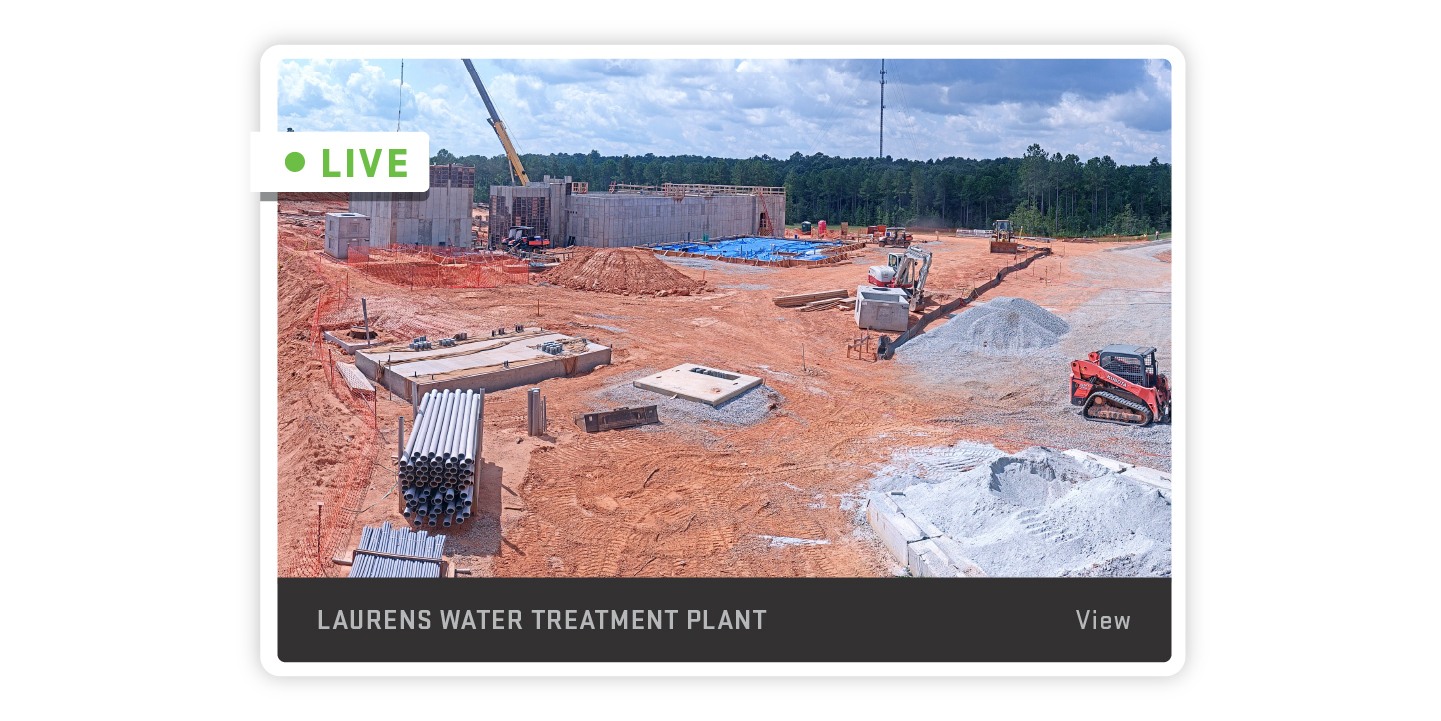
Where TrueLook fits: This is the exact gap continuous jobsite cameras are built to close: a running, time-stamped visual record of the entire site, accessible remotely, that turns “he-said, she-said” into a settled question in minutes. See how TrueLook documents active construction sites →
Theft Risk on Remote Wastewater Treatment Plant Construction Sites
Construction equipment theft costs the industry an estimated $300 million to $1 billion a year, per the long-standing National Equipment Register (NER) / NICB estimate, and recovery rates on stolen equipment stay under 25%. Copper theft adds another roughly $1 billion in annual losses on top of that, per Department of Energy estimates cited by NICB, and treatment plants are a specific target because critical infrastructure runs on the same conductive metals that scrap buyers pay for.
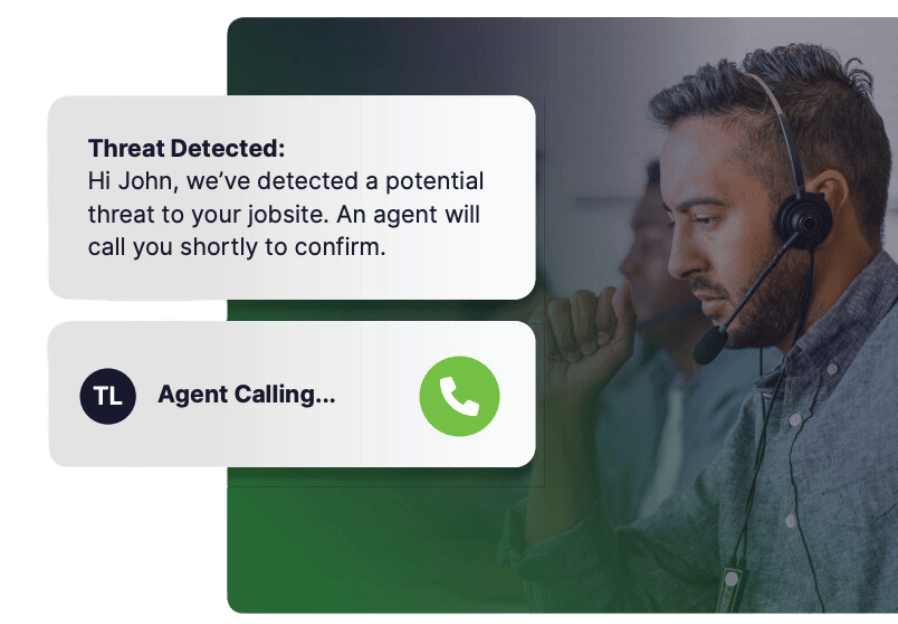
A remote plant site outside a city center, with materials staged overnight and minimal after-hours foot traffic, checks every box thieves look for. The fix isn’t more fencing: live remote camera access with real-time alerts does the same job a security guard would, without needing a guard physically on a site that might be forty minutes from the nearest town.
Municipal Wastewater Treatment Plant Construction Case Studies
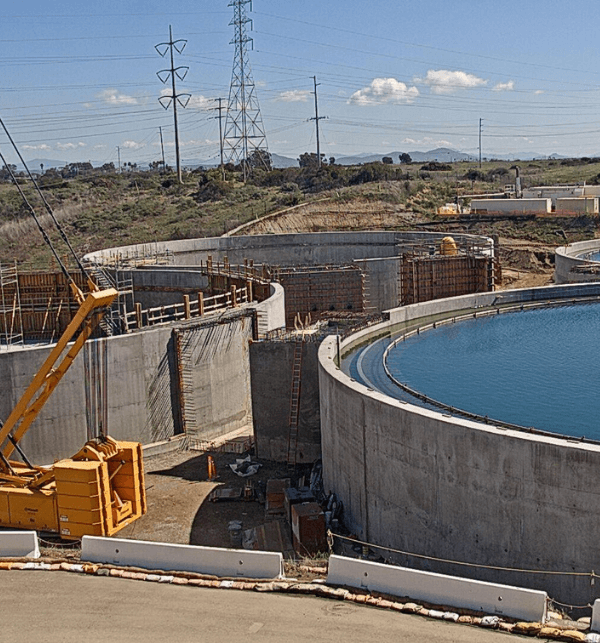
AECOM’s expansion of the North City Water Reclamation Plant in San Diego is a good example of what this actually looks like in practice. It’s a multi-year build (started in 2019 and was completed in 2025) centered on a new Flow Equalization Basin that will take the plant’s capacity from 30 million gallons a day to 52 million gallons a day once it’s online. That’s not a small addition. It’s years of foundation work, structural buildout, and process equipment installation on a live municipal reclamation site, with a hard capacity target at the end of it.
A project on that scale, over that timeline, is exactly the profile where documentation gaps turn into real cost: multiple phases, a long stretch of time between milestones, and a lot of distance (literal and organizational) between the field and the people who need to verify progress.
AECOM deployed a TrueLook 1080p PTZ camera on the site specifically to keep a continuous, real-time visual record from foundation work through the rising structure, giving the project team a way to track milestones and stay ahead of issues as they came up, rather than reconstructing what happened after the fact. (See the full project highlight →)
On the regulatory side, EPA’s own case study on Richmond Hill, Georgia is a useful reference point for the other kind of exposure these projects carry. The city spent more than six years under a state consent order tied to a treatment facility that fell out of compliance, at an ongoing monthly cost, before a new plant resolved it. That’s the kind of multi-year exposure that starts with a documentation and compliance gap most people wouldn’t think to flag as a “construction risk” at all, but it is one, and it starts on day one of the build.
Common Risk Management Failures in Wastewater Treatment Plant Construction
| Failure mode | What actually prevents it |
|---|---|
| Disputed change order, no record of approval | Time-stamped photo/video log tied to the date work occurred |
| Missed regulatory inspection window | Verifiable record of crew and equipment readiness on the scheduled date |
| Materials or copper theft overnight | Live remote monitoring with after-hours alerting |
| Owner/PM can’t verify progress remotely | Continuous, accessible site footage instead of status calls |
| Subcontractor coordination breakdown (multiple trades overlapping) | Full-site visibility that shows who was where, and when |
FAQ: Risk Management on Large Wastewater Treatment Plant Construction Projects
It’s rarely the core civil or process engineering; that work is well understood. The bigger risk is disputes and delays that stem from a lack of documentation: unclear change order approvals, missed inspection windows, and coordination gaps across multiple concurrent trades.
Most large municipal builds run two to five years from groundbreaking to commissioning, depending on plant capacity and process complexity. For a broader look at the phases involved, see our complete guide to water treatment plant construction.
Many sit outside city centers with limited after-hours presence, and they rely heavily on copper and other conductive materials that carry high resale value, the same profile that drives roughly $1 billion in annual copper theft industrywide.
Continuous, time-stamped visual documentation of the site. It’s the one practice that directly resolves disputes, verifies compliance, and deters theft, all at once.
The Bottom Line on Risk Management in Wastewater Treatment Plant Construction
None of the risks on a large wastewater build are hard to predict. Change orders happen. Inspections get missed. Materials sitting on a remote site overnight get targeted. What separates a project that absorbs those events from one that loses months and six figures to them is whether there’s a record that settles the question the moment it’s asked.
That’s the piece I think about most: risk management on these projects isn’t really about preventing the bad day. It’s about making sure the bad day has a clean answer.
If you’re managing risk on a large wastewater or water treatment build, let’s talk about what full-site visibility looks like on a project like yours.