
Grid modernization is the ongoing effort to upgrade America’s transmission and distribution infrastructure, replacing aging poles, wires, substations, and control systems with smarter, more resilient technology built for today’s demand. For utility owners and the construction teams building this new infrastructure, it’s no longer a future-tense conversation. It’s the project on your schedule right now, and it’s happening at a scale the industry hasn’t seen in decades.
Key Takeaways
- Grid modernization investment is climbing fast: Wood Mackenzie projects a 23% increase in U.S. spending between 2025 and 2030, on top of a 27% jump the previous five years.
- More than 70% of U.S. transmission lines are already over 25 years old, and 31% of transmission and 46% of distribution infrastructure is near or past its intended lifespan.
- The IEA estimates annual global grid investment needs to rise roughly 50% by 2030, from today’s $400 billion baseline, just to keep pace with demand.
- Data center and EV load growth is accelerating the timeline; data centers alone could grow from 4% of U.S. electricity demand in 2023 to 9% by 2030.
- Remote visibility, time-lapse documentation, and AI-powered monitoring have become standard project tools on modern grid builds, giving utilities and contractors a way to prove progress and protect against disputes on high-stakes projects.
- Permitting, not construction, is typically the longest phase of a grid modernization project, and multi-contractor coordination is one of the biggest sources of schedule risk.
- For construction teams, this means more substation builds, more transmission miles, and more pressure to hit deadlines with fewer delays and less rework.
Why Grid Modernization is Happening Now
Most of the U.S. power grid was built in the 1960s and ’70s, back when demand grew slowly and predictably. That’s not the world utilities operate in anymore. Over 70% of the nation’s transmission infrastructure is more than 25 years old, and utilities like American Electric Power have already flagged that roughly 30% of their power lines will need replacement within the next decade.
At the same time, demand is shifting in ways the old grid was never designed to handle. Wind and solar projects are being built in rural areas far from existing transmission corridors, which means utilities have to string new high-voltage lines across long distances just to connect them. Layer in electric vehicle charging, which could add 100 to 185 terawatt-hours of annual demand by 2030, and the explosive growth of AI-driven data centers, and it’s easy to see why utilities are treating modernization as urgent rather than aspirational.
The financial numbers reflect that urgency. Investor-owned electric utilities plan to spend more than $1.1 trillion between 2025 and 2029 upgrading and expanding the grid, and globally, roughly $5.8 trillion is forecast for grid upgrades through 2035. For construction firms, that translates into a wave of substation, transmission, and distribution projects that will keep crews busy for years.
What Does Electricity Grid Modernization Actually Include?
“Grid modernization” covers a broad set of upgrades, but most projects fall into a few categories:
- Transmission line rebuilds and expansion: replacing decades-old conductors and towers, and building new high-voltage corridors to connect renewable generation.
- Substation upgrades: modernizing transformers, switchgear, and protective relays to handle higher loads and integrate digital monitoring.
- Distribution automation: smart meters, sensors, and automated switches that let utilities detect and isolate faults faster.
- Grid-enhancing technologies: software and hardware that squeeze more capacity out of existing lines without a full rebuild.
- Resilience hardening: undergrounding lines, reinforcing poles, and adding redundancy to withstand severe weather.
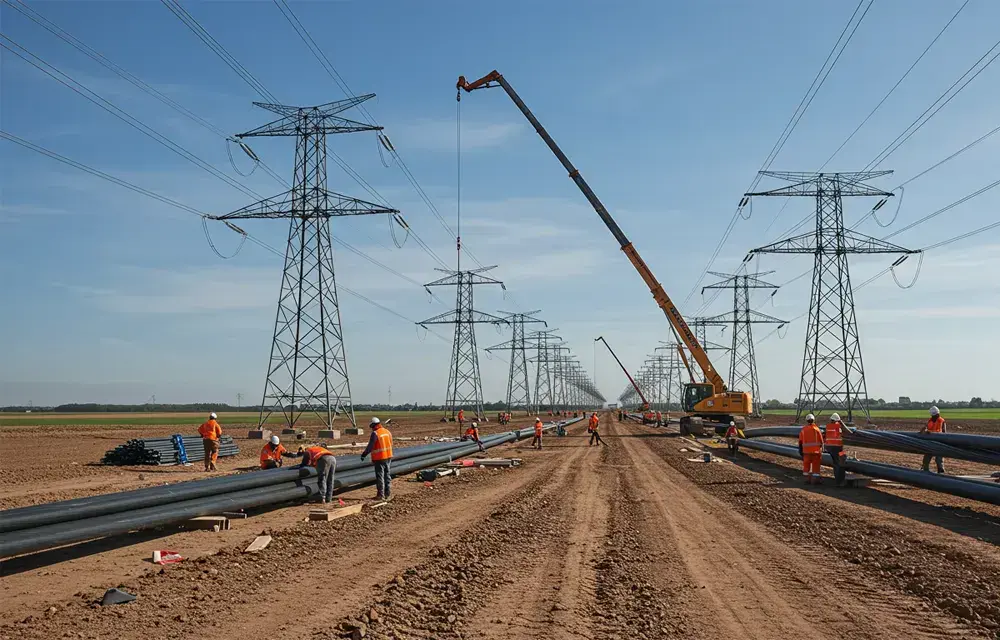
Every one of these is a construction project with its own site logistics, safety requirements, and inspection demands, and every one carries real financial stakes if it falls behind schedule.
The Cost of Standing Still
The case for modernization isn’t theoretical. Power outages already cost the U.S. economy an estimated $121 billion annually, and the frequency of major outages has tripled since 2003, while average outage duration per customer is up roughly 40% over the same stretch. Every month a modernization project slips is another month utilities are running on infrastructure that’s already past its design life.
That pressure flows straight down to the job site. Utility owners are watching these builds closely; funding is tied to regulatory timelines, rate cases, and public commitments which means construction teams working on substations, transmission corridors, and distribution upgrades are under real scrutiny to document progress, avoid costly delays, and prove the work is on track.
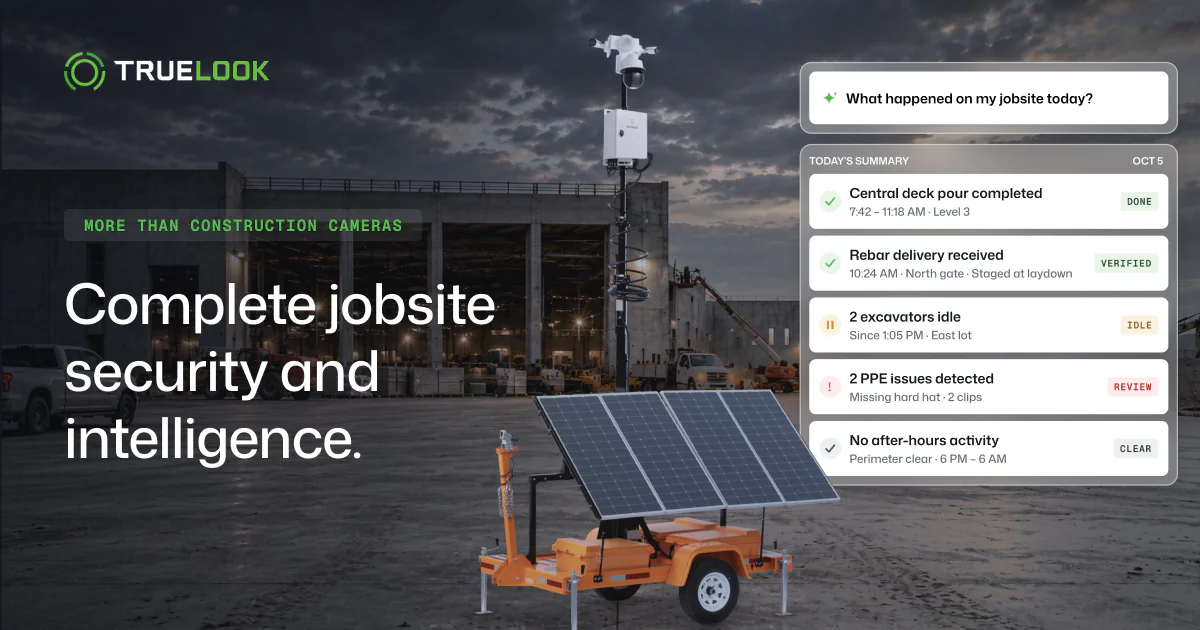
See it for yourself: If you’re managing a substation build or transmission project, TrueLook’s construction cameras give utility owners and project leads live visibility into progress from anywhere — no site visit required.
Grid Modernization Project Tools Utilities and Contractors Are Deploying Today
Modernization isn’t just about new poles and wires; it’s also about how utilities and their construction partners manage the projects themselves. A few project tools are becoming standard on modern grid builds:
1. Remote Project Visibility
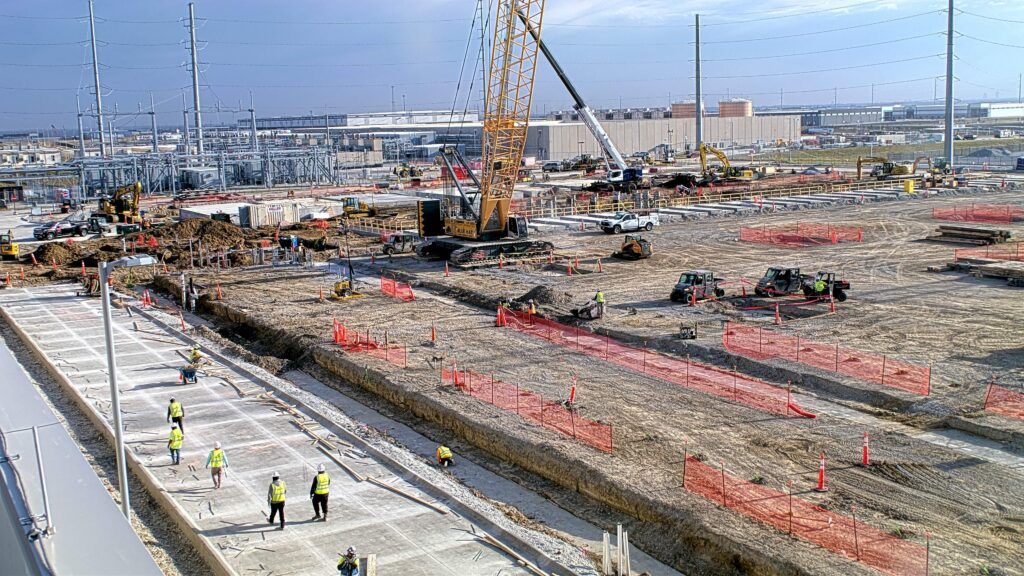
With projects spread across rural transmission corridors and urban substations alike, utility owners can’t be on-site every day. Remote camera systems give project owners, engineers, and safety managers a live view of progress, staging areas, and crew activity without a site visit, which matters when a single substation project can span multiple counties.
2. Time-Lapse Documentation for Stakeholders
Utility commissions, investors, and regulators often want proof of progress. Time-lapse footage gives utilities a clean, verifiable record of construction milestones; useful for regulatory filings, community updates, and internal reporting, and it doubles as documentation if a dispute or change order comes up later.
3. Security and Theft Deterrence
Transmission and substation sites hold valuable copper, transformers, and equipment, often in remote or unmanned locations overnight. Active deterrence and real-time alerts help protect materials and equipment on sites that can’t always be staffed around the clock; a real cost concern on large, multi-phase grid projects. TrueLook’s guide to jobsite theft prevention covers this in more depth.
4. Solar-Powered Monitoring for Remote Sites
Many grid modernization projects, especially new transmission corridors connecting rural wind and solar farms happen far from reliable power or internet. Solar-powered camera systems solve that problem, giving teams connectivity and visibility even at the most remote build sites. TrueLook’s complete guide to solar-powered cameras breaks down how these systems work.
5. AI-Powered Safety Monitoring
As grid modernization projects scale up crew size and equipment on-site, safety compliance becomes harder to track manually. AI-powered tools that flag PPE gaps or unsafe zones in real time help construction teams stay ahead of incidents, something covered in TrueLook’s construction AI camera guide.
What This Means for Utility and Construction Teams
Grid modernization isn’t a single project, it’s a multi-decade construction cycle that’s just getting started. The IEA projects annual grid investment needs to climb about 50% by 2030, and utilities are already signaling that permitting, workforce capacity, and project execution will determine how fast that work gets done.
For construction teams, that means more bids, more concurrent projects, and more pressure to deliver on schedule with clean documentation. Owners funding these projects want to see progress, not just read about it in a monthly report. Teams that can show real-time visibility into their sites are in a stronger position to win the next contract and defend against disputes on the current one.
Planning a Grid Modernization Project: What Actually Determines the Timeline
Knowing what grid modernization involves is one thing. Planning one is another. For utility owners and the contractors bidding this work, a few factors consistently determine whether a project stays on schedule or slips:
1. Permitting, Not Construction, Is Usually the Long Pole
The physical build — stringing conductors, setting transformers, upgrading switchgear — is often faster than the approval process that has to happen first. Substation and transmission projects can spend a year or more in permitting and regulatory review before crews break ground, which means the planning phase deserves as much attention as the construction schedule itself.
2. Phasing Determines Risk Exposure
Most large modernization programs are broken into phases rather than executed as a single build; a distribution automation rollout might phase by feeder or substation, while a transmission corridor project phases by segment. Getting the sequence right (which sections go first, and why) affects everything downstream: crew mobilization, material lead times, and how quickly a utility starts seeing reliability gains.
3. Multi-Contractor Coordination Adds Real Schedule Risk
Grid modernization projects rarely involve a single contractor. Substation upgrades, transmission line work, and distribution automation often run in parallel with different crews, different vendors, and different timelines that all have to line up. A delay from one contractor can cascade into another’s schedule, which is part of why owners increasingly want visibility into every site, not just status updates after the fact.
4. Documentation Requirements Are Built Into the Funding
Because so much of this work is tied to rate cases, regulatory approval, or public investment, utilities need to show verifiable progress, not just report it. That means the planning phase has to account for how progress will be documented and proven from day one, not added on after a dispute or audit comes up.
Planning around these four factors early, before a shovel goes in the ground, is what separates grid modernization projects that hit their timeline from the ones that don’t.
Ready to Bring Visibility to Your Next Grid Project?
TrueLook gives utility owners and construction teams the on-site visibility to keep grid modernization projects moving.
FAQ
Grid modernization is the process of upgrading the transmission and distribution infrastructure that delivers electricity, replacing aging poles, wires, substations, and control systems with smarter, more resilient technology. It includes transmission rebuilds, substation upgrades, distribution automation, and resilience hardening designed to handle rising demand and more frequent severe weather.
Most of the U.S. grid was built in the 1960s and ’70s and wasn’t designed for today’s load. Data center growth, EV adoption, and renewable interconnections are straining infrastructure that’s already past its intended lifespan, and outages tied to aging equipment already cost the U.S. economy over $100 billion a year.
Common grid modernization solutions include smart meters and sensors, automated switches that isolate faults faster, grid-enhancing technologies that add capacity to existing lines, and substation upgrades with digital monitoring. On the construction side, remote jobsite visibility and time-lapse documentation are increasingly part of how these projects get delivered on schedule.
Investor-owned utilities plan to spend more than $1.1 trillion on the grid between 2025 and 2029, and the IEA estimates annual global grid investment needs to rise roughly 50% by 2030 to keep pace with demand. Globally, close to $5.8 trillion is forecast for grid upgrades through 2035.
Timelines vary widely by project type. A distribution upgrade might take months, while a new substation or transmission corridor can run 18 months to several years, largely driven by permitting and long equipment lead times rather than the construction itself.