Construction sites lose over $1 billion in equipment and materials every year — and less than 25% of it is ever recovered. If you’ve ever arrived at a jobsite to find stolen tools, missing copper, or tampered equipment, you already know how fast those losses add up.
The right security cameras for construction sites don’t just record what happened — they help prevent it from happening in the first place. But with dozens of camera types and vendors in the market, knowing which solution actually fits a working construction environment is half the battle.
This guide breaks down what to look for, what features matter most on active jobsites, and how to choose a camera system built for the realities of construction — not a parking lot or retail store.
Why Construction Sites Need Purpose-Built Security Cameras
A standard home security camera won’t cut it on a commercial jobsite. Construction environments are uniquely challenging: open perimeters, no permanent power, and constant layout changes. In fact, the Associated General Contractors of America (AGC) highlights in their Recommended Practices for Securing Project Sites that both high-quality cameras and security personnel are essential for maintaining long-term security during site shutdowns.
According to the National Equipment Register, more than 11,000 equipment theft incidents are reported annually in the U.S. — roughly 30 per day. The most commonly targeted items include copper wiring, lumber, hand tools, generators, and heavy machinery. Most thefts happen overnight or on weekends when sites are unattended.
Standard surveillance cameras fail on construction sites for a few common reasons:
- No Wi-Fi or power infrastructure during early build phases
- Changing site layouts that make fixed installations impractical
- Harsh environments — dust, rain, vibration, and temperature extremes
- Large open areas with multiple blind spots that need wide-angle or PTZ coverage
The best security cameras for construction sites are designed around these challenges, not retrofitted from consumer products.
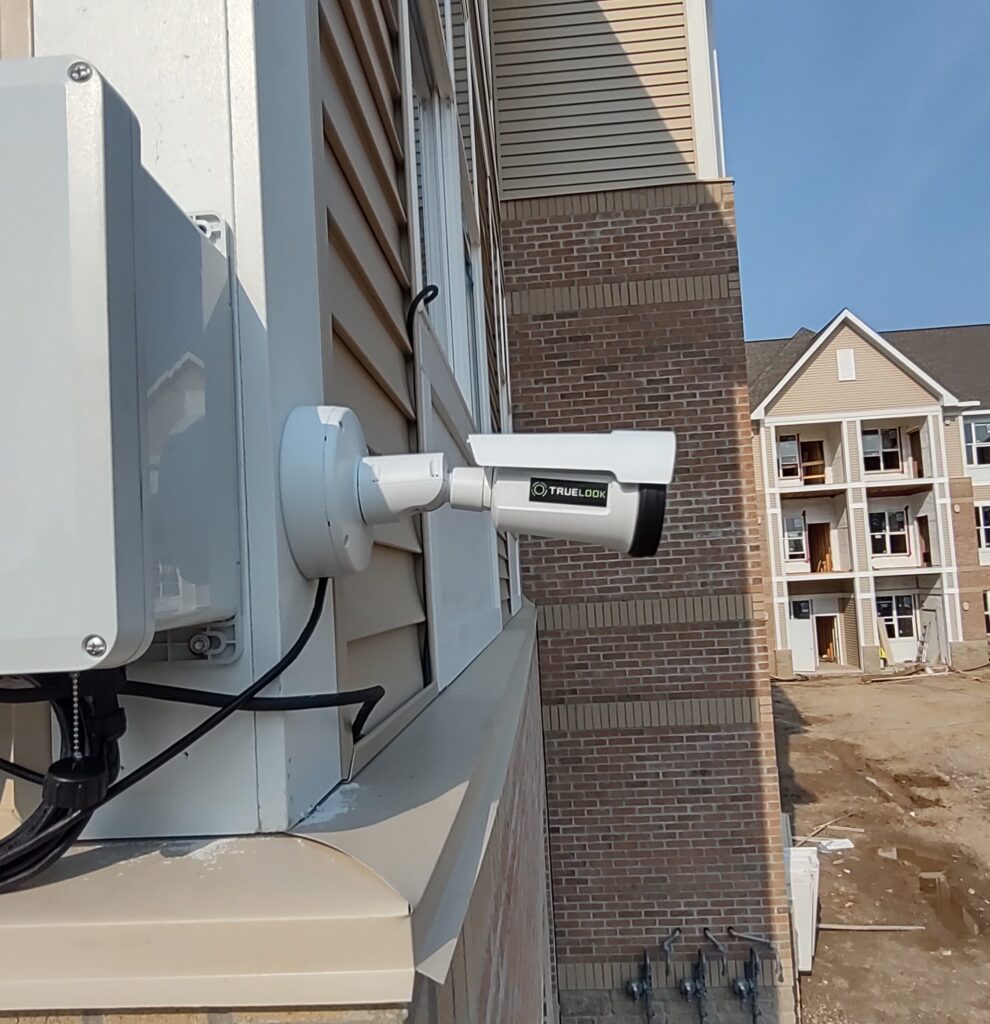
Key Features to Look For
Before comparing specific camera options, it helps to know which features actually matter on a jobsite. Here’s what experienced project managers and site supervisors consistently prioritize:
1. Resolution: 1080p Minimum, 4K Preferred
Grainy footage doesn’t help with insurance claims or identifying intruders. Look for a minimum of 1080p HD resolution, with 4K becoming the industry standard for sites where identifying individuals or equipment details is important. Higher resolution is especially valuable when cameras are mounted far from key assets.
2. Weatherproof Rating (IP65 or Higher)
Construction cameras get rained on, dusty, and occasionally bumped. An IP65 or IP66 weatherproof rating is essential — IP65 protects against water jets and dust ingress, while IP66 adds resistance to powerful water streams. In colder climates, look for cameras rated to operate in below-freezing temperatures.
3. 4G LTE Connectivity
Many construction sites don’t have reliable Wi-Fi until well into the build. 4G LTE-enabled cameras work independently of on-site internet, letting you monitor remotely from day one. This is critical for remote sites, early-phase projects, and locations where broadband installation lags behind construction activity.
4. Solar or Battery Power Options
Hard-wired installations require power infrastructure that often isn’t available in the early stages of construction. Solar-powered or battery-operated cameras can be deployed immediately, without waiting on an electrician. Solar options with rechargeable batteries provide continuous operation without regular maintenance.
5. Night Vision and Low-Light Performance
The majority of construction site theft happens after dark. Look for cameras with infrared (IR) night vision or color night vision with spotlight capability. The detection range matters — cameras covering large open areas need IR range of 50 feet or more to be effective.
6. Motion Detection and Real-Time Alerts
Modern jobsite cameras should do more than record — they should notify you the moment something happens. AI-powered motion detection that distinguishes between people, vehicles, and environmental noise (like blowing tarps) dramatically reduces false alarms while ensuring you respond to real threats quickly.
7. Pan-Tilt-Zoom (PTZ) Capability
For large sites, PTZ cameras allow one unit to cover ground that would otherwise require multiple fixed cameras. PTZ cameras can pan horizontally, tilt vertically, and zoom optically — letting security personnel or automated systems follow movement across broad areas.
8. Cloud Storage
On-site DVRs can be stolen alongside the equipment they’re meant to protect. Cloud-based storage keeps your footage off-site and accessible even if a camera is damaged or removed. Look for plans that retain footage long enough to support insurance claims and legal proceedings — typically 30 days minimum.
One platform. Every site. Zero surprises.
TrueLook centralizes live camera feeds, time-lapse, and jobsite data into a single dashboard built for PMs — not IT teams. See everything, from anywhere, right now.
Camera Types: Which One Fits Your Site?
Not every construction project needs the same solution. Here’s a breakdown of the main camera types and when each makes the most sense:
Fixed Cameras — Best for high-value fixed locations like tool lockups, site entrances, fuel storage, and material staging areas. Focused, reliable, cost-effective for targeted monitoring.
PTZ Cameras — Best for large, active sites with broad open areas. One PTZ can replace several fixed cameras and allows active tracking of movement across wide coverage zones.
Solar-Powered 4G LTE Cameras — Best for early-phase construction, remote sites, or projects where power infrastructure doesn’t yet exist. Self-contained and repositionable as the site evolves.
Time-Lapse Cameras — Dual-purpose tools that serve both security and project documentation. Time-lapse cameras capture progress imagery at set intervals while also providing site surveillance. These are particularly valuable for client reporting, dispute resolution, and marketing.
| TrueLook | Alternatives | |||||
|---|---|---|---|---|---|---|
| TrueLook 4K Fixed / PTZ Custom Quote ⭐ Built for Jobsites | Reolink Argus B440 $119.99 | Tactacam DEFEND Cellular $119.99 | Tactacam DEFEND 360 $199.99 | Ring Spotlight Cam Plus $149.99 | Ring Outdoor Cam Pro PoE $199.74 | |
| Resolution | 4K (8K available) | 4K | 1080p–2K | 1080p | 1080p | 4K |
| Power | Wired · Solar · Trailer | Solar + Battery | Battery | Battery | Battery | Wired (PoE) |
| Connectivity | 4G LTE + Wired + Wi-Fi | Wi-Fi | Cellular only | Cellular only | Wi-Fi | Wired only |
| Pan / Tilt (PTZ) | ✓ Full optical PTZ | ◑ Pan/tilt, no optical zoom | ✗ | ◑ 360° pan only | ✗ | ✗ |
| Motion Detection | AI-powered | Basic PIR | PIR sensor | PIR sensor | Motion zones | 3D motion |
| Night Vision | infrared (IR) night vision | Color night vision | IR only | IR only | Spotlight + color | Color night vision |
| Storage | Cloud-based | Cloud + local SD | Cloud (plan req’d) | Cloud (plan req’d) | Cloud (sub req’d) | Cloud (sub req’d) |
| Weatherproofing | IP66 · Extreme temp rated | IP66 | IP66 | IP66 | IP55 | IP64 |
| Time-Lapse | ✓ Automated, built-in | ✗ | ✗ | ✗ | ✗ | ✗ |
| Live Streaming | ✓ 24/7 HD multi-site | ✓ App-based | ◑ Limited cellular | ◑ Limited cellular | ✓ App-based | ✓ App-based |
| Integrations | Procore · Autodesk · Raken | ✗ | ✗ | ✗ | Amazon / Alexa | Amazon / Alexa |
| Pro Monitoring | ✓ TrueShield + TrueDeter | ✗ | ✗ | ✗ | ◑ Ring Protect | ◑ Ring Protect |
| Multi-site Dashboard | ✓ Unlimited projects | ✗ | ✗ | ✗ | ✗ | ✗ |
| Best Use | Commercial construction · All phases · Security + documentation | All-around home / small site | Remote sites, no Wi-Fi | Open areas, 360° view | Theft deterrence, residential | Permanent wired installs |
| Price Tier | Flexible Plans | Budget | Budget | Mid-Range | Mid-Range | Mid-Range |
What Sets TrueLook Apart for Jobsite Security
TrueLook construction cameras are built specifically for the demands of active job sites, not adapted from consumer or commercial security products. The platform integrates high-definition live streaming, time-lapse documentation, and cloud-based security monitoring in a single system designed for the construction workflow.
A few things that distinguish TrueLook in this space:
- Purpose-built hardware designed to withstand harsh outdoor environments across all phases of construction
- Live streaming so project managers, owners, and security teams can check the site in real time from any device
- Time-lapse and jobsite documentation built into the same system — your security camera becomes a progress documentation tool
- Rapid deployment without the need for complex installation or on-site IT infrastructure
- Dedicated construction expertise — TrueLook works exclusively with the construction industry, meaning their cameras and platform reflect real jobsite needs
For a deeper look at how to stop theft before it starts, TrueLook’s jobsite theft prevention guide walks through practical strategies, from camera placement to site access control, that work together to protect your assets.
Placement Strategy: Where to Put Your Cameras
Having the right cameras is only part of the equation; placement is key. Leading industry bodies like the AGC recommend integrated security strategies that combine physical site security and camera surveillance to ensure full coverage during both active and idle hours.
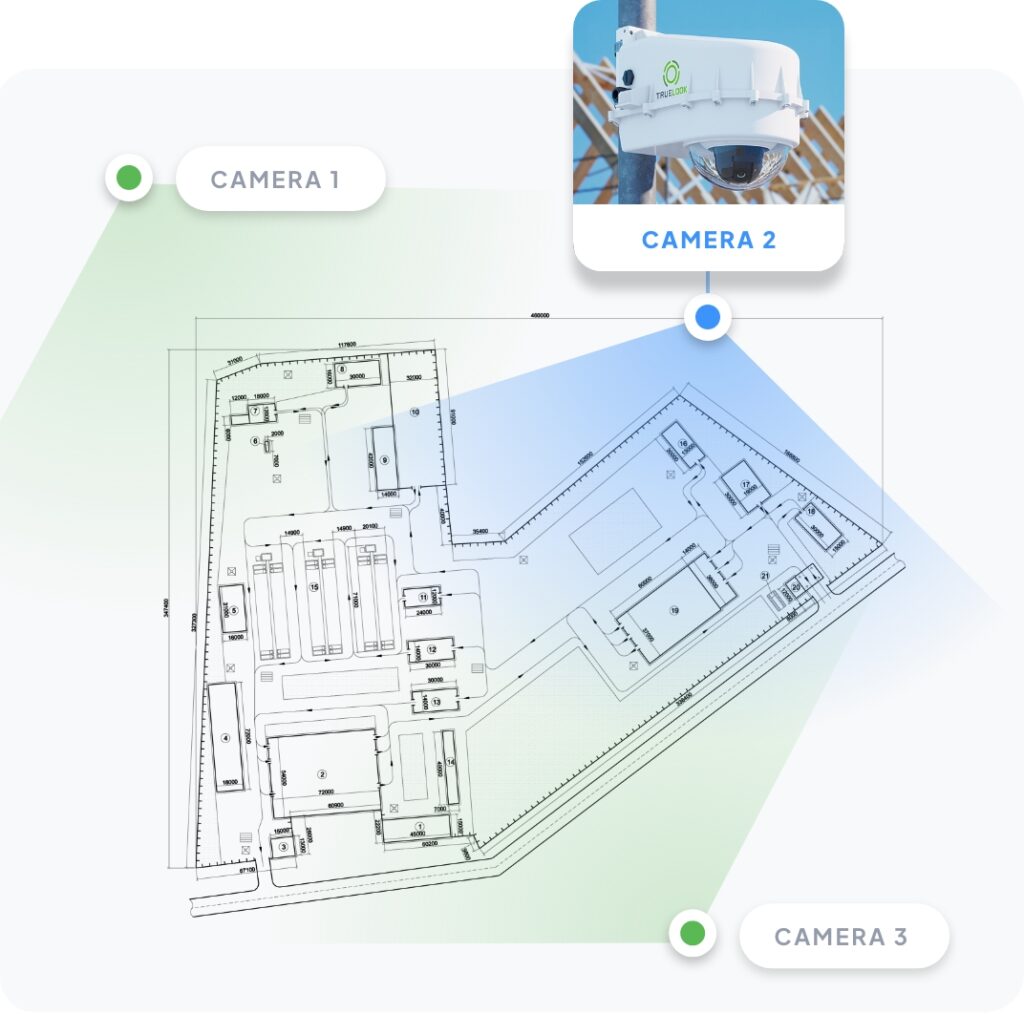
Prioritize these locations first:
- Site entrances and exits — Every access point should be covered, including pedestrian gates and vehicle entry points
- Material staging areas — Where lumber, copper, and other high-value materials are stored
- Equipment parking areas — Where machinery is secured overnight and on weekends
- Tool lockups and storage containers — High-frequency theft targets, especially for hand tools and power tools
- Perimeter blind spots — Any area not visible from the main camera coverage that could provide concealed access
Overlap your camera fields of view to eliminate gaps. A single blind spot is all a determined thief needs.
FAQ: Security Cameras for Construction Sites
No. 4G LTE-enabled cameras operate independently of on-site internet, making them ideal for early-phase construction or remote locations. As long as your area has cellular coverage, your cameras can stream and store footage without an on-site Wi-Fi connection.
It depends on site size and layout, but most mid-size commercial sites benefit from 4–8 cameras covering entrances, equipment areas, material storage, and perimeter blind spots. Larger sites with multiple access points and laydown areas may need more. A site walkthrough helps identify the right number and placement.
A minimum of 1080p HD is recommended for clear identification of individuals and equipment. 4K resolution is increasingly preferred for larger sites or anywhere detail matters for insurance or legal purposes.
Yes — and this is one of the key advantages of purpose-built construction camera platforms like TrueLook. Time-lapse cameras capture project progress for client reporting, milestone documentation, and marketing content, while serving as security assets at the same time.
Cloud storage is strongly recommended. If a camera is stolen or damaged, locally stored footage is lost with it. Cloud-based systems keep recordings accessible from anywhere and protect your evidence regardless of what happens on-site.
Modern solar-powered cameras with rechargeable lithium batteries provide consistent operation even through multiple cloudy days. For sites in regions with low winter sunlight, look for systems with higher-capacity batteries or supplemental power options.
Conclusion: The Right Camera Pays for Itself
Construction site theft isn’t a minor inconvenience — it delays projects, raises insurance premiums, and in serious cases, can threaten a project’s financial viability. With recovery rates below 25% for stolen materials, prevention is the only reliable strategy.
The best security cameras for construction sites combine rugged hardware, flexible power and connectivity, high-resolution imaging, and smart monitoring tools built for how construction actually operates. Whether you’re securing a single residential build or a multi-phase commercial development, the right system gives you visibility and a measurable deterrent. This alignment with industry-recommended security practices ensures your site remains protected during both daily operations and long-term shutdowns.
TrueLook’s purpose-built construction cameras deliver all of this — along with the time-lapse and project documentation capabilities that turn your security investment into a multi-functional jobsite tool.
Get a quote in under 10 minutes.
Tell us about your jobsites and we’ll put together a custom plan. No pushy sales — just answers.
Get My Quote →