Construction site and progress photography is one of the simplest, most effective risk management tools a general contractor has and one of the most frequently done halfway. A complete documentation program costs $3,500–$12,000 over the life of a typical commercial project. A single unresolved dispute costs far more.
This guide covers what good documentation looks like, how to build it into your project workflow, and what combination of tools gives you the best protection when things go sideways.
Why Site Photography Is Worth Taking Seriously
Most GCs take photos. Fewer have a system that actually holds up when it matters.
The difference shows up in four situations:
- Change order disputes: A subcontractor claims the existing conditions required extra work. If you have dated photos of those conditions before work began, you have something to stand on. If you don’t, you’re arguing from memory.
- Concealed condition claims: Once drywall goes up or concrete gets poured, whatever is behind it stays there. Photos taken during rough-in are the only permanent record of what was installed, where, and how. That window closes fast — and it never reopens.
- Delay documentation: Proving a weather delay, a utility conflict, or interference from an adjacent project requires evidence from the time it happened, not a written account put together weeks later. Continuous camera footage is particularly strong here because it shows exactly what was happening on site, hour by hour, without anyone having to be there to capture it.
- Lender draw support: Lenders on larger projects increasingly want to see photographic backup before approving draw requests. A clean, organized photo record moves that process along. A gap in documentation slows it down.
What a Complete Documentation Program Looks Like
Good construction documentation isn’t one thing — it’s three layers working together: scheduled professional photography, 24/7 camera coverage, and periodic drone or aerial overviews.
Each one covers what the others miss. Together they give you a complete record.
Scheduled professional photography
A professional photographer visits the site on a regular schedule and systematically documents work in progress. This is different from superintendent photos. It’s organized, consistently formatted, and carries third-party credibility that internal phone photos don’t.
Weekly professional visits are the standard for commercial projects over $2 million. Bi-weekly may be sufficient for smaller or single-trade jobs, but you should never go more than 30 days without documentation during active work.
What gets covered on a standard visit:
- Foundation, formwork, and concrete work before and during pours
- Structural framing and steel connections
- Mechanical, electrical, and plumbing rough-in before walls close — this is your most important category
- Waterproofing and roofing before they get covered up
- Exterior cladding and window installation progress
- General site conditions and sequencing
The photos from these visits are your milestone record. They show what was built, in what order, and when.
24/7 jobsite cameras
Scheduled photography captures planned moments. It doesn’t capture the 5 a.m. concrete pour, the subcontractor working in the wrong area, or the three-day weather shutdown that started on a Sunday.
Permanent jobsite cameras fill that gap. Mounted on fencing, scaffolding, or temporary structures, they run continuously and create a time-stamped archive of everything that happens on site — day and night, weekdays and weekends.
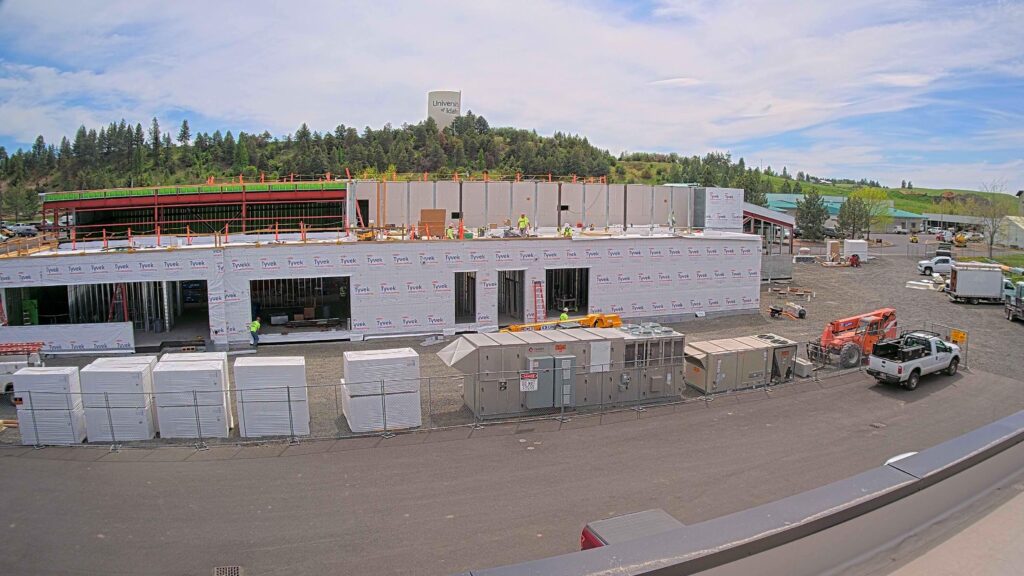
Platforms like TrueLook deliver cloud-accessible footage you can pull up immediately when a question arises. If a subcontractor claims a delay started on a specific date, or a neighbor alleges your site activity caused damage to their property, the camera archive answers that question in minutes rather than weeks.
Typical costs run $100–$500 per month per camera, including hardware, connectivity, and cloud storage. Most projects need two to four camera positions — covering the main building face, site entrance, and active work areas. Setup is straightforward and doesn’t require any licensed trade work.
TrueLook also integrates directly with Procore, so your live feed and historical footage sit alongside your scheduled photography in a single project record. That unified archive ,continuous footage plus professional milestone photos plus drone coverage, is what a complete documentation program looks like.
Drone and aerial coverage
Drone flights add a third perspective that neither ground-level photography nor fixed cameras can provide.
The biggest value for GCs is roof documentation. Roofing substrate, membrane installation, and equipment placement are nearly impossible to document effectively from ground level. Quarterly drone overviews catch what everything else misses.
Drone flights also help with site sequencing, earthwork, paving, and utility progress reads clearly from above and give owners and lenders a useful big-picture view that tends to reduce the number of site visit requests you field.
Cost ranges: $400–$900 per flight for standard aerial stills. Quarterly drone overviews layered over your weekly ground-level documentation cover most commercial projects without excessive cost.
One practical note: commercial drone operations require a licensed pilot with FAA Part 107 certification. Verify credentials before any flight, and confirm whether your site location requires additional airspace authorization.
Before You Start: Document What You’re Inheriting
Before any work begins, photograph the existing conditions thoroughly. This is your baseline for every future dispute about what was already there when you arrived.
Walk the site and capture all faces of any existing structures, existing paving and site features within your work area, and the condition of any adjacent properties at the boundary line. On renovation and tenant improvement projects especially, this step is essential — existing conditions in those jobs become the source of scope disputes more than almost anything else.
Pre-construction documentation is also where you establish your record under the terms of your owner-contractor agreement, which typically transfers site responsibility to the GC after possession. Documenting what you received is basic protection.
Getting the Organization Right
Documentation that can’t be found quickly is nearly as useless as documentation that doesn’t exist.
Establish your file standards before the first shoot, not after the first dispute.
A few things that matter most:
- Metadata: Every image should embed the date, time, and GPS location. Most professional cameras do this automatically. Confirm with your photographer that metadata is being captured.
- File naming: Use a consistent naming convention that includes the project name, date, and location. Something like
ProjectName-20260415-Level2-East-0031.jpgis retrievable. A folder full ofIMG_4872.jpgfiles is not.
- Delivery timing: Professional photography should be delivered within 48 hours of each site visit. Milestone deliverables (edited walkthroughs, milestone summaries) within five business days.
- Platform: If you’re running projects in Procore, Autodesk Build, or a similar platform, your documentation should live there, not in someone’s email or a disconnected Google Drive. The goal is one place where anyone on the project team can find what they need, tagged by date and location.
If you’re using a 24/7 camera system like TrueLook, your continuous footage integrates directly into that same environment, so your complete record stays in one place.
A Note on Contracts and Copyright
Two things worth getting right before the project starts:
Who takes the photos before concealment? In your subcontractor agreements, consider adding a simple requirement: notify the GC 24–48 hours before any work that will be covered up, so it can be documented first. MEP rough-in, waterproofing, foundation waterproofing before backfill, these are the moments you can’t go back to.
Who owns the photos? By default under U.S. copyright law, the photographer owns the copyright, not you. If you hire a professional photographer without a written agreement that assigns the rights to you, those images may not be yours to use in a claim, in marketing, or in future due diligence. Negotiate a work-for-hire agreement upfront. It’s a simple contract term and far easier than sorting it out after the fact.
FAQ: Construction Site Photography
They do different things. Your photographer captures planned milestones in detail. A 24/7 camera captures everything that happens between visits — overnight activity, weather events, weekend work, and anything unplanned. The combination gives you a complete record. Either one alone leaves gaps. For most commercial projects, both are worth the investment.
Weekly professional visits during active construction is the standard for commercial projects over $2 million. For smaller or simpler jobs, bi-weekly may be enough. Regardless of your regular schedule, always document before any concealment event — before walls close, before concrete gets poured, before waterproofing gets covered.
Both. Your superintendent’s photos are valuable for daily tracking and internal communication. A professional photographer provides systematic coverage, consistent organization, and third-party credibility that holds up when documentation is used for draw requests, dispute resolution, or legal proceedings. They’re not interchangeable.
Missing the window on concealed conditions. Once a wall closes or concrete gets poured, that documentation opportunity is gone permanently — and reopening it means destructive investigation that typically runs $5,000–$25,000 per location. The second most common mistake is poor file organization. Hundreds of untagged phone photos with no location or date context are nearly impossible to use in a dispute.
Look for someone with commercial construction experience specifically — not just architectural photography. Confirm they carry general liability insurance and can provide a certificate naming you as additional insured. Ask for sample deliverables from a comparable project. If you need drone work, verify FAA Part 107 certification separately.
Bottom Line
- A complete documentation program — professional photography, 24/7 camera coverage, and periodic drone aerials — costs a fraction of what one unresolved dispute costs.
- Weekly professional photography is the standard for active commercial projects over $2 million. Never go more than 30 days without documentation during active work.
- MEP rough-in, waterproofing, and structural connections before enclosure are your highest-value documentation targets. That window closes and doesn’t reopen.
- 24/7 jobsite cameras like TrueLook fill the gap between scheduled visits — particularly for delay documentation, weather events, and anything that happens outside of business hours.
- Negotiate copyright assignment from your photographer in writing before the project starts. It is not the default.
- Build your documentation into Procore or your project management platform from day one, with consistent naming and location tagging.