Key Takeaways
- Mobile surveillance trailer rental cost runs $1,000–$3,500/month; purchase prices range from $15,000–$50,000. The biggest price drivers are camera hardware (PTZ vs. fixed), power autonomy (solar/battery), and software subscription.
- Renting is usually best for projects under 18 months, and often bundles managed services, though you should budget for mobilization/demobilization fees.
- Ongoing costs include cellular data, cloud storage/retention, and routine maintenance, which can materially affect the total cost of ownership.
- Compared with human guards, trailers can cut security spend by roughly 60% while improving deterrence via lights, audio, and remote monitoring—so prioritize all-in, transparent pricing based on a site audit.
Finding the true mobile surveillance trailer cost often feels like navigating a maze, yet most professional setups land firmly in the $15,000 to $50,000 range. For teams not ready to purchase, rental options typically run $1,000–$3,500 per month — a fraction of what round-the-clock guards would cost. In many proposals, this figure is listed as the mobile camera trailer cost. This significant investment in a mobile security trailer buys more than just a camera; it secures a completely autonomous station capable of replacing human guards.
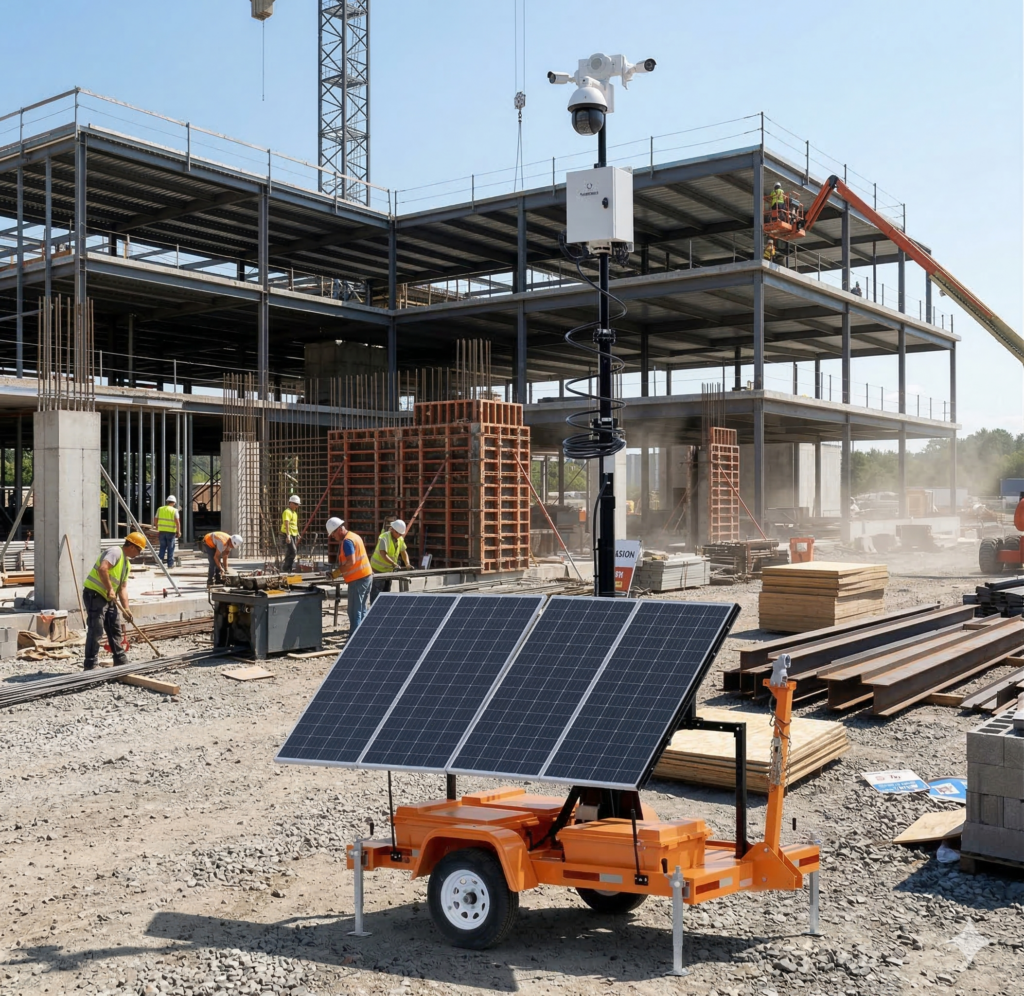
Think of these units as industrial versions of a smart home doorbell, equipped with their own power plant and a 20-30-foot telescoping neck. Instead of relying on nearby outlets, these systems use integrated solar arrays to operate entirely off-grid.
When estimating the mobile surveillance trailer cost, portable tower pricing requires looking beyond just the steel. In practice, the total cost is split between the physical hardware and the managed services, keeping the video feed live, securing the jobsite, creating time-lapses, and more.
The ‘Big Three’ Price Drivers: Why Hardware, Power, and Software Dictate Your Mobile Surveillance Trailer Cost
Looking at two identical trailers side-by-side, it is often impossible to tell why one costs $15,000 and the other $40,000 just by kicking the tires. The discrepancy usually comes down to three core components: the camera hardware on the mast, the power in the box, and the digital brains or software tying them together.
Your choice of “eyes” creates the most immediate price change. While standard fixed cameras tend to be more affordable, upgrading to PTZ cameras –units that Pan, Tilt, and Zoom to catch specific details—will rapidly increase the price. Night vision capabilities for outdoor surveillance are even more expensive, detecting people in total darkness, but they are often necessary for large, unlit job sites.
- Standard Fixed (2K, 4K, 8K): Base cost; best for general presence and deterrence.
- 4K Resolution: Adds ~20% per camera; necessary for identifying faces or tags.
- Infrared Capabilities: Adds $2,000 – $5,000; critical for detecting perimeter breaches at night.
Reliability acts as the second major surveillance trailer cost driver. Think of the trailer like a smartphone that must run 24/7; solar-powered mobile security trailer specifications determine if that phone stays on during a cloudy week in December. Paying for a trailer with large solar panels and battery backup guarantees “autonomy” through the winter, most likely, preventing the system from going dead when you need it most.
These components represent a significant upfront investment, but the math changes when you compare a one-time hardware purchase against an ongoing salary.
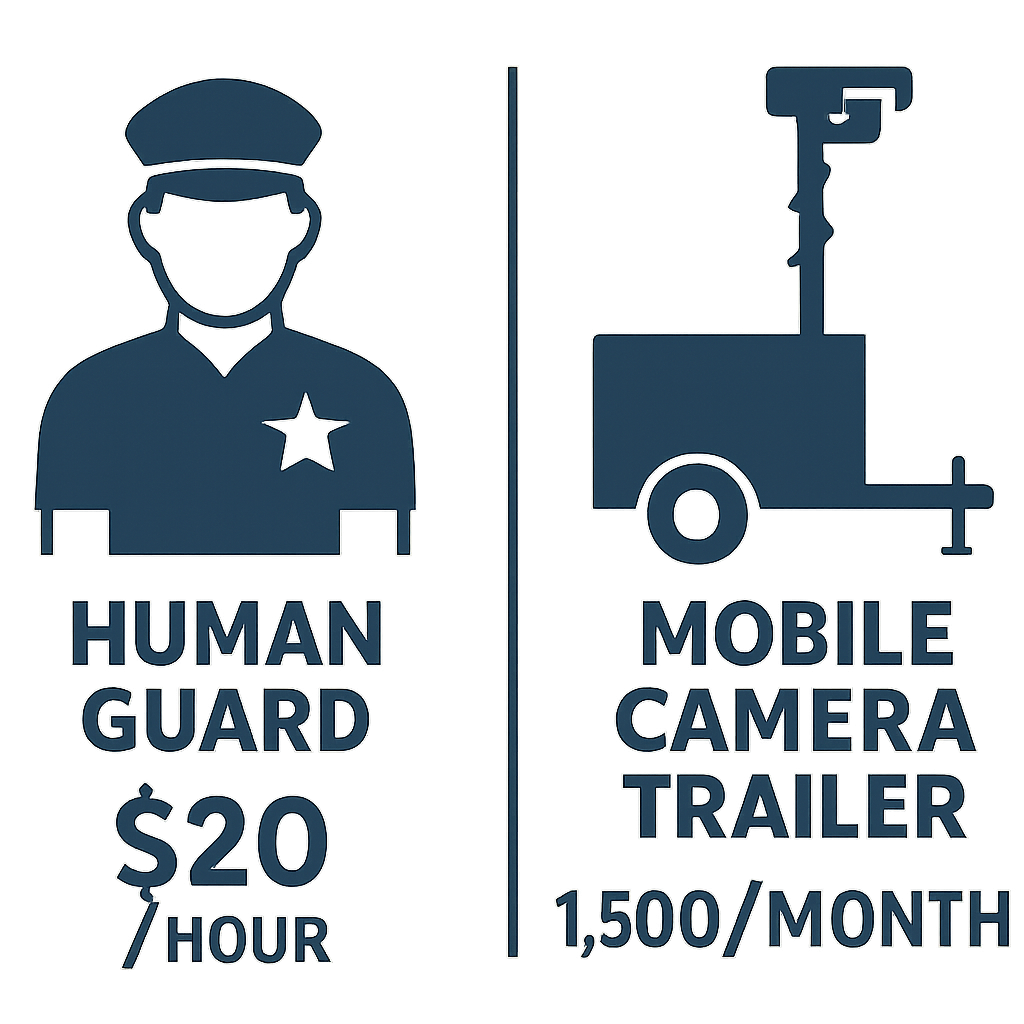
Security Guards vs. Mobile Trailers: How to Slash Your Monthly Security Budget by 60%
Hiring a physical guard usually costs between $20 and $35 per hour, adding up to over $10,000 monthly for round-the-clock coverage. In stark contrast, security guard cost vs mobile surveillance data shows that a high-end mobile security trailer typically rents for roughly $1,000 to $3,500 per month. This massive discrepancy implies that swapping a human patrol for an autonomous unit pays for itself in just over a week, freeing up significant capital for materials or labor.
Beyond the raw savings, these units offer consistency that human eyes cannot match. Reducing jobsite theft with portable towers relies on “Active Deterrence,” a feature set that includes blinding strobe lights and loud verbal warnings triggered automatically when someone breaches the perimeter. While a lone guard might be on the other side of the property or distracted during a break-in, the trailer watches every angle simultaneously and acts immediately to scare off intruders before they can steal things like tools or copper.
Replacing personnel with hardware also eliminates the liability risks associated with confronting criminals in the dark. When calculating return on investment for site security, you must factor in these invisible savings on insurance premiums and the reduced risk of workplace injury lawsuits.
Mobile Surveillance Trailer Rental Cost: What to Expect
Rental pricing for mobile surveillance trailers typically runs $1,000–$3,500 per month, but that range hides a lot of variation. A $1,200/month quote and a $3,000/month quote can cover very different scopes, or the same scope with very different fine print.
Here’s what actually drives rental cost:
- Camera and hardware tier: Entry-level rentals usually include a single fixed camera. PTZ cameras, thermal imaging, or multi-camera mast configurations push the monthly rate higher. If you need license plate capture or facial recognition-grade resolution, expect to be near the top of the range.
- Rental duration: Most vendors discount for longer commitments. A 6-month rental will cost more per month than a 12-month agreement. If your project timeline is firm, locking in a longer term upfront can reduce your effective monthly rate by 15–25%.
- What’s bundled vs. billed separately: This is where rental quotes diverge the most. Always ask whether the following are included or line-itemed separately:
- Mobilization and demobilization fees (delivery, setup, and retrieval — often $300–$800 each way)
- Cellular data for video transmission
- Cloud storage and video retention
- Software platform access (live viewing, alerts, time-lapse)
- Routine maintenance and hardware replacement if something fails
- Permit fees, if required by your jurisdiction
- Managed monitoring services: Some rental packages include human monitoring, a live team that watches for intrusions and dispatches a response. Others are self-monitored, meaning your team handles alerts. Managed monitoring typically adds $300–$600/month but is worth considering for unmanned sites or after-hours-only coverage needs.
When Renting Makes More Sense Than Buying
The practical threshold is around 18–24 months. If your deployment is shorter than that, renting almost always wins on total cost, especially once you factor in the capital outlay, depreciation, storage between projects, and the IT overhead of managing firmware and cellular contracts yourself.
Renting also makes sense if:
- You’re testing surveillance trailers before committing to a fleet purchase
- Your project is in a region where you don’t have an established vendor relationship or local service support
- You need the trailer mobilized quickly (rental vendors typically have faster deployment timelines than custom purchases)
- You want hardware, data, support, and liability bundled into one predictable monthly line item
If you’re managing multiple concurrent projects or plan to reuse the asset across several jobs, the math shifts toward purchasing, but for most single-site deployments under two years, rental is the cleaner financial decision.
Software and Platform Costs: Powering a Mobile Surveillance Trailer
When estimating the total mobile surveillance trailer cost, the hardware is only one part of the equation. The software platform and connectivity that power the cameras are what allow project teams to monitor the jobsite, store footage, and generate time-lapse documentation.
Most construction camera systems operate on a subscription model that bundles features like live viewing, motion-detection, cellular connectivity, and technical support into one predictable monthly cost. Instead of managing separate expenses for data plans, storage, and software licenses, everything runs through a single platform.
For example, jobsite camera software plans can start around $129 per month (or as low as $99/month with prepayment) for basic documentation and visibility. These entry-level plans typically include:
- Live jobsite viewing
- Motion detection
- Time-lapse creation
- Secure cloud storage
- Basic support
For projects that require stronger security monitoring or deeper insights, more advanced plans add features such as motion alerts, unlimited time-lapses, expanded data limits, and AI-powered jobsite analytics. These enhanced plans often start around $359 per month and are designed for teams managing larger or more complex projects.
At the top tier, premium construction camera subscriptions can start around $599 per month and include capabilities like lifetime media storage, full HD project recording, advanced integrations, and premium time-lapse services that document an entire build from groundbreaking to completion.
The biggest advantage of a jobsite camera subscription model is cost predictability. Instead of worrying about fluctuating cellular data usage, storage fees, or software licensing costs, project teams get a single monthly platform that covers connectivity, video management, AI insights, and support.
When budgeting for a mobile surveillance trailer or mobile camera trailer, factoring in the right software plan ensures you’re not just installing cameras—you’re investing in a platform that helps monitor security, document progress, and keep stakeholders informed throughout the life of the project.
Your 3-Step Action Plan to Select the Most Cost-Effective Surveillance Solution
You no longer need to guess at the true price tag of rapid deployment surveillance or the real mobile surveillance trailer cost. Start with a basic site audit to define your specific risks, ensuring you never pay for unnecessary hardware features. When soliciting bids, always demand “all-in” pricing to reveal hidden ongoing operational expenses for mobile towers before signing a contract.
Viewing this investment through Total Cost of Ownership allows you to confidently justify the budget to stakeholders. Unlike comparing a permanent fixed CCTV installation vs portable trailers, you are paying for flexibility. By prioritizing transparent costs over the lowest initial bid, you secure a reliable solution that protects your bottom line and supports a right-sized mobile security trailer strategy.
Mobile Surveillance Trailer Cost FAQs
Most professional mobile surveillance trailers cost $15,000–$50,000 to purchase or about $1,000–$3,500 per month to rent. The total price is primarily driven by three things: the camera hardware you choose (fixed vs. PTZ, resolution, night vision), the power system’s autonomy (solar array and battery capacity), and the software/platform subscription that keeps the system connected, recording, and manageable.
The “Big Three” price drivers are:
Camera hardware: Fixed cameras are more affordable; PTZ units add cost. Upgrading to 4K can add about 20% per camera, and infrared/night-vision capabilities often add $2,000–$5,000 but are crucial for dark or large sites.
Power autonomy: Larger solar arrays and battery banks cost more but keep the system live through cloudy weeks and winter, preventing downtime when you need coverage most.
Software and services: Subscriptions that enable live viewing, motion detection, storage, alerts, AI analytics, and support add recurring costs and can vary widely by feature set and data needs.
Use the 24-month ROI rule of thumb. Buying often makes sense if your deployment will last around two years or if you plan to reuse the trailer across multiple jobs. Renting is usually best for projects under ~18 months and often bundles hardware, cellular data, storage, and support into one predictable monthly fee while keeping liability off your books. When comparing rentals, confirm what’s included (permits, mobilization/demobilization, cellular, monitoring).
Around-the-clock guards commonly cost $20–$35 per hour, exceeding $10,000 per month. In contrast, a high-end mobile security trailer typically rents for roughly $1,000–$3,500 per month. Many teams see about a 60% reduction in security spend by switching to trailers. Beyond cost, trailers provide consistent “Active Deterrence” (strobe lights and loud audio warnings triggered on intrusion), broader coverage without fatigue, and reduced liability versus sending personnel to confront intruders.
Most systems, like TrueLook’s, run on a subscription model that consolidates connectivity, storage, and software:
Entry-level plans start around $129/month (or $99/month with prepayment) and include live viewing, motion detection, time-lapse creation, secure cloud storage, and basic support.
Advanced plans start around $359/month and add motion alerts, unlimited time-lapses, expanded data limits, and AI-powered analytics.
Premium plans start around $599/month and layer in lifetime media storage, full HD project recording, advanced integrations, and premium time-lapse services.
This model improves cost predictability by rolling data, software, and support into a single monthly platform.
Want to see exactly what a trailer, camera, & subscription will cost you?
We’ll chat through your project and help you figure out what you need at a price that works for you.