
Whether you’re managing a high-value construction project, protecting remote equipment, or overseeing a temporary worksite, a mobile surveillance trailer offers one of the most flexible and cost-effective security solutions available. This guide covers everything you need to know — from how these units work to how they prevent theft and deliver measurable ROI.
What Is a Mobile Surveillance Trailer?
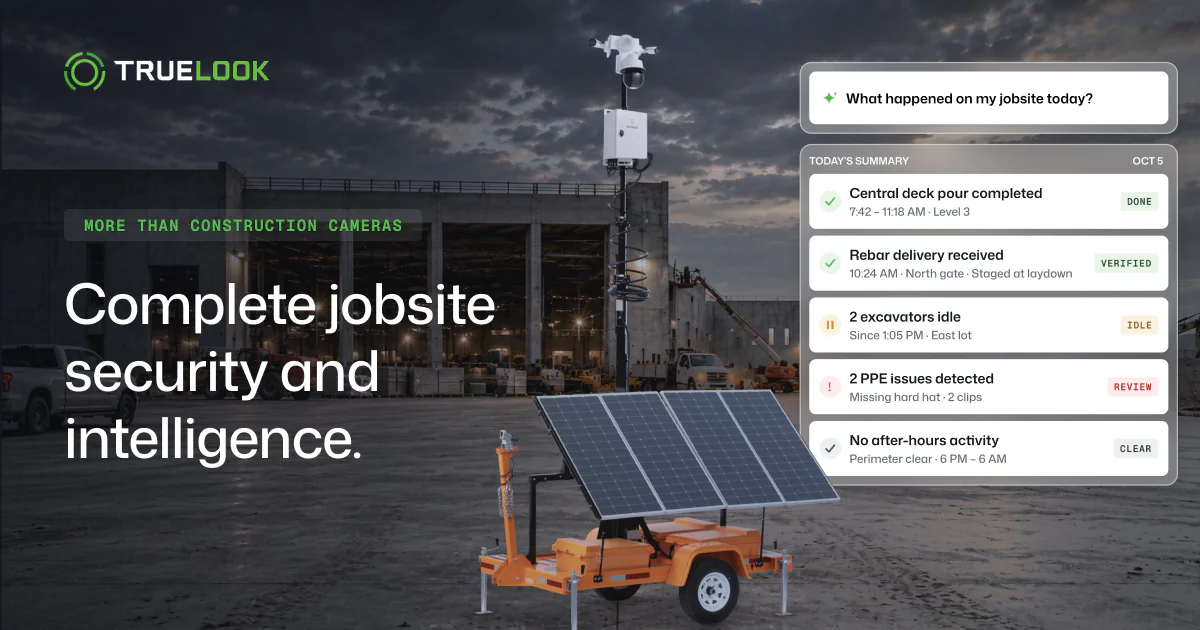
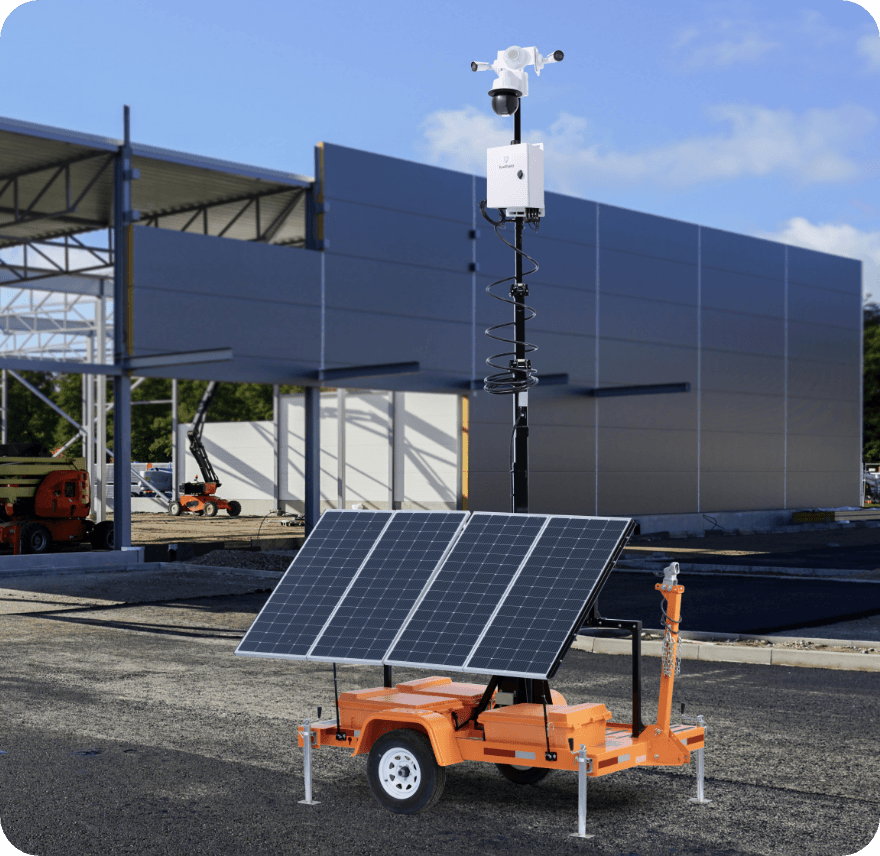
A mobile surveillance trailer is a self-contained, towable security unit equipped with cameras, lighting, power systems, and often remote monitoring capabilities. Unlike fixed security systems that require permanent installation and electrical infrastructure, you can deploy a mobile security camera trailer in hours and reposition it as your project evolves.
These trailers are purpose-built for environments where traditional security isn’t practical: open construction sites, equipment yards, event venues, parking lots, and utility infrastructure projects. They arrive ready to operate, typically requiring little more than placement and activation to start recording and transmitting footage.
Key components of a standard unit typically include:
- High-definition PTZ (pan-tilt-zoom) or fixed cameras
- Onboard storage with cloud backup options
- Power supply — solar, generator, or grid connection
- LED deterrent lighting
- Two-way audio or alarm systems
- A rugged, weatherproof trailer chassis
See how TrueLook’s Mobile Surveillance Trailer is built for exactly these conditions.
Construction Site Use Cases
Construction sites are among the most common and highest-value applications for mobile camera trailers. Jobsites present unique security challenges: large open perimeters, rotating crews, expensive equipment, and high material theft risk — all across a timeline that can span months or years.
Equipment and material theft prevention is the most immediate use case. Tools, copper wire, lumber, and heavy machinery are prime targets overnight and on weekends when sites are unoccupied. A visible mobile surveillance unit is a proven deterrent.
Access control and subcontractor accountability is another major driver. Knowing who is on-site and when helps project managers verify compliance, resolve disputes, and maintain accurate records for liability purposes.
Progress documentation is a growing use case, especially for owners and developers who need visual proof-of-work for lender draw requests or remote project oversight. Many units integrate with time-lapse and project management platforms.
After-hours monitoring ensures that incidents — whether a perimeter breach, vandalism, or an on-site accident — are captured in real time, even when no personnel are present.
Learn more about what makes these units portable and how to choose the right configuration.
Solar vs. Powered Trailers: Which Is Right for Your Site?
One of the most practical decisions when selecting a mobile surveillance trailer is choosing the right power source. Each option has trade-offs depending on your site conditions, deployment length, and available infrastructure.
Solar-Powered Trailers
Solar units use photovoltaic panels and battery storage to operate entirely off-grid. They’re ideal for remote locations, greenfield construction sites, or any situation where running electrical service would be costly or impractical.
Advantages:
- No fuel costs or utility hookup required
- Lower operating cost over long deployments
- Environmentally friendly
- Minimal maintenance beyond panel cleaning
Limitations:
- Performance can degrade in low-light or heavily overcast conditions
- Battery capacity may limit overnight recording duration in extreme climates
- Higher upfront cost than basic wired solutions
Grid-Connected or Generator-Powered Trailers
These units draw from shore power or an onboard generator, making them a reliable choice for urban jobsites with electrical access or deployments that require continuous, uninterrupted power.
Advantages:
- Consistent, uninterrupted power regardless of weather
- Supports more cameras, brighter lighting, and edge computing
- Better suited for high-traffic or high-risk sites needing maximum uptime
Limitations:
- Requires access to power infrastructure or fuel management
- Generator units add noise and ongoing fuel costs
Many modern mobile camera trailers, such as TrueLook’s Mobile Surveillance Trailers, offer hybrid configurations — solar primary with generator or battery backup — giving you the best of both options.
Real-Time Monitoring Capabilities
Today’s mobile surveillance trailers are far more than passive recording devices. Modern units support real-time monitoring features that allow security personnel, project managers, or automated systems to respond to incidents as they happen.
Live video streaming over 4G LTE or Wi-Fi enables remote viewing from any device. Project managers can check in from a smartphone; security operations centers can monitor dozens of sites simultaneously from a central dashboard.
Motion-triggered alerts use onboard analytics to detect activity within defined zones and immediately notify designated contacts. This reduces alert fatigue compared to continuous monitoring and ensures that high-risk activity — like someone approaching equipment storage after hours — gets immediate attention.
Two-way audio emits verbal warnings through talkdown horn speakers. trespassers without requiring any physical intervention.
AI-powered site analytics available on newer platforms can distinguish between humans, vehicles, and animals, reducing false alarms and providing more actionable event data, as well as showing PPE violations as they happen.
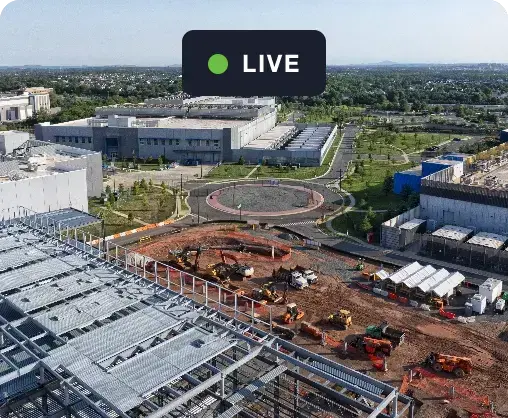
Progress documentation gives project managers a continuous visual record of site activity. Cameras capture photos at intervals of up to once per minute, automatically saving timestamped images into organized folders. Those images are then compiled into automated time-lapses, giving owners, developers, and lenders a clear, shareable record of work completed, which can be useful for draw requests, dispute resolution, and remote project oversight.
Cloud storage and redundancy ensure footage isn’t lost if a unit is vandalized or stolen. Most enterprise-grade systems back up continuously to off-site servers.
How Mobile Surveillance Trailers Prevent Theft
According to the National Equipment Register, construction site theft costs the U.S. industry an estimated $1 billion annually. Equipment, materials, and tools are regularly targeted, and recovery rates for stolen construction equipment remain low at only 25%. Mobile surveillance trailers address this problem in two complementary ways: deterrence and documentation.
Visible deterrence is the first line of defense. A large, bright-colored trailer with prominent cameras, warning signage, and strobe lights signals to would-be thieves that a site is actively monitored. Research consistently shows that visible security infrastructure reduces opportunistic crime.
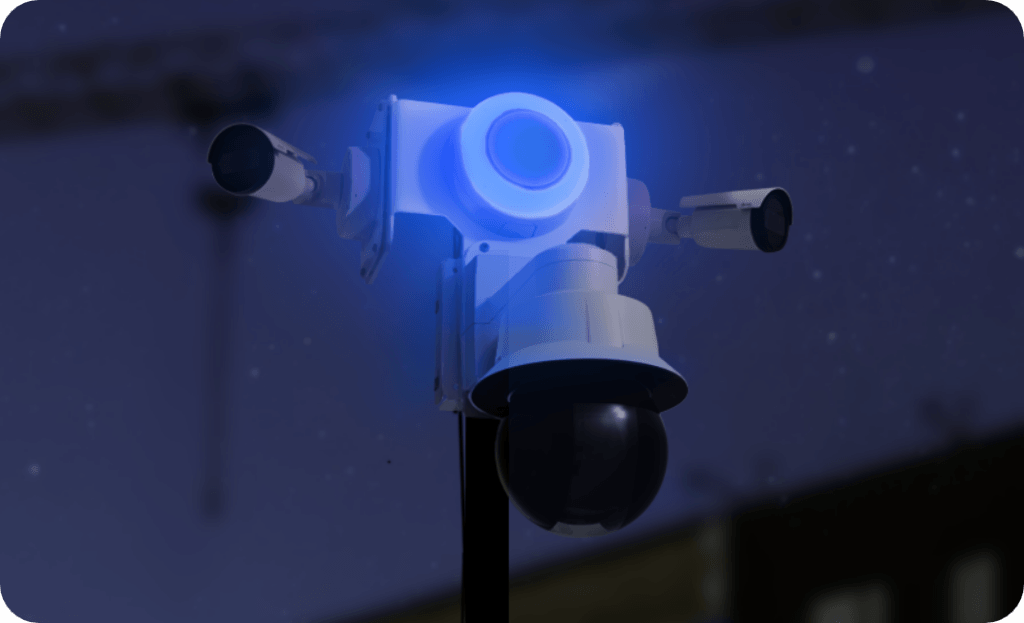
Active response capability takes deterrence a step further. Sites with talkdown horns and live monitoring can respond to intrusions in real time, which can verbally challenge trespassers or dispatch security personnel before a theft is completed.
Interested in a unit that can catch and arrest a trespasser in less than 10 minutes?
On one of our sites, someone tried to steal an excavator and drive it off site, but our monitoring team caught it, verified the threat, and got cops to the scene fast to make an arrest.
Evidentiary documentation ensures that when incidents do occur, there is high-quality footage to support insurance claims, police reports, and prosecution. Many insurers offer reduced premiums for sites with documented camera coverage.
Perimeter coverage flexibility is a key advantage of mobile units over fixed systems. As site layouts change during a project, trailers can be repositioned to maintain coverage of the highest-risk areas — something hardwired systems simply can’t do.
If you’re not ready to purchase, renting a security camera trailer is a flexible option that keeps costs variable and aligns with project timelines.
What Does a Mobile Surveillance Trailer Cost? (And How to Calculate ROI)
The cost of a mobile surveillance trailer varies based on configuration, power type, camera count, and whether you’re buying or renting. Entry-level units can start in the mid-four-figures for a rental, while full-featured purchased systems can reach $30,000 or more.
However, you should always evaluate cost against risk exposure. A single equipment theft on a mid-size jobsite can easily exceed $10,000–$50,000 in losses, delays, and insurance deductibles. On one unmonitored site in 2026, two unauthorized individuals played with the equipment, and that alone caused $48,000 in damages. For most projects, a mobile surveillance trailer pays for itself by preventing just one significant incident.
To help you quantify the return on investment for your specific project, use our Jobsite Camera ROI Calculator. Enter your project size and risk profile to see a personalized cost-benefit analysis.
For a detailed breakdown of pricing by unit type, rental vs. purchase, and what factors drive cost, see our mobile surveillance trailer cost guide.
Frequently Asked Questions
Most units can be on-site and operational within a few hours of arrival. Setup typically involves positioning the trailer, extending the camera mast, and powering the system.
Permit requirements vary by municipality and site type. In most jurisdictions, mobile trailers used on private property during active construction don’t require special permits, but you should verify local regulations and notify relevant stakeholders, including subcontractors, that recording is in effect.
Standard configurations typically include one to three cameras, though some units support more. Camera positioning and lens selection (wide-angle vs. zoom) have a significant impact on effective coverage area.
Yes. Commercial-grade units are designed for outdoor use in a wide range of conditions, including rain, snow, heat, and wind. Look for units with IP66 or higher weatherproofing ratings and operating temperature ranges that match your climate.
Renting makes sense for short-term projects, single-site deployments, or when you want to test the technology before committing to a purchase. Buying typically offers better long-term economics for companies with ongoing or multi-site security needs. See our Security Camera Trailer Rental guide for a full comparison.
Yes. Most modern units support remote access via a web browser or mobile app, with live streaming and recorded footage retrieval available from any location with internet access.
Conclusion
A mobile surveillance trailer is one of the most versatile and cost-effective security investments available for construction sites and other high-risk temporary environments. With flexible power options, real-time monitoring, proven theft deterrence, and rapid deployment, these systems offer protection that scales with your project — wherever it takes you.
Ready to Secure Your Jobsite?
TrueLook’s Mobile Surveillance Trailer is built for construction sites that can’t afford downtime, theft, or gaps in coverage.
Get a personalized quote or learn more about how it works.