Whether you’re protecting a construction site, managing a large utilities area, or securing a remote property, a security camera trailer rental puts professional-grade surveillance exactly where you need it — fast, without a six-figure capital investment.
This guide breaks down what surveillance trailer rentals actually cost, what features matter most, which industries use them, and how to choose the right option for your situation. If you’re comparing providers or just trying to budget, you’ll have the numbers you need by the end.
What Is a Security Camera Trailer?
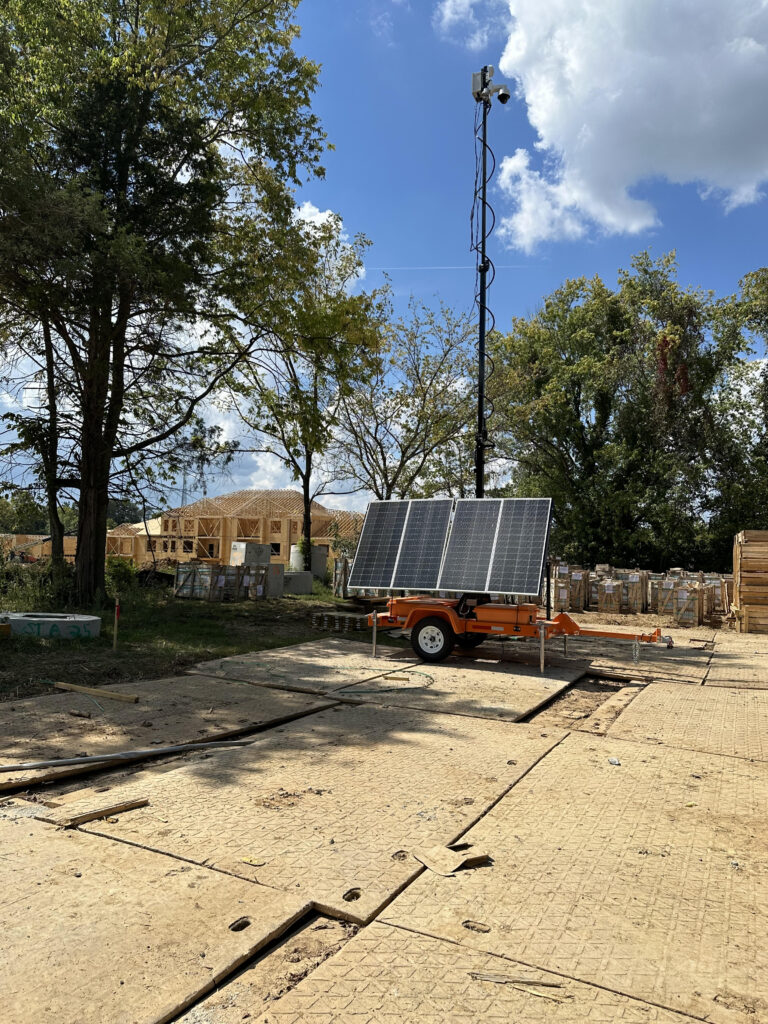
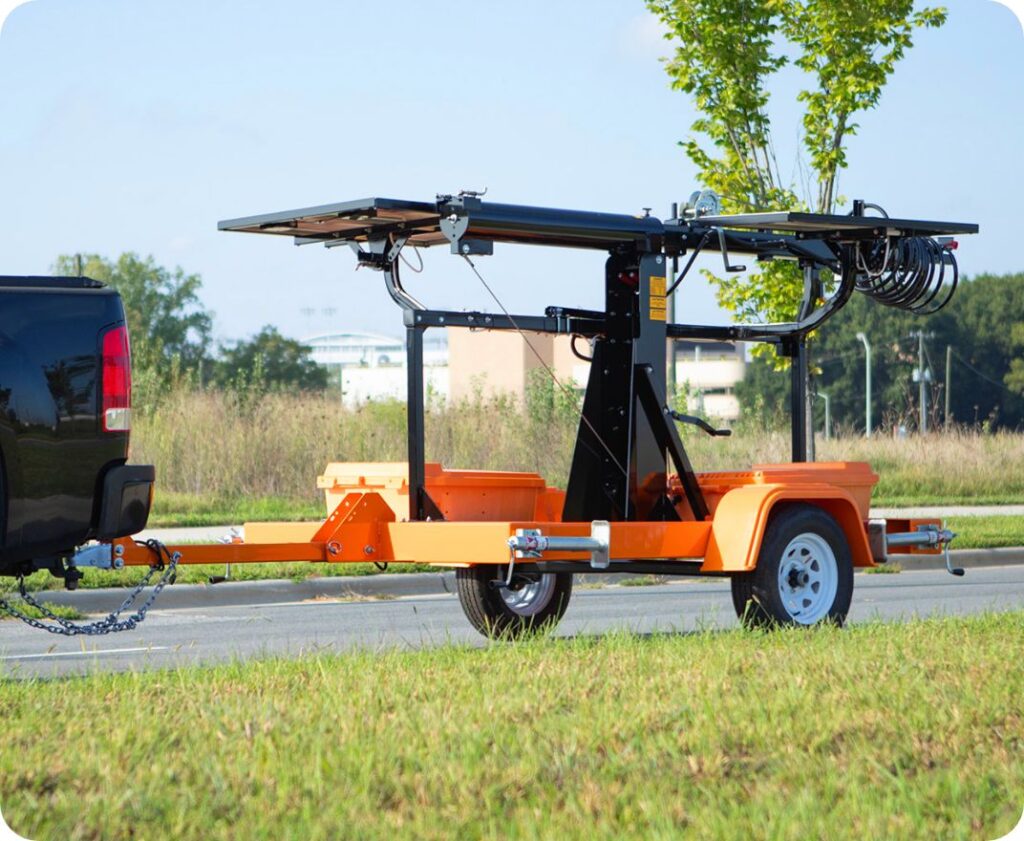
A mobile surveillance trailer is a self-contained, towable security unit equipped with high-definition cameras, a tall mast for wide-area coverage, onboard power (solar, battery, or grid), and cellular connectivity for remote access. Unlike fixed camera systems, these trailers can be deployed in hours, repositioned as your project moves, and removed the moment you’re done.
Most modern surveillance trailer rentals include:
- PTZ (Pan-Tilt-Zoom) cameras for flexible coverage across large footprints
- Night vision and infrared for 24/7 monitoring in any lighting
- Solar panels with battery backup for off-grid operation
- 4G/LTE or 5G cellular for live remote access and cloud storage
- Motion detection and AI-powered alerts to reduce false alarms
- Two-way audio for real-time verbal deterrence
- Strobe and flood lights to actively discourage intrusion
Some providers also offer optional central monitoring station services, where trained security analysts watch your feeds around the clock and can dispatch law enforcement when needed.
Learn more about our Mobile Surveillance Trailers →
How Much Does a Security Camera Trailer Rental Cost?
Pricing depends on rental duration, the number of cameras, add-on services like live monitoring, and your geographic location. Here’s a realistic breakdown based on current industry averages*:
Rental Cost by Duration
| Rental Period | Typical Price Range |
| Weekly | $250 – $1,000 / week |
| Monthly | $800 – $2,900 / month |
| Multi-month | Discounted rates available |
| Annual / Contract | Custom pricing, often 20–30% off |
Note: These figures represent industry averages and do not reflect specific TrueLook pricing.
Short-term weekly rentals work well for events or emergency deployments. Monthly rentals are the standard for construction projects and ongoing commercial needs. Most providers offer meaningful discounts for 6- to 12-month commitments.
What Affects the Price?
Several variables move the needle on your final quote.
Rental vs. Purchase: Which Makes More Sense?
Purchasing a mobile surveillance trailer can run $25,000+ depending on the configuration. For most businesses, renting is the smarter financial decision, unless you have continuous, multi-site surveillance needs year-round.
Rent when:
- Your need is temporary (a project, event, or seasonal operation)
- You want access to newer technology without obsolescence risk
- You prefer predictable monthly costs over capital expenditure
- Maintenance, storage, and logistics would add operational burden
Buy when:
- You manage multiple active sites simultaneously, 12 months a year
- You have the internal team and storage to maintain the asset
- You’re building a long-term security infrastructure
For most contractors, property managers, and event organizers, surveillance trailer rental delivers the flexibility and support that ownership simply can’t match.
Key Features to Look for in a Surveillance Trailer Rental
Not all trailers are equal. When evaluating providers, focus on these differentiators:
Camera quality and count — Look for HD or 4K cameras with optical zoom. More cameras mean fewer blind spots. PTZ cameras with a high mast (20–30 feet) can cover large areas from a single unit.
Power reliability — Solar systems with substantial battery backup can run through multiple cloudy days without interruption. Ask about battery capacity and backup runtime.
Cellular connectivity — LTE/5G connectivity ensures remote access and real-time alerts. Some units include dual-SIM for redundancy in weak-signal areas.
Remote access platform — A user-friendly mobile app and cloud-based video management system (VMS) lets your team view live feeds and review footage from any device. Look for at least 28–30 days of onboard storage.
AI and motion detection — Intelligent video analytics reduce false alarms and alert you only to genuine threats. More advanced units can detect smoke, fire, and missing safety equipment.
Deployment speed — Most reputable providers can deliver and set up within 1–2 weeks of signing. Confirm this upfront if timing is critical.
Who Uses Security Camera Trailer Rentals?
Mobile surveillance trailers are deployed across a wide range of industries — anywhere temporary, high-coverage security is needed fast.
Questions to Ask Before You Rent
Before signing a rental agreement, get clear answers to these:
- What’s included in the base rental price? (Cameras, cellular data, cloud storage, maintenance)
- What does live monitoring cost, and how does it work?
- How quickly can the trailer be delivered and set up?
- What happens if the unit is vandalized or damaged?
- Is there a minimum rental period?
- Can the trailer be relocated mid-rental if your site changes?
- What’s the battery runtime if there’s a string of overcast days?
Getting these answers in writing protects you and ensures the system performs as expected.
FAQ: Security Camera Trailer Rental
Yes. Most modern surveillance trailers are solar-powered with battery backup, so they operate entirely off-grid. Cellular (LTE/5G) connectivity eliminates the need for Wi-Fi, and footage is stored on the cloud for security.
Most providers can deliver within 1–2 weeksanywhere in the continental U.S. Some regional providers offer same-week delivery for local deployments.
Yes. Every reputable rental includes a cloud-based platform or mobile app with live access to camera feeds, motion alerts delivered by text or email, and the ability to review recorded footage remotely.
In most cases, yes — significantly so. A single overnight guard can cost $3,000–$6,000/month or more. A fully monitored surveillance trailer rental is typically more affordable and covers a larger area continuously.
Construction, events, municipalities, commercial real estate, industrial/remote sites, and law enforcement are the most common. Any situation requiring temporary surveillance without permanent infrastructure is a strong use case.
Conclusion
A security camera trailer rental gives you enterprise-level surveillance anywhere, on any timeline, without the capital cost of ownership. Whether you need a week of coverage for an outdoor event or a year-long deployment across an active construction site, the right mobile unit delivers real-time visibility, active deterrence, and documented evidence — at a cost that consistently beats traditional security alternatives.
The key is choosing a provider with reliable hardware, transparent pricing, and responsive support. Compare your options, ask the right questions, and get a quote tailored to your specific site.