U.S. utilities are on pace to spend more than $1.1 trillion on grid infrastructure between 2025 and 2029, according to Edison Electric Institute figures cited by Bloomberg — up from $765 billion in the prior five-year period. That number gets a lot of ink. What it doesn’t capture is what’s happening on the ground while that money turns into steel, concrete, and copper, which is exactly where energy remote video monitoring earns its keep.
I hear about that part constantly. Substations, transmission corridors, solar fields, battery storage yards, and power plant expansions all share the same construction-phase problem: the site is remote, the crew count swings week to week, and nobody in the home office can see what’s actually happening without driving out.
Energy remote video monitoring solves that specific problem. It’s live, cloud-connected camera coverage of an energy project while it’s under construction, not the operational security system that goes live once the plant or substation is energized. This article is about the build, not the finished asset.
Key Takeaways
- Energy remote video monitoring gives project teams live, on-demand visibility into a power project while it’s being built, not after it’s operational.
- U.S. utility capital spending is projected to hit $259 billion in 2026 alone, per S&P Global Market Intelligence, and keeps climbing through 2028, meaning more concurrent energy construction sites than ever need remote coverage.
- Real-time video surveillance and live video monitoring are functionally the same capability during construction: a live feed any authorized person can pull up from a phone or laptop, without a site visit.
- Power plant monitoring during construction is a different problem than plant security once operational: it’s about documenting progress, protecting materials, and giving remote stakeholders eyes on the build.
- Long-lead equipment (industry reporting has some large power transformers now carrying multi-year delivery windows) makes visual documentation of on-site staging and installation more valuable, not less: there’s often no room to redo the work.
- The right camera system needs to run on cellular, not jobsite WiFi, because most energy construction sites don’t have reliable connectivity until the project is nearly done.
Why energy remote video monitoring matters right now
Here’s the thing: energy construction spending isn’t slowing down, and it isn’t concentrated in one place. S&P Global Market Intelligence has aggregate energy utility capex climbing from $259 billion in 2026 to nearly $277 billion by 2028, driven by grid modernization, new generation capacity, and the substation build-out that data center demand is forcing. That’s not one mega-project. That’s hundreds of substations, solar arrays, transmission segments, and plant expansions running at once, often in places without a permanent site office.
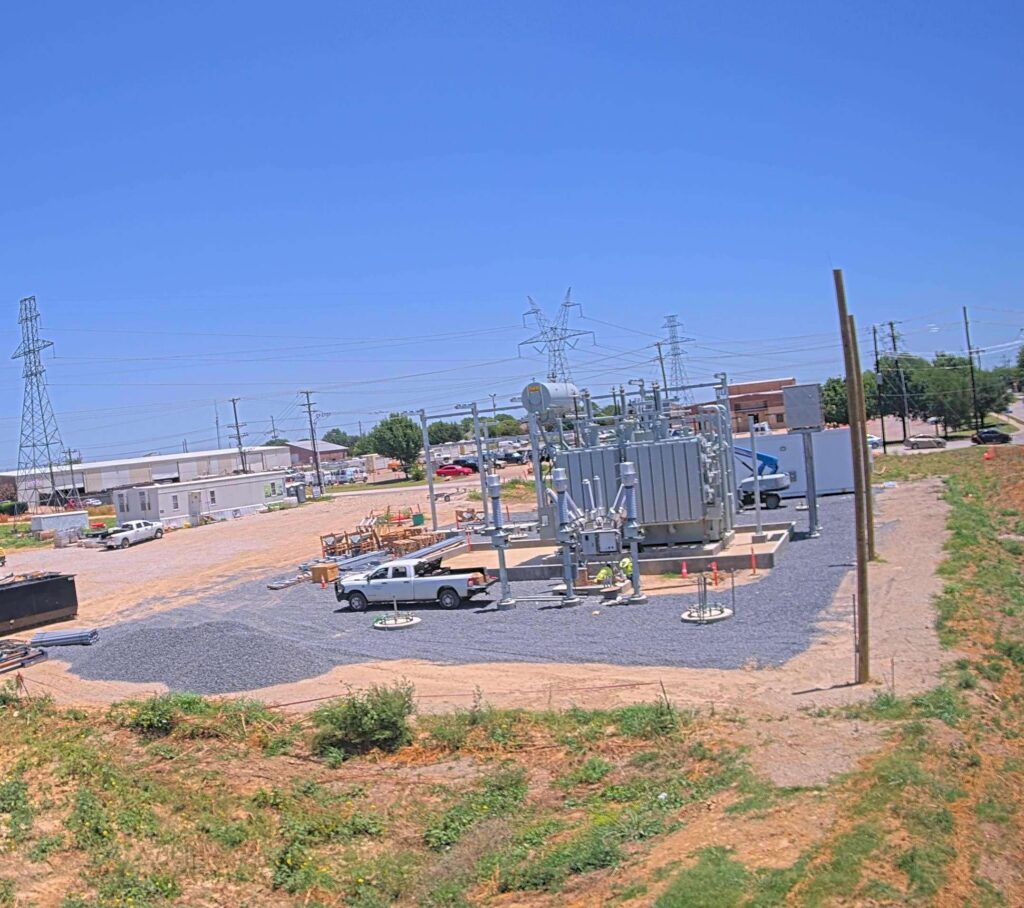
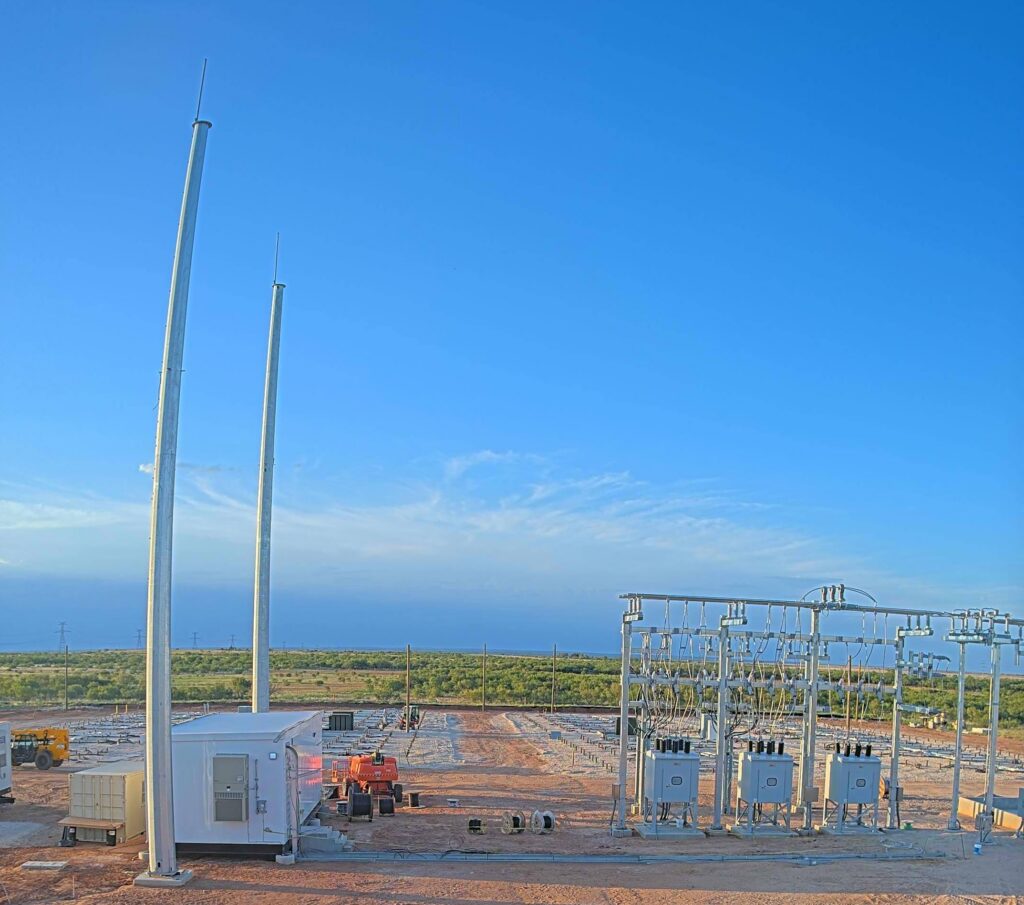
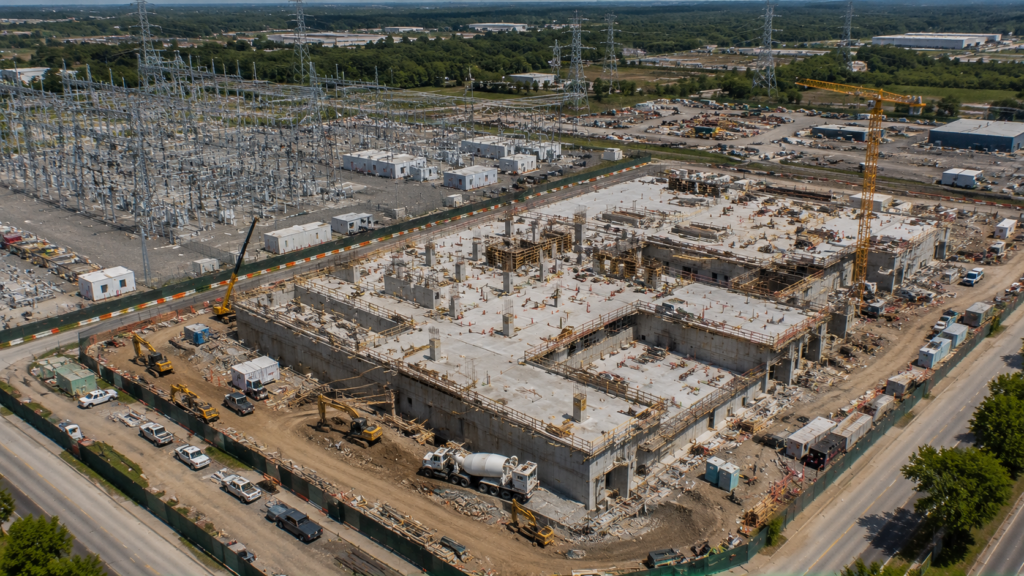
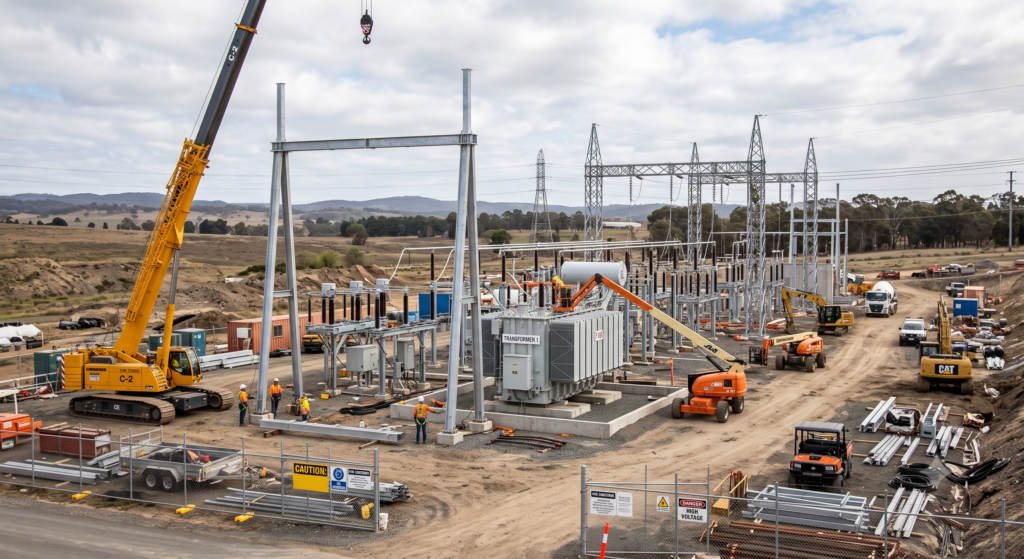
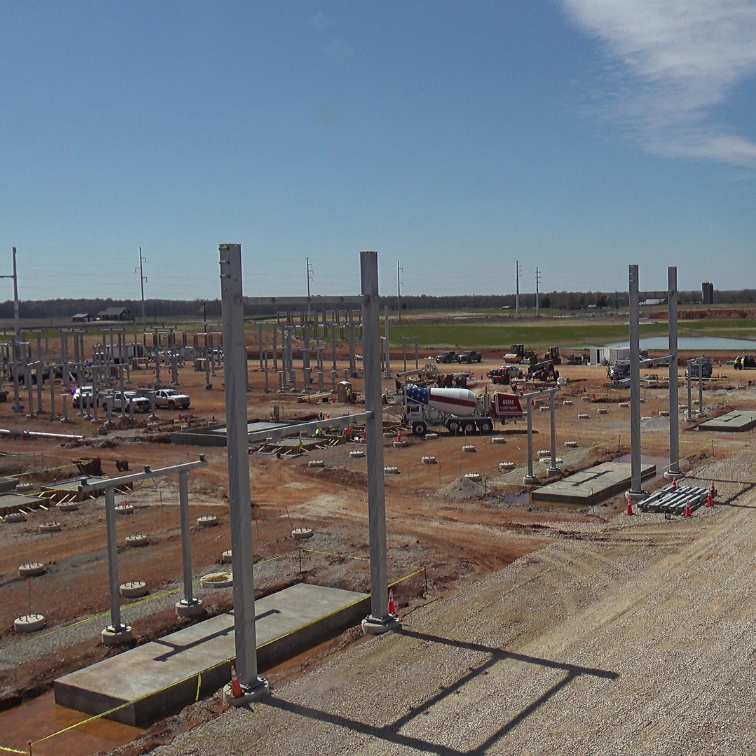

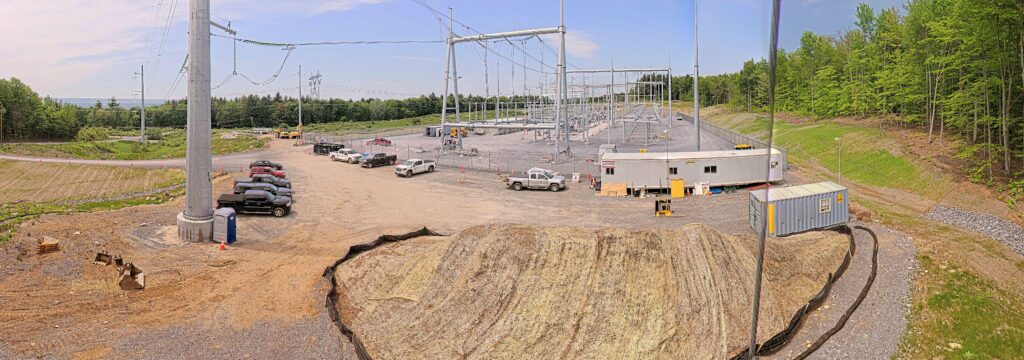
Scale is outrunning the ability to physically check on it. A project executive overseeing six substation builds across three states can’t be on-site for any of them most days. A utility procuring transformers and switchgear with lead times now commonly measured in years, not months, can’t afford to find out a delivery was damaged, misplaced, or improperly staged only after the fact.
That’s the gap energy remote surveillance is built to close: a live feed of the actual site, available to anyone who needs it, without anyone needing to drive there.
What “real-time” and “live” actually mean on an energy jobsite
Energy real-time video surveillance and energy live video monitoring get searched as if they’re different things. On a construction site, they’re the same capability described two ways: a camera feed that updates continuously and that any authorized viewer can open from a browser or phone, right now, not after someone pulls archived footage.
That distinction matters more on energy sites than almost anywhere else in construction. A commercial GC checking on drywall progress can wait for a daily photo. A superintendent watching a 500 kV transmission tower erection, a battery energization test, or a turbine crane pick needs to see it as it happens: partly for safety, partly because these are moments that don’t get redone if something goes wrong.
Live video monitoring during these phases typically covers:
- Material staging and delivery verification: confirming transformers, switchgear, panels, or turbine components arrived intact and are stored correctly
- Crane and rigging operations: high-risk lifts where remote engineering or safety leads want eyes on the pick in real time
- Multi-contractor coordination: civil, electrical, and specialty crews often overlap on the same footprint, and live footage settles “who was where” questions before they become disputes
- Weather-driven schedule calls: deciding whether a pour, a pull, or a lift can proceed today without anyone standing in the mud to check
Want live views of your next project?
TrueLook’s live HD viewing runs on a built-in 4G LTE modem, so crews get real-time coverage even before permanent power or jobsite WiFi is in place.
Power plant monitoring: the construction phase is a different problem than plant security
Search power plant monitoring and most results assume the plant is already running: SCADA systems, control room dashboards, operational security. That’s not what a construction team needs during the build.
Before a plant is energized, the “asset” is scattered across a construction footprint, not consolidated behind a fence line yet. Turbine halls, cooling infrastructure, switchyards, and interconnection points are all being built in parallel, often by different subcontractors on different schedules. Power plant monitoring at this stage means documenting progress against schedule, keeping a visual record for change-order and claims support, and giving owners’ reps and financiers, who often can’t visit as often as they’d like, a way to see real progress instead of relying on a written status report.
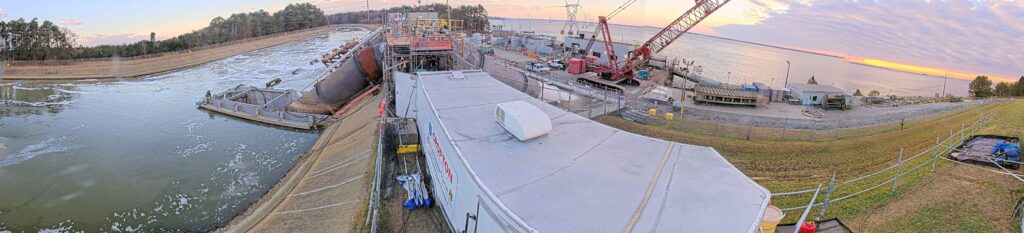
Natural gas plant expansions, LNG-adjacent power infrastructure, and battery storage facilities all follow this same pattern: a long construction window, high-value equipment arriving in phases, and stakeholders spread across multiple time zones who need to see the site without being on it. The same pattern shows up around data center power infrastructure builds, where generation capacity and interconnection work often happen on the same accelerated schedule as the data center itself.
Where TrueLook fits
TrueLook builds jobsite camera systems specifically for this construction-phase gap, not plant security systems, and not a general-purpose surveillance product retrofitted for energy work. Cameras run on a built-in 4G LTE modem so they’re live before permanent utilities are, cover multi-site projects through a single dashboard, and integrate with platforms like Procore and Autodesk Construction Cloud that energy contractors already use for daily logs and documentation.
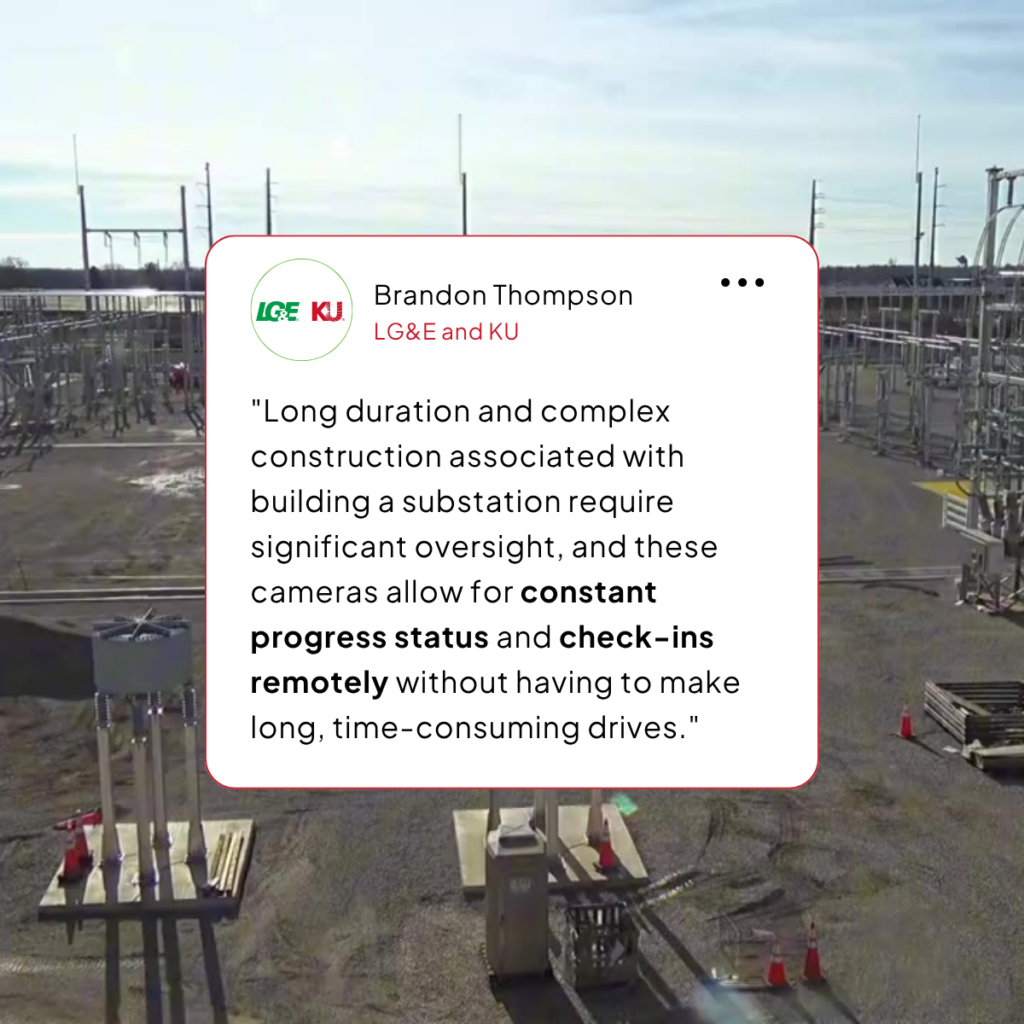
This isn’t theoretical. LG&E and KU used TrueLook to improve oversight and secure substations under construction across their service territory. As Brandon Thompson, Sr. Manager at LG&E and KU, put it: “Long duration and complex construction associated with building a substation requires significant oversight, and these cameras allow for constant progress status and check-ins remotely without having to make long, time-consuming drives.” Read the full case study for the details.
That matters most on the projects where nobody’s set up to answer “what’s happening out there right now” without someone getting in a truck.
This isn’t unique to energy. The same construction-phase visibility gap shows up on other critical infrastructure builds: water treatment plant construction faces the identical problem of remote sites, multi-contractor coordination, and stakeholders who need progress verification without a site visit.
FAQs
It’s live, cloud-connected camera coverage of an energy construction site (substations, transmission corridors, solar and battery facilities, power plant expansions) that lets project teams, owners, and stakeholders view progress from anywhere, without visiting the site in person.
Power plant security monitoring covers the operational asset once it’s energized and running. Energy remote video monitoring covers the construction phase: the build itself, before the plant, substation, or array is producing power.
Usually not, especially early in the project. That’s why cameras built for this use case run on cellular connectivity (commonly 4G LTE) rather than depending on jobsite WiFi that may not exist yet.
Yes. With some large power transformers and specialty switchgear now carrying multi-year lead times, visual verification of delivery condition and on-site staging has real financial weight: there’s often no fast way to replace damaged or misplaced equipment.
All three, usually through different access levels on the same system: the GC for crew and subcontractor coordination, the owner or utility for progress verification and stakeholder updates, and safety leads for real-time oversight of high-risk operations like crane lifts.
Closing thoughts on energy remote video monitoring
Energy infrastructure spending is climbing past $1.1 trillion this decade, and almost none of that reporting mentions who’s actually watching the sites while it gets built. That’s the part that matters most to the people running these projects, not the top-line number, but whether someone can see what’s happening on-site today, right now, from wherever they are.
If you’re building substations, transmission infrastructure, solar or battery facilities, or power plant capacity, talk to TrueLook about what live jobsite visibility looks like on a project like yours.
Cost and spending figures cited above (EEI, S&P Global Market Intelligence) reflect industry reporting as of 2026; actual project-level costs and timelines vary with equipment class, region, and market conditions.