“PTZ cameras (Pan-Tilt-Zoom) are remote-controlled cameras that move horizontally, vertically, and zoom in or out. On construction sites, they provide 360° jobsite coverage from a single mounting point, replacing multiple fixed cameras while allowing project managers to monitor specific areas in real time.”
Imagine approaching the jobsite in the early morning hours, only to discover that valuable equipment and materials have walked off. Despite nearby cameras, their fixed field of view failed to capture any activity, a vehicle, or really any evidence of theft.
It’s a scene that haunts construction professionals, and the limited visibility of construction sites presents a genuine concern, especially for sprawling projects. Pan-tilt-zoom cameras are a practical solution that extends your construction camera’s focus beyond single, fixed areas.
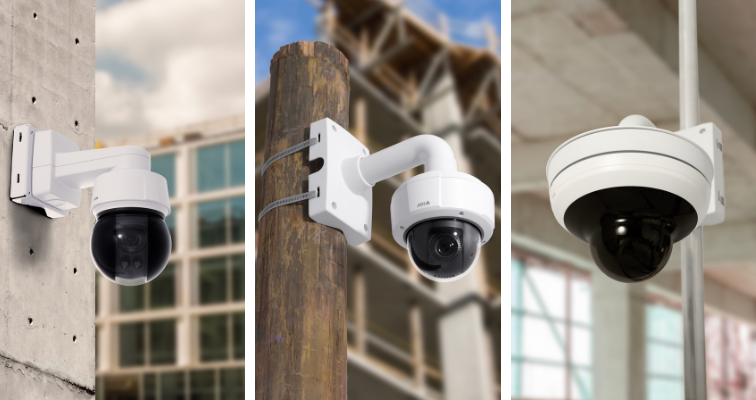
This PTZ security camera guide explores how they work, their benefits for your construction operations, and key factors for integrating them with the rest of your security measures. Plus, you’ll catch a glimpse of how TrueLook meets the needs of construction businesses like yours!
What are PTZ Cameras?
To support your journey of gaining better jobsite visibility, let’s see what makes PTZ cameras a practical solution for construction monitoring. Pan, tilt, and zoom are the three essential movements that allow you to capture a comprehensive view of your worksite activities. Beyond these basic functions, PTZ cameras offer features that make them worthy additions to your toolbox. Most notably, their remote control capabilities set them apart from fixed cameras. While fixed construction cameras remain stationary with a limited field of view, you can control PTZ cameras remotely, providing unparalleled flexibility in monitoring your jobsite.
Furthermore, these cameras offer:
- Pan functionality allows the camera to rotate horizontally up to 360°, giving you complete coverage of your jobsite from a single mounting point.
- Tilt capabilities enable vertical movement, so you can view everything from the ground to the sky.
- Powerful optical zoom technology (unlike digital zoom, which merely enlarges pixels) allows you to capture detailed images of distant objects without compromising image quality.
- Wider coverage areas mean that one PTZ camera can often replace multiple fixed cameras, providing significant cost savings and simplified installation.
- Preset positions allow camera operators to program specific views that you can instantly recall, making routine monitoring more efficient.
- Motion tracking features in modern PTZ cameras can automatically detect and follow moving objects, providing enhanced security surveillance without manual control.
What is the Difference Between Digital & Optical Zoom?
With PTZ cameras, it’s all about the zoom. TrueLook’s PTZ Cameras can zoom to incredible distances with no loss in image quality. This is true optical zooming, which means that the image you see is always at the highest resolution, no matter how far away you zoom. Digital zoom, which is used on fixed-position cameras does begin to lose image quality when zooming.
TL;DR: PTZ cameras help you capture high-definition, 360° views of your projects in real time. Check in on your jobsite remotely by controlling the PTZ movements and zoom to incredible distances without losing visual quality.
Types of PTZ Cameras
Construction professionals have a couple of PTZ camera options to help meet specific jobsite monitoring needs. Some cameras, like IP PTZ cameras, use ethernet technology for network connectivity. Others, like analog PTZ cameras, transmit signals through traditional video cable links. Finally, ePTZ cameras create the PTZ effect digitally rather than through mechanical movement.
Most providers, such as TrueLook, offer professional-grade outdoor PTZ cameras that feature true optical zoom capabilities, weatherproof construction, and wireless 4G LTE connectivity. These cameras typically have flexible power options, including solar-power and 110V configurations to accommodate any jobsite environment.
Advantages of Using PTZ Cameras on Construction Sites
Now that you know what PTZ cameras are and some of the options available, we can talk about the real benefits you can see through their deployment. The average construction site project manager can expect to see some or all of the following when using PTZs:
- Enhanced Security: PTZ cameras are powerful security measures that provide comprehensive surveillance footage that deters theft and vandalism. They are also able to detect suspicious activity automatically through intelligent tracking features.
- Improved Jobsite Monitoring: Remote live-viewing capabilities allow project managers to monitor customer sites from anywhere. That remote viewing ensures real-time awareness of all jobsite activities.
- Dynamic Observation: With PTZ controls, you can instantly move the camera to check if drivers delivered materials to the correct location or zoom in on workers to verify they’re using proper safety equipment without leaving your office.
- Streamlined Project Documentation: Capture stunning panoramic time-lapse views that showcase your project’s progress from multiple angles. TrueLook’s 360° panoramas create a comprehensive view that traditional fixed cameras simply cannot provide.
- Increased Efficiency and Productivity: PTZ cameras save valuable time and resources by reducing the need for physical site visits. Construction site cameras provide clear video footage that helps identify and address issues before they become costly problems.
- Better Communication and Collaboration: Share remote camera feeds with stakeholders through your security system, enabling everyone from owners to subcontractors to stay informed. This communication and collaboration mean better project decisions.
PTZ Cameras vs. Fixed Cameras
| PTZ camera | Fixed construction camera | |
|---|---|---|
| Coverage area | 360° pan, 180° tilt — one camera covers the full jobsite Advantage |
Fixed field of view; multiple units needed for full-site coverage |
| Remote control | Pan, tilt, and zoom in real time from any device, anywhere Advantage |
View is permanent once mounted; no remote repositioning |
| Image detail | Optical zoom captures license plates, faces, and equipment at distance Advantage |
Wide-angle capture; limited close-up detail without physical relocation |
| Coverage gaps | Possible — camera can only point one direction at a time Trade-off |
Consistent, always-on coverage of assigned zone Advantage |
| Time-lapse | Possible but best suited for active monitoring and security | Ideal — fixed position captures consistent project progression Advantage |
| Theft deterrence | Auto-tracking follows intruders; detailed footage usable by law enforcement Advantage |
Visible deterrent; limited tracking capability after hours |
| Installation | One unit per site in many cases — simpler cabling, fewer mounts Advantage |
Multiple units required; more complex cable runs across site |
| Upfront cost | Higher per unit, but fewer units needed overall Trade-off |
Lower per unit; cost adds up with multiple cameras needed |
| Best for | Active monitoring Security Large sites | Time-lapse Documentation Always-on zones |
PTZ Camera Use Cases for Construction Sites
Time-lapse documentation
PTZ cameras aren’t just for live monitoring — they can be programmed to capture time-lapse footage of your jobsite at set intervals throughout the day. For construction projects, this creates a visual record of progress that’s invaluable for owner updates, investor reporting, and internal project reviews. Unlike fixed cameras that capture a single angle, a PTZ can be preset to rotate through multiple positions, giving you a multi-angle time-lapse that documents the full scope of your build from a single mounting point.
Theft and vandalism deterrence
Construction sites are among the most targeted environments for theft — equipment, copper wiring, tools, and materials regularly disappear after hours. A PTZ camera deters theft in two ways. First, its visible presence signals that the site is actively monitored. Second, its auto-tracking capability means that when motion is detected after hours, the camera follows and records the intruder across the site automatically. Crucially, PTZ optical zoom captures the detail that matters for law enforcement and insurance claims — license plates, faces, and specific equipment — not just a blurry figure in the distance that fixed cameras often produce.
Remote project management
One of the biggest operational advantages of PTZ cameras on a construction site is the ability to manage and inspect your project without physically being there. Project managers overseeing multiple sites can pan to the material staging area, zoom in on a specific crew, or check equipment positioning — all from a laptop or phone in real time. This eliminates costly site visits for routine check-ins and gives GCs the visibility they need to catch scheduling issues, verify deliveries, and keep subcontractors accountable without leaving the office.
Permit and compliance documentation
Permitting disputes and compliance questions are a reality on most commercial construction projects. PTZ cameras provide timestamped, high-resolution video evidence that specific work was completed at a specific time — useful when a permit inspection is delayed, a subcontractor’s work is disputed, or a change order needs to be justified. Because PTZ cameras can zoom into specific areas of the build, the footage is detailed enough to actually show the work completed, not just that activity occurred on site.
Choosing the Right PTZ Camera for Your Construction Site
The right PTZ camera system will meet your specific construction needs and jobsite conditions. Modern PTZ cameras offer a range of advanced features that significantly enhance your video surveillance, but finding the perfect match depends on weighing which specifications matter most for your project.
Consider some of these factors when making your decision:
- Image Quality and Zoom Capabilities: Look for cameras with high-resolution imaging and true optical zoom capabilities. These cameras will give you quality images even from considerable distances.
- Camera Field of View and Movement Range: Pan, tilt, zoom cameras should cover your entire jobsite. Cameras like those from TrueLook with 360° panning functionality are ideal for total construction site monitoring.
- Network Connectivity Options: Consider how your PTZ camera will transmit the data it collects. Wireless PTZ cameras transmit video over Wi-Fi or cellular networks. Other cameras use ethernet cables or integrate with an onboard digital video recorder for storage and playback.
- Weatherproofing and Durability: Construction environments and outdoor conditions are harsh on technology. Look for cameras with a minimum IP66 and/or NEMA 4X rating to withstand dust, rain, and corrosion caused by weather.
- Night Vision Capabilities: Many PTZ cameras now have built-in infrared technology, providing clear video footage in complete darkness. That infrared tech allows for security monitoring and enhanced motion detection, even in pitch-black conditions.
- Motion Detection and Auto Tracking: Advanced cameras automatically detect and follow moving objects. This tracking enables constant security without manual control from a camera operator.
- Preset Positions and Programming: The ideal camera will be able to program multiple preset positions for total coverage of critical areas. Combined with time-lapse documentation, you can cover your entire jobsite from various angles.
- Power Requirements: Consider whether or not your site will have reliable access to standard power sources or if a solar-powered option would be a better fit. A popular solar-power option is a mobile trailer, which has built-in camera mounting and can provide more flexibility. Storage and Retention: Evaluate how and where you plan to store surveillance footage and photo documentation. Some solutions offer local storage; others offer remote cloud-based services with expandable memory packages.
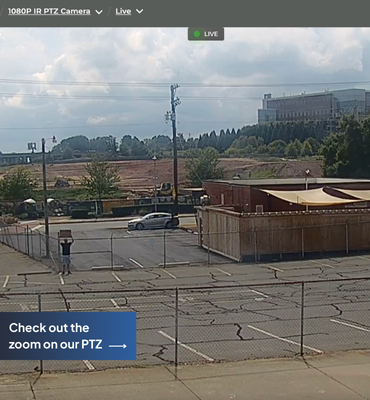
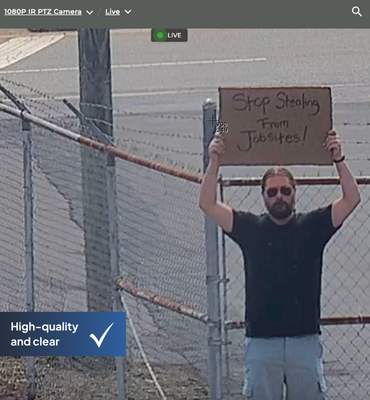
When evaluating PTZ camera models, consider not just the immediate security requirements, but also how these systems can integrate with your existing security measures. The most effective PTZ camera solutions provide multiple functionalities, including live monitoring, security surveillance, and comprehensive project documentation.
Frequently Asked PTZ Camera Questions
For most construction sites, yes, especially on large or multi-phase projects. A single PTZ camera can cover the ground that would otherwise require 3–4 fixed cameras, reducing both equipment costs and installation complexity. The real advantage on a jobsite is flexibility: as your project progresses and activity shifts across the site, you can remotely reposition the camera rather than physically remount it. That said, PTZ cameras work best when paired with at least one fixed wide-angle camera to ensure there are no coverage gaps when the PTZ is focused on a specific area.
Yes, and that’s one of the biggest advantages for project managers and GCs who oversee multiple jobsites. Modern construction PTZ cameras connect over cellular or wired networks, letting you pan, tilt, and zoom into any area of your site in real time from a laptop, tablet, or phone — without ever stepping on site. TrueLook’s PTZ cameras, for example, are built specifically for remote jobsite monitoring, with cloud-based access that doesn’t require on-site IT infrastructure.
Construction sites are high-theft environments — equipment, materials, and tools are frequently targeted after hours. PTZ cameras deter theft in two ways: visibly (criminals are less likely to target a site with active camera coverage) and reactively (motion-triggered will record intruders across the site automatically). Because a PTZ can zoom into a face, license plate, or specific area with high optical clarity, the footage is actually usable for law enforcement and insurance claims, unlike some low-resolution fixed cameras that capture movement but not detail.
Construction environments are harder on equipment than most. Look for cameras rated IP66 or higher for weather resistance, since jobsites expose cameras to dust, rain, and temperature swings. Optical zoom (not digital) is essential — you want to be able to zoom into a detail 200 feet away without pixelation. Cellular connectivity matters if your site doesn’t have reliable wired internet. And for construction specifically, look for a provider that offers preset positioning, so you can instantly jump between saved views (material staging area, crane zone, site entrance) without manually repositioning every time.
See the Difference with PTZ Cameras
PTZ cameras give you unparalleled jobsite coverage with unique features like user-controllable movements and optical zooming. This allows PTZ cameras to boost construction site security through documentation and monitoring in a single compact unit.
PTZ technology is a smart investment for construction professionals seeking to protect assets and operations. They can also cover broader areas when compared with fixed cameras, making them a smart solution for construction companies.
TrueLook Cameras offer industry-leading technology that provides the easiest, hassle-free way to enhance your jobsite security and project efficiency.
Ready to invest in your construction site security?
Determine which camera solution will suit your construction site best.