

For general contractors, the construction tech stack has grown well beyond a single project management platform. Scheduling, procurement, financials, jobsite cameras, documentation, and other specialized tools all generate information teams need to keep projects moving.
Most GCs don’t have a construction technology problem. They have a connection problem.
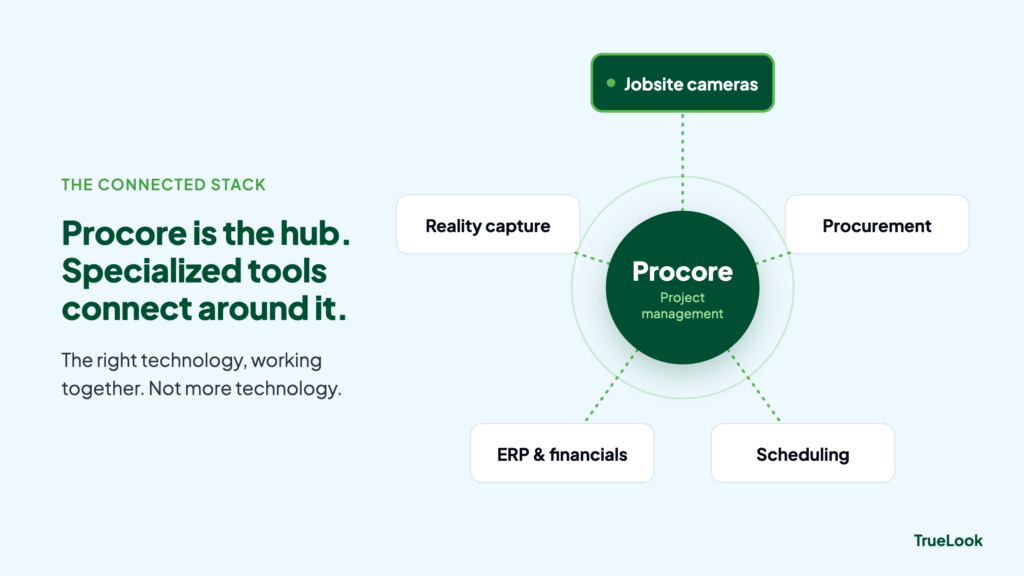
A Procore-connected tech stack brings specialized construction technology into a more connected workflow, with Procore serving as a central hub for project information. Instead of adding more disconnected software, GCs can build a stack that reduces duplicate work, improves visibility, and helps teams move information from the office to the field and back again.
Here’s what that integrated construction tech stack can look like in 2026.
What Is a Procore-Connected Tech Stack?
A Procore-connected tech stack is a group of construction technologies that integrate with Procore to share project information and support workflows across different stages of a project.
Rather than asking one platform to solve every problem, contractors can use specialized technology for specific needs while keeping important project information connected.
This approach aligns with the broader shift toward connected construction, where technology and project data work together to improve communication, processes, and outcomes.
For example, a GC might use:
- Procore for project management
- Procurement software for material and equipment tracking
- Scheduling software for project milestones
- Construction cameras for jobsite visibility
- ERP software for financial management
- Reality capture or documentation tools for project records
The goal isn’t to have more technology. It’s to have the right technology working together.
Why Integrated Technology Matters for GCs in 2026
As construction companies adopt more software, fragmentation can become a problem of its own.
A project manager may review submittals in one system, maintain a procurement log in a spreadsheet, check the schedule somewhere else, and rely on calls, texts, or site visits to understand what’s actually happening in the field.
Each handoff creates another opportunity for information to become outdated or disconnected.
Procore itself has built its platform around this idea of expandability, with 500+ integrations available across its ecosystem. The goal is to allow contractors to connect specialized tools and data without completely disrupting their existing workflows.
A seamless tech stack can create greater continuity between those workflows. Project information can move from planning and procurement through field execution and documentation without requiring teams to repeatedly recreate the same context.
For GCs managing multiple projects or geographically dispersed jobsites, that visibility becomes especially important.
The Core Components of a Procore-Connected Tech Stack
There’s no universal construction tech stack. The right combination depends on a contractor’s projects, workflows, and existing systems.
However, several technology categories play an important role in creating a seamless GC workflow.
1. Project Management
Procore often sits at the center of the stack.
Project teams can use it to manage drawings, RFIs, submittals, documents, project communication, and other critical information. Procore’s open API also allows other technologies to build connections around the platform.
Think of Procore as the hub, with specialized systems connected around it.
2. Jobsite Cameras and Visual Documentation
Project data tells teams what should be happening. Visual jobsite information helps them understand what is actually happening.
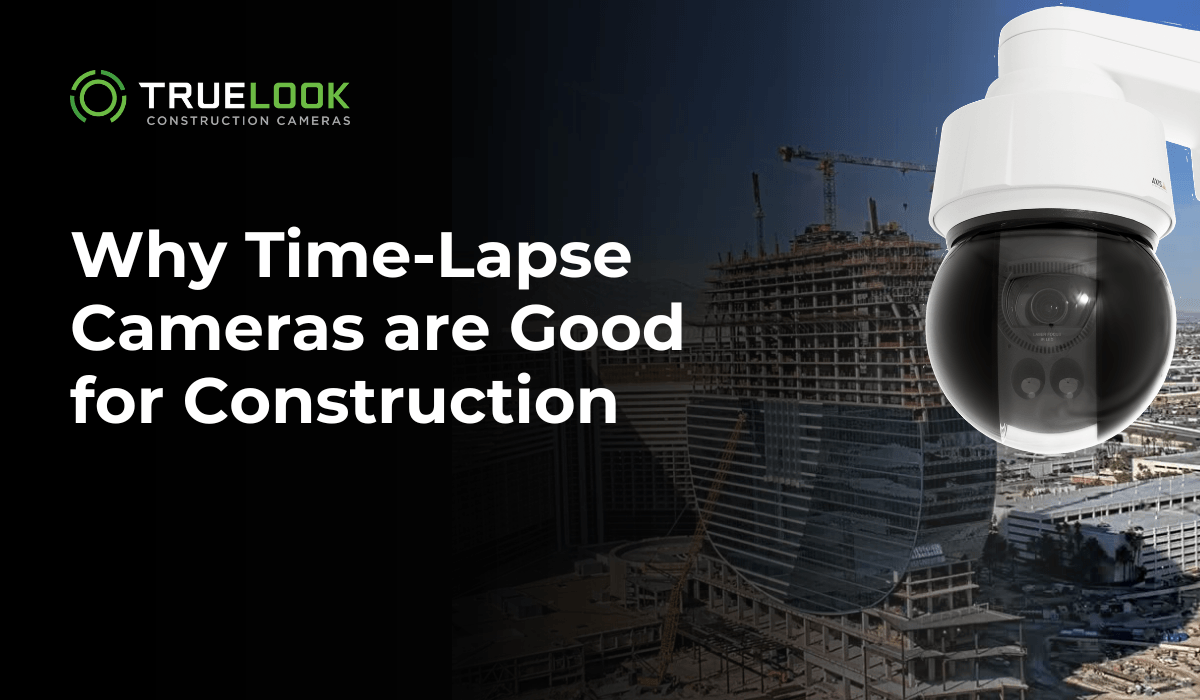
Construction cameras can provide live views of the jobsite along with historical imagery, time-lapse documentation, and visual records of project conditions.
When those capabilities connect with Procore, project teams can bring field visibility closer to the systems they already use to manage the project.
The TrueLook + Procore integration, for example, allows users to access live camera views, send images to Procore, automatically share time-lapse imagery, and create RFIs using jobsite images.
That can be especially valuable for executives, project managers, owners, and other stakeholders who can’t physically visit every project whenever they need an update.
3. Construction Procurement
An integrated project also needs visibility into what is coming to the jobsite and when.
Construction procurement sits between design decisions and field execution. Submittals need approval, materials need to be ordered, lead times need to be accounted for, and deliveries need to align with the project schedule.
A construction procurement platform like Koncurent can connect procurement activities with information already living in Procore, helping teams manage submittals, procurement milestones, and schedule requirements without relying entirely on disconnected spreadsheets. For GCs, connecting procurement to the broader tech stack helps answer a critical question:
Will the materials and equipment the field needs be ready when the schedule calls for them?
4. Scheduling and Planning
The project schedule provides the timeline that many other workflows depend on. Procurement dates, material requirements, subcontractor activity, and field progress all ultimately connect back to scheduled work.
Connecting scheduling tools with the rest of the technology stack gives teams more context around upcoming milestones and makes it easier to identify when an issue in one workflow could affect another.
A delayed procurement item, for example, matters much more when the team can immediately see the activity it could hold up.
5. ERP and Financial Systems
Project execution and financial performance can’t live in completely separate worlds.
Connecting ERP and financial systems with project management technology can help contractors reduce duplicate entry and create greater consistency between operational and financial information. Procore similarly positions its construction software integrations as a way to reduce manual entry and connect project and accounting information.
The exact integration will depend on a contractor’s ERP and accounting processes, but the principle remains the same: information should move between systems without requiring teams to manually rebuild it.
6. Reality Capture and Project Documentation
Construction generates an enormous amount of visual information. Photos, videos, site scans, progress documentation, and other project records can provide important context throughout construction and after project completion.
Connecting these tools with the broader project ecosystem makes that documentation easier to find and more useful to the people making decisions.
What Does a Connected GC Workflow Actually Look Like?
The value of integration becomes clearer when you stop looking at individual tools and start looking at the entire workflow.
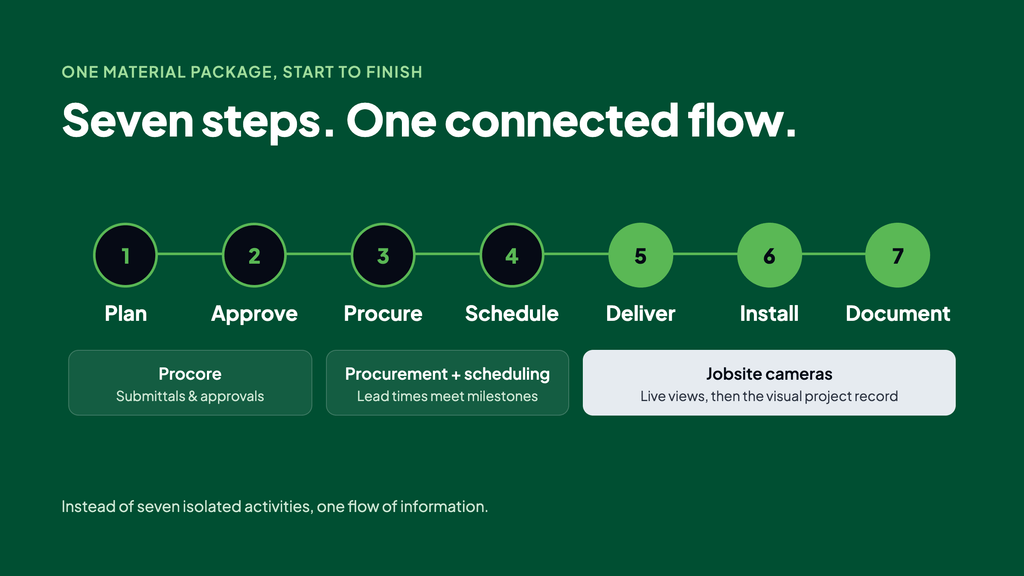
A submittal may begin in Procore. Once approved, procurement activities and lead times need to be tracked. Koncurent can connect that procurement information with schedule requirements so teams understand when an item needs to arrive onsite.
Meanwhile, field visibility technology gives project teams a way to see current site conditions remotely. Once work progresses, visual documentation can become part of the project record.
Instead of seven isolated activities, the project team gets a connected flow of information from planning through installation.
Connecting Procurement With Field Visibility
Procurement and jobsite visibility may seem like separate technology categories, but they answer two sides of the same question.
- Procurement tells the project team: What should be ready, and when should it be onsite?
- Field visibility tells the project team: What’s actually happening onsite?
- Connecting those perspectives can give teams better context around project readiness.
If an important material package is scheduled for delivery, for example, procurement information can show whether the item is on track while visual jobsite information can help remote stakeholders understand whether field conditions are ready for the associated work.
This is where a connected construction procurement workflow becomes part of the larger tech stack rather than an isolated procurement log.

How TrueLook Connects Jobsite Visibility With Procore
TrueLook extends Procore workflows with visual jobsite information.
Through the TrueLook + Procore integration, project teams can access TrueLook cameras from within Procore and use jobsite imagery in existing project workflows.
Teams can:
- View live TrueLook camera feeds
- Send jobsite images into Procore
- Automatically share time-lapse imagery
- Use imagery when creating RFIs
- Access historical visual documentation
That connection gives project stakeholders another source of context without requiring every person who needs a project update to physically visit the site.
For contractors overseeing several projects, remote visibility can make it easier to understand current conditions across the portfolio.
How to Evaluate Procore Integrations in 2026
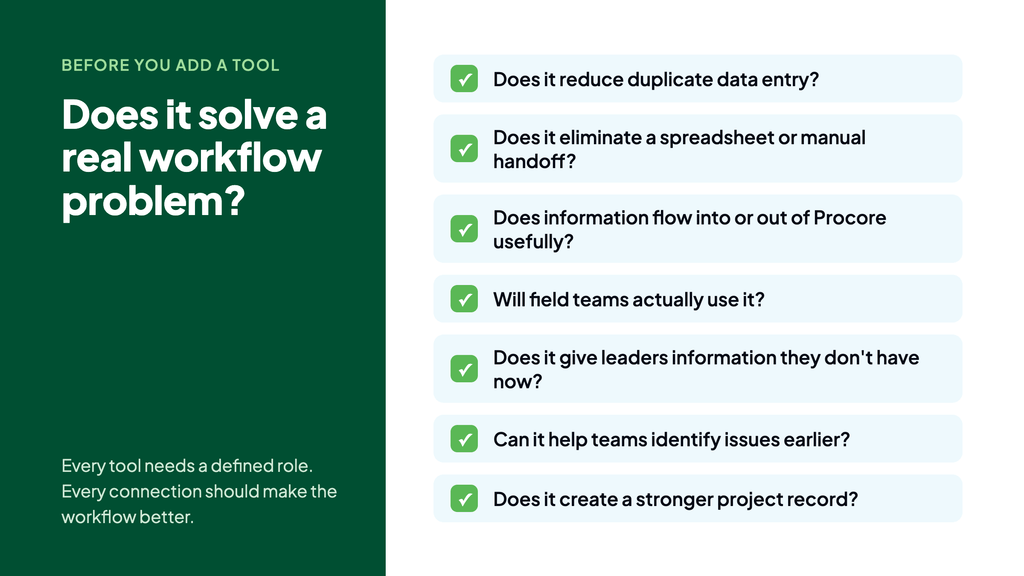
Adding another tool isn’t automatically an improvement. Before adding technology to your Procore ecosystem, ask whether the integration solves a real workflow problem. A useful integration should answer questions such as:
- Does it reduce duplicate data entry?
- Does it eliminate a spreadsheet or manual handoff?
- Does information flow into or out of Procore in a useful way?
- Will field teams actually use it?
- Does it give project leaders information they don’t currently have?
- Can it help teams identify issues earlier?
- Does it create a stronger project record?
The best construction tech stacks aren’t necessarily the largest. They’re the ones where each tool has a defined role and the connections between those tools make the overall workflow better.
Frequently Asked Questions About Procore-Connected Tech Stacks
A construction technology stack is the collection of software and technology a contractor uses to manage projects and business operations. It can include project management, scheduling, procurement, construction cameras, financial systems, reality capture, safety technology, and other specialized tools.
A Procore integration connects another technology or software platform with Procore so information or functionality can move between the two systems. The exact data shared depends on the integration.
Procore supports integrations across many construction technology categories, including scheduling, financial management, analytics, document management, field technology, and jobsite visibility.
Yes. Construction camera platforms can integrate with Procore to connect visual jobsite information with project workflows. TrueLook’s Procore integration allows teams to access live camera views and use imagery and time-lapse content within Procore workflows.
Connecting procurement software with Procore can help teams carry information from submittal and project management workflows into procurement tracking. It can also reduce duplicate entry and make it easier to connect procurement milestones with schedule requirements.
Start with the workflows your teams need to improve rather than the number of tools you want to deploy. Identify where information becomes disconnected, then choose technologies that solve those specific problems and integrate with the systems your teams already use.
Build a More Connected View of the Jobsite
A connected construction tech stack shouldn’t just tell teams what has been planned. It should help them understand what’s happening throughout the project.
By connecting project management, procurement, scheduling, financial information, and field visibility, GCs can create a more complete picture from planning through execution.
TrueLook brings the jobsite into that connected workflow by integrating live and historical visual information with Procore.
Explore the TrueLook + Procore integration to see how connected jobsite visibility can fit into your construction tech stack.
Ready to Connect the Tools you Already Use?
TrueLook gives construction teams the ability to reduce log-in fatigue and keep all their tools in one place.