
Solar security cameras are the right choice when power is limited, the project is temporary, or the site spans a large area. They deploy in hours, require no electrician, and can be repositioned as the job evolves. With solar in summer and 110V backup in winter, TrueLook cameras deliver reliable coverage year-round — on any jobsite, in any season.
Solar security cameras are changing the way construction companies protect their jobsites. Whether you’re running a remote infrastructure project miles from the nearest power line or managing a temporary build in an urban infill lot, a solar-powered wireless surveillance camera gives you full-time monitoring without the cost and complexity of hardwired power.
Key Takeaways
- Solar security cameras are worth it for construction sites when power access is limited, the project is temporary, or the site spans a large area — the deployment savings alone often outweigh the camera cost.
- A solar-powered system typically costs far less over a project’s lifecycle than running utility power to a temporary or remote camera location, once you factor in trenching, permits, and utility coordination.
- Construction site solar security camera systems deploy in hours with no electrician and relocate in minutes as the project evolves — hardwired systems can’t do either.
- The best solar security cameras for remote sites pair solar power with 4G LTE cellular connectivity, so there’s no dependency on site Wi-Fi or utility power.
- TrueLook’s dual-power design — solar in summer, 110V backup in winter — removes the biggest objection to solar: seasonal reliability.
At TrueLook, we’ve built our entire platform around one idea: every jobsite deserves professional-grade camera coverage, regardless of location or access to power. That’s why we offer solar-powered video cameras as a core part of our lineup, and why we recommend them for a wide range of project types. In summer months, solar is often the fastest and most cost-effective deployment option. In winter, when sunlight hours drop, our cameras can seamlessly transition to 110V power so your coverage never lapses.
This guide covers everything you need to know about security camera solar-powered solutions for construction — how they work, where they perform best, and how to choose the right setup for your project.
Are Solar Security Cameras Worth It for Construction Sites?
Yes, for the majority of construction jobsites, a solar security camera system pays for itself faster than a hardwired equivalent. The math comes down to three factors: deployment cost, project duration, and what a single theft or vandalism incident costs you without coverage.
- Deployment cost. Running utility power to a remote or temporary camera location means trenching, permits, and utility coordination — costs that a solar-powered wireless surveillance camera skips entirely. On a 6-month project, that difference alone often covers the full cost of the camera system.
- Project duration. The shorter and more temporary the project, the stronger the case for solar. A construction site solar security camera system deploys in hours and demobilizes just as fast, with nothing left behind — no conduit, no junction boxes, no cleanup costs. A permanent facility with long-term power infrastructure already in place is the one scenario where wired cameras can be the better economic choice.
- Cost of going without coverage. Equipment theft, vandalism, and trespassing incidents on active jobsites routinely run into the tens of thousands of dollars per event. A solar security camera at material staging areas, perimeters, and gate entrances doesn’t just deter that risk — it gives you the documentation to support insurance claims and change order disputes if something does happen.
When solar isn’t the worth-it answer: if a site already has permanent electrical infrastructure, sits in a region with consistently low solar generation, or is a long-term facility beyond the construction phase, wired cameras may deliver better long-term value. Most large projects end up using both solar at the perimeter and remote areas, wired at the site office and gate.
Where Solar Security Cameras Are Used
Solar security cameras are used across a wide range of industries and applications — anywhere that requires reliable monitoring without access to hardwired power. While construction jobsites represent one of the most demanding use cases, the same core advantages apply across many other environments.
Commercial Properties and Parking Lots: Large surface parking lots, retail centers, and commercial campuses often have areas that are too far from existing electrical infrastructure to run camera cable cost-effectively. Solar security cameras fill those gaps without trenching or utility coordination.
Event Venues and Temporary Installations: Festivals, outdoor concerts, fairs, and sporting events require temporary security coverage that can be deployed quickly and removed just as fast. Solar-powered cameras are purpose-built for this kind of short-duration, high-stakes monitoring.
Agricultural and Rural Properties: Farms, ranches, and rural land parcels frequently lack the electrical infrastructure needed for hardwired cameras. Solar security cameras provide perimeter monitoring, gate coverage, and equipment protection without relying on utility power that may not reach the camera location.
Oil, Gas, and Energy Infrastructure: Pipelines, wellheads, substations, and renewable energy installations are often located in remote areas with no grid connection. Solar-powered cameras provide continuous security monitoring at these high-value, high-risk sites without the cost of running power to each location.
Municipal and Public Infrastructure: Parks, trailheads, remote public facilities, and transportation corridors benefit from solar security cameras where installing hardwired infrastructure would be cost-prohibitive or logistically impractical.
For construction jobsites specifically, where power access is unpredictable, project timelines are compressed, and camera coverage needs to evolve as the work progresses, solar security cameras offer additional advantages that go beyond simple power independence.
Why Solar Security Cameras Are Ideal for Construction Jobsites
Construction sites have security needs that most commercial properties don’t. Equipment theft, vandalism, trespassing, and liability incidents can cost companies tens of thousands of dollars per event. Traditional hardwired cameras can address many of these risks, but only on sites where power infrastructure already exists.
Solar-powered wireless surveillance cameras solve the power problem entirely. Here’s why they’ve become a go-to solution for construction security:
No Trenching, No Electrician, No Delay
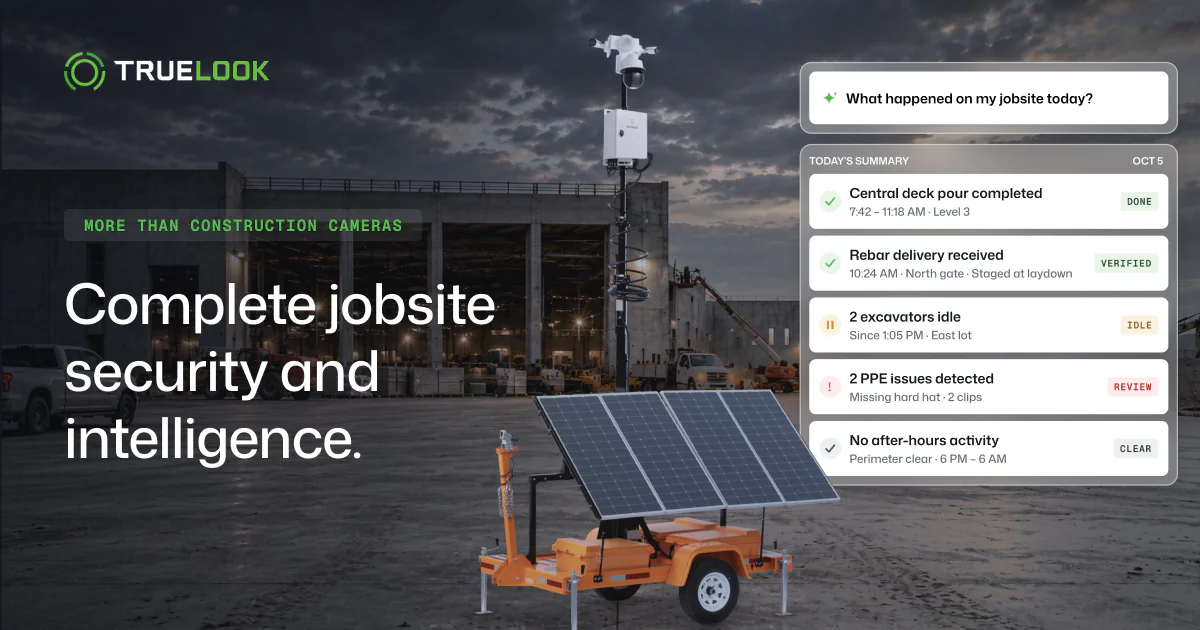
Running conduit and pulling electrical wire to a camera location adds time, labor, and permit complexity to every installation. A security camera solar-powered system eliminates that dependency. You can mount cameras on a pole or trailer, connected to a solar panel and battery, and operational within hours — not days.
Deploy Anywhere on the Site
Hardwired cameras are limited by how far you’re willing to run cable. Solar-powered video cameras have no such constraint. You can position cameras at the perimeter, at material staging areas, at gate entrances, or at any blind spot on the site, wherever the coverage is needed, not wherever power happens to be available.
Lower Total Cost on Power-Limited Sites
Bringing utility power to a temporary or remote location involves utility coordination, trenching, panel upgrades, and recurring electrical costs. For a 6-month construction project, a solar-powered wireless surveillance camera typically costs far less over the project lifecycle than a hardwired equivalent, especially when you account for mobilization and demobilization.
Scalable and Relocatable
Construction jobsites evolve. As a project progresses, the areas that need coverage change. You can quickly reposition solar security cameras mounted on portable stands or surveillance trailers, as the site changes, without any rewiring or electrical work.
Reliable Around-the-Clock Monitoring
Modern solar-powered video cameras are built with high-capacity battery systems designed to sustain operation through multiple overcast days. Combined with motion-triggered recording, remote live views, and cellular or Wi-Fi connectivity, they deliver the same always-on monitoring capability as hardwired units.
Best Solar Security Cameras for Remote Jobsites
Remote construction sites present a unique security challenge: they’re far from help, frequently unstaffed after hours, and nearly impossible to monitor without dedicated technology. They’re also, almost by definition, far from reliable power infrastructure.
A solar-powered wireless surveillance camera is often the only practical security solution for truly remote locations. There’s no utility hookup to coordinate, no generator fuel to manage, and no power bill to run. The sun provides the energy, and the camera does the work.
What Makes a Site “Remote” for Camera Purposes?
For security camera planning purposes, a site is effectively remote if any of the following apply:
- Utility power is not available at the camera location
- The cost of running power to the camera location exceeds the camera system cost
- The site is more than a few hundred feet from an existing power source
- The project timeline doesn’t justify permanent electrical infrastructure
Pipelines, quarries, timber operations, rural road construction, and oil and gas facilities frequently fall into this category. So do agricultural projects, solar farms under construction, and wind energy installations, all of which involve large land areas with minimal existing infrastructure.
Connectivity on Remote Sites
Power isn’t the only infrastructure challenge at remote sites. Internet connectivity is equally important for a functional security camera solar-powered system. TrueLook cameras support 4G LTE cellular connectivity, which means they can transmit live video, alerts, and recorded footage from virtually any location with cell service, no hardwired internet connection required.
For sites in areas with limited cellular coverage, connectivity options vary. It’s always worth checking carrier coverage maps for the specific location before finalizing a camera deployment plan.
Solar Security Cameras for Temporary Construction Projects
Not every construction project is a multi-year effort. Road resurfacing, bridge repairs, utility upgrades, and residential builds often wrap up in weeks or months. These shorter-duration projects still carry significant security risks, but the economics of a permanent hardwired camera installation rarely make sense for a temporary jobsite.
This is where solar-powered wireless surveillance cameras deliver some of their strongest ROI.
Fast Deployment, Fast Demobilization
For a project lasting 90 days, the last thing a project manager needs is a multi-week camera installation process that eats into the schedule. You can set up solar security cameras in a fraction of the time — no electrician required, no trenching, no waiting on utility coordination. When the project wraps, demobilization is equally fast. The cameras come down, the pole gets pulled, and the equipment moves to the next site.
Learn more about DIY construction camera installation.
Equipment and Material Theft on Short-Duration Projects
Theft is not exclusively a long-term jobsite problem. In fact, temporary projects can be at a higher risk because materials and equipment are staged quickly, site security routines haven’t been fully established, and neighboring properties may not be accustomed to construction activity. A security camera solar-powered system provides immediate deterrence and documentation from day one.
Flexibility as the Project Progresses
On a temporary project, the camera needs to change quickly. Early in a project, the focus might be on material staging areas. Later, it might shift to completed work that needs protection. You can relocate solar-powered video cameras mounted on portable stands or security trailers in minutes, giving project managers the flexibility to cover the most critical areas as the work evolves.
No Long-Term Infrastructure Commitment
When you install hardwired cameras for a temporary project, you often leave behind infrastructure — conduit, junction boxes, and sometimes wiring — that serves no purpose after the project closes. Solar security cameras leave no footprint. There’s nothing to abandon, nothing to remove from a completed structure, and no cleanup costs associated with electrical infrastructure.
Solar Security Cameras for Infrastructure Projects
Large-scale infrastructure construction — highways, bridges, rail lines, pipelines, utility corridors — involves some of the most challenging security environments in the industry. These projects span vast geographic areas, often cross through remote or semi-rural territory, and involve extremely high-value equipment and materials.
Solar-powered wireless surveillance cameras are particularly well-suited to infrastructure projects for several reasons.
Coverage Across Large Linear Projects
A highway widening project might stretch 20 miles. A pipeline installation might cover hundreds of miles. Deploying hardwired cameras along the length of a project like this is not practical, but solar-powered video cameras can be placed at any point along the corridor, spaced to provide overlapping coverage of the most critical sections. Because they’re wireless and self-powered, there’s no need for electrical infrastructure at each camera location.
High-Value Equipment Exposure
Infrastructure projects typically involve heavy equipment with significant replacement value — excavators, dozers, pavers, and specialty machinery that can cost hundreds of thousands of dollars per unit. Theft or vandalism of this equipment can halt a project and trigger significant uninsured losses. Security camera solar-powered coverage at equipment staging and laydown areas provides both a deterrent and the documentation needed for insurance claims.
Public Safety and Liability Documentation
Infrastructure projects frequently occur adjacent to active roadways, pedestrian areas, or existing utilities. Incidents, whether involving workers, third parties, or adjacent property, require thorough documentation. A solar-powered wireless surveillance camera positioned at key areas of a project creates a continuous visual record that can be invaluable in the event of a dispute or claim.
Multi-Phase Projects Spanning Years
Some infrastructure projects run for several years. While a solar camera’s power independence remains an advantage throughout, longer projects may also benefit from supplemental 110V power in winter months when solar generation is reduced. TrueLook cameras are designed to support both power sources, so your security coverage doesn’t degrade during shorter winter days.
Power Backup: Solar in Summer, 110V in Winter
One of the most common concerns about solar security cameras is reliability during overcast weather or winter months. TrueLook’s answer: cameras that run on either solar or standard 110V power, with an easy switch between them. Solar handles most projects efficiently in summer; when daylight hours shorten, the same camera connects to a standard outlet or generator without missing coverage.
Most TrueLook systems carry 3–5 days of battery backup, which covers the vast majority of weather events. For the full breakdown of how the panel, battery, and charge controller work together, see our guide to how solar powered cameras work.
The 110V Backup Solution
TrueLook’s approach to this challenge is simple: design cameras that can operate on either solar or standard 110V power, and make it easy to switch between them. At the beginning of a project, or in summer months, solar is often the fastest and most cost-effective deployment option. When daylight hours shorten in fall and winter, the same camera can be connected to a standard electrical outlet or a generator to maintain full performance. Most security camera trailers come with built-in battery backup.
This dual-power capability means you’re never forced to choose between solar flexibility and year-round reliability. You get both.
Battery Storage and Camera Operation
Modern solar security camera systems use lithium battery storage that maintains performance in cold temperatures, an important consideration for winter deployments. Look for systems that specify low-temperature battery performance and that include power management features like adjustable frame rates, motion-triggered recording, and scheduled operation windows to extend battery life during periods of limited solar generation.
How to Choose the Right Construction Site Solar Security Camera System
Not all solar-powered wireless surveillance cameras are built for construction environments. Consumer-grade solar cameras marketed for residential use lack the video quality, durability, and connectivity features required on an active jobsite. Here’s what to evaluate when selecting a security camera solar-powered system for construction.
Video Resolution and Image Quality
Construction security cameras need to capture usable footage at distances of 50–200 feet or more. Look for cameras with at least 2K resolution, and consider 4K options for large open sites where you need to identify individuals or read equipment tags at a distance. Pan-tilt-zoom (PTZ) capability adds flexibility, allowing you to monitor a wider area with a single camera and zoom in on specific incidents.
Night Vision and Low-Light Performance
A significant portion of construction theft and vandalism occurs after dark. Ensure any solar-powered video camera you evaluate includes effective night vision — either infrared (IR) illumination or color night vision using ambient light. IR range is typically rated in feet; for large sites, look for cameras with an IR range of 100 feet or more.
Weatherproofing and Durability
Construction sites are rough environments. Cameras are exposed to dust, rain, temperature extremes, and sometimes physical impacts. Look for cameras with an IP66 or IP67 weatherproofing rating, which indicates protection against dust ingress and heavy rain. Vandal-resistant housings add another layer of protection in high-risk locations.
Connectivity Options
Solar-powered wireless surveillance cameras need a path to transmit footage. Options include:
- 4G LTE cellular: The most flexible option for remote and temporary sites with no on-site Wi-Fi infrastructure. Requires cell coverage at the camera location.
- Wi-Fi: Suitable for sites with existing wireless network coverage. Faster data transmission, but limited by Wi-Fi range.
- Ethernet over temporary cabling: Sometimes used in hybrid deployments where cameras are solar-powered but connected via a temporary network run.
Solar Panel and Battery Sizing
The solar panel wattage and battery capacity determine how the system performs in low-light conditions. For construction applications, look for systems that specify their backup capacity in days (not just hours) and that have been tested in real-world conditions, not just laboratory settings. Systems with at least 3 days of battery backup provide a practical buffer for cloudy weather.
Cloud Storage and Remote Viewing
A construction security camera system should include cloud-based video storage and a platform for remote viewing. This allows project managers, superintendents, and safety teams to monitor the jobsite from anywhere — on their phone, tablet, or desktop. Look for platforms that include motion alerts, scheduled live views, time-lapse capabilities, and easy clip sharing for incident documentation.
Solar Security Cameras vs. Wired Security Cameras: Which Is Right for Your Project?
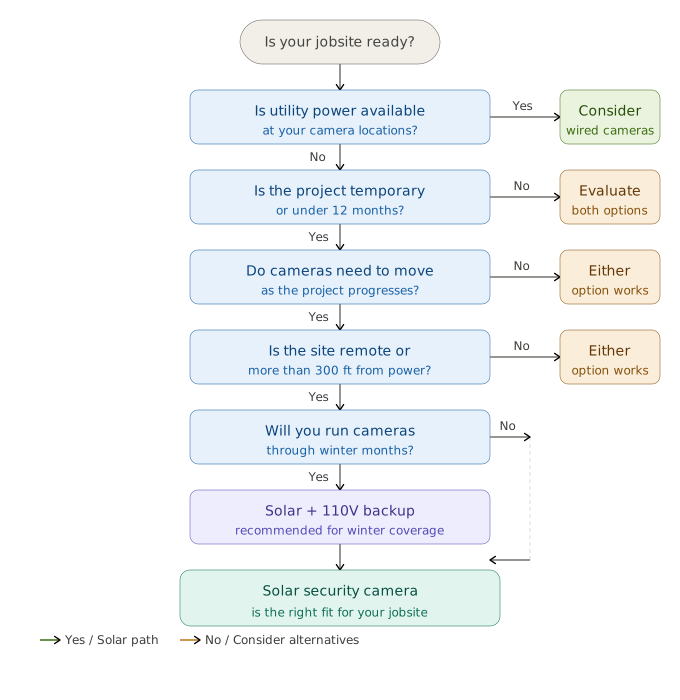
The choice between solar-powered wireless surveillance cameras and traditional wired security cameras depends on several project-specific factors: site access to power, project duration, geographic location, and the level of coverage required.
In general terms:
- Solar is the better choice when power is unavailable or expensive to provision, when the project is temporary, when cameras need to be repositioned frequently, or when the site spans a large geographic area.
- Wired cameras may be preferred when permanent infrastructure already exists, when the site is in a location with limited solar generation, or when the project involves a permanent facility with long-term security needs beyond the construction phase.
Many large projects use both solar-powered video cameras at the perimeter and in remote areas, with wired cameras at the site office, gate, and other locations where power is readily available.
TrueLook Solar Security Camera Solutions
TrueLook offers solar powered construction cameras purpose-built for construction jobsites. Every camera in our lineup is backed by our cloud platform, which gives you live viewing, motion alerts, time-lapse, and secure video storage accessible from any device.
Our solar camera systems are designed for:
- Fast deployment with no electrician required
- 4G LTE cellular connectivity for remote and temporary sites
- Dual-power operation — solar on sunny days and battery backup on cloudy ones
- Weatherproof, construction-grade housings
- Integration with TrueLook’s premier construction camera platform
Whether you’re securing a pipeline corridor, monitoring a remote land development project, or adding coverage to a fast-moving residential build, TrueLook has a solar-powered video camera solution that fits your timeline and budget.
Frequently Asked Questions About Solar Security Cameras
For most jobsites, yes. Solar security cameras eliminate the trenching, permitting, and utility coordination costs of hardwired power, deploy in hours instead of days, and can be relocated as the project evolves. They’re the clearest value on remote, temporary, and large-footprint sites. The exception is permanent facilities with existing electrical infrastructure, where a wired system may make more long-term sense.
You can mount TrueLook solar cameras on dedicated camera poles, temporary construction fencing, existing structures, or portable stands. The mounting method depends on site conditions and how frequently the camera needs to be repositioned. Most deployments don’t require any permanent installation or structural modification.
Have more technical questions about solar power, battery life, or connectivity?
See our full breakdown in How Solar Powered Cameras Work: A Complete Guide, which covers battery runtime, winter performance, Wi-Fi-free operation, and weatherproofing in detail.
The Bottom Line on Solar Security Cameras
Solar security cameras aren’t a compromise — they’re the right tool for a wide range of construction security applications. For remote sites, temporary projects, large infrastructure work, and any situation where power access is limited or expensive, a security camera solar powered by the sun delivers professional-grade coverage without the cost and complexity of hardwired electrical infrastructure.
With dual-power flexibility — solar in summer, 110V in winter — TrueLook’s solar-powered wireless surveillance cameras give construction companies a reliable, adaptable security solution that performs in any season and on any type of project.
Solar Security Camera
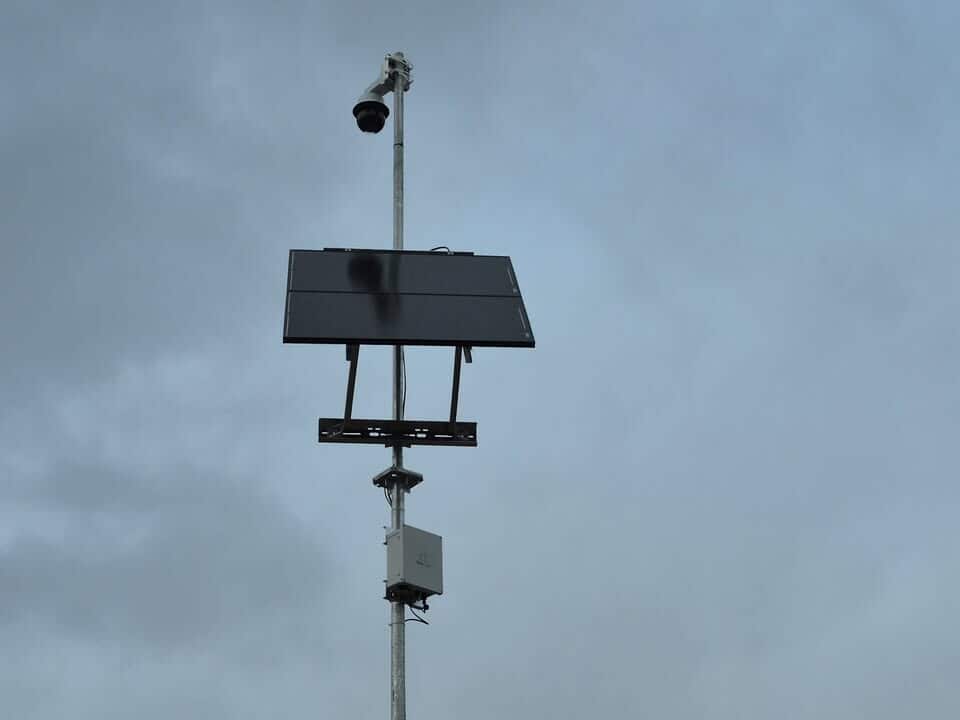
- No electrician or trenching required
- Deploys in hours, relocates in minutes
- 4G LTE cellular connectivity
- Solar in summer, 110V in winter
- Ideal for remote & temporary sites
Wired PTZ Security Camera
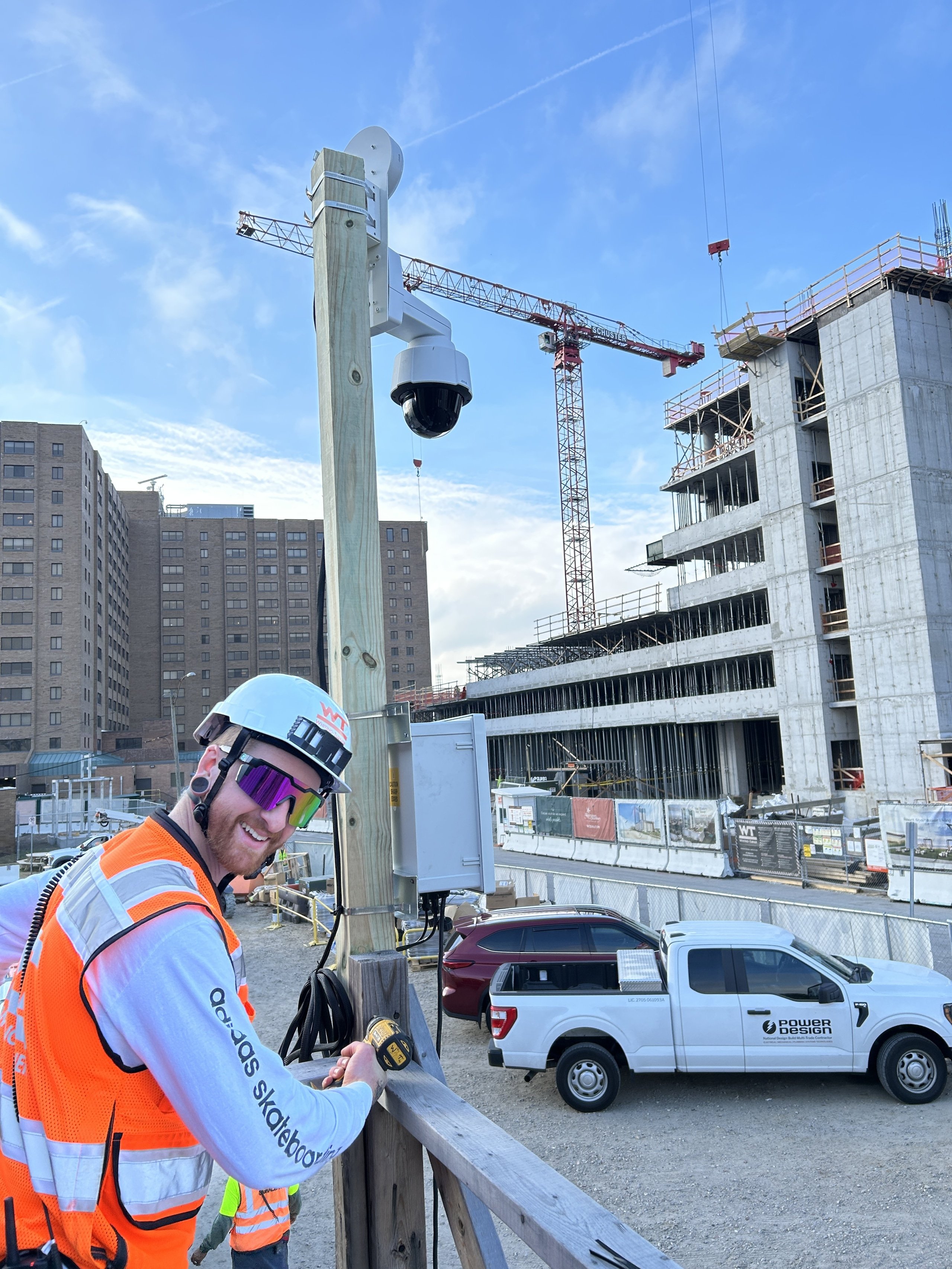
- Consistent year-round performance
- Hardwired power and network
- Best for sites with existing electrical
- Ideal for permanent facilities
- No seasonal power adjustments needed
Ready to secure your jobsite? Talk to a TrueLook camera specialist today.